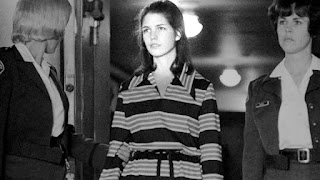
Fifty years ago, Bobby Beausoleil murdered Gary Hinman. Did he set in motion the Manson killings and the myth of Helter Skelter?
By ERIK HEDEGAARD (
Rolling Stone)
On the dusty, heat-blister town of Vacaville, California, halfway between Sacramento and Oakland, sits the bleak squat prison that holds a trim, handsome, highly articulate inmate named Bobby Beausoleil, almost 72, who has spent the past 50 years behind bars for murdering a musician friend of his, Gary Hinman, either as part of a drug deal gone bad or as a straight-up robbery, all depending on which version of events you believe. All of it happened under the dark cloud of another of Beausoleil’s friends, Charlie Manson, the pint-size, so-called hippie-death-cult mastermind ex-con Svengali, who was convicted in 1971 of directing the horrific Tate-LaBianca murders, which left seven people dead and a bunch of his followers behind bars for life, and who died in 2017, much to the dismay of very few.
Beausoleil is in the prison’s visiting room now, hands folded together, fans moving the air around some. He wears jeans, a plain, pressed, standard-issue shirt, rimless glasses; he smiles easily, laughs easily, has kind eyes, professes to follow a Buddhist philosophy, seems gentle enough. Indeed, last January, for the first time since he went to jail in 1969, after 18 previous rejections, the parole board recommended that he be released, based on its finding that he did not pose “an unreasonable risk of danger to society.” It also noted that he “has accepted full responsibility for his actions in killing Mr. Hinman.”
Even so, the board did have its concerns, especially given that Beausoleil’s version of the events that led to Hinman’s murder — the motivation for it — has wobbled about over the years and, in fact, does not at all square with the official version that, in brief, on July 25th, 1969, Manson sent him to Hinman’s to rob the guy of some rumored $20,000 inheritance. When no money was forthcoming, he then ordered Beausoleil to kill him, although not before Manson himself showed up on the scene and slashed Hinman across the ear and cheek with a sword. Beausoleil’s version has the whole thing revolving around a soured drug deal, with Manson ordering no one to do anything. In previous hearings, the discrepancies caused the board to deny Beausoleil parole, figuring his story was basically a way for him to distance himself from Manson and the slaughters that followed, but not this time. It let the long-gone past be long gone and looked only at the future, based on a 2016 psychological assessment stating that Beausoleil was “statistically low risk to re-offend in the free community.”
It was then left up to the new governor of California, Gavin Newsom, to decide whether or not to follow the board’s recommendation.
Beausoleil was hopeful — “I like Newsom. He’s kind of ballsy. He talks a lot about reforming the criminal justice system. I’m not planning on hanging out too much longer in here. I’ve pretty much already said all my goodbyes.” And he made plans. Before jail, he’d been a musician of considerable promise. In San Francisco, he fronted a band called the Orkustra that, at one point, played alongside the Grateful Dead, and for a moment, he played rhythm guitar in what would become the seminal psychedelic group Love. He was a baby-faced kid who was nicknamed Cupid and wore a top hat around town, carrying himself with enough cool-cat swagger that underground filmmaker Kenneth Anger cast him in a movie project, Lucifer Rising. Like everyone else in those days, he was full on into being a rebel. But then he drifted south from San Francisco in 1968, met Manson playing music at some roadhouse around L.A., thought he was talented, spent time where Manson lived with his gang at Spahn Ranch, had a blast roaring Army-surplus wagons through Death Valley, never considered himself a member of the Manson tribe, just liked hanging around them, laughing, getting high, having sex, playing music, being free.

“Man, it was great,” he says. “That’s what people don’t get. At first, it was just fun. Then again, maybe that’s just what Charlie chose to show me, the happy-go-lucky, lighthearted vagabond musician, when he wasn’t being so many other things to other people. Whatever works in the moment. That was Charlie’s unifying philosophy.”
Beausoleil still plays music. While in prison, he completed the soundtrack for Lucifer Rising and has released six other albums since. He’s led several prison bands, playing prison-owned Strats or the acoustic that he wired up for electric-jazz-box sound using a soldering iron cobbled together out of paper clips and a AA battery. He’s also an artist, and his fanciful mythology-based pieces can be seen all over the internet. Two decades ago, he drew scenes of children getting their bare bums spanked that appeared in newsletters like Sassy Bottoms, published by his late wife, Barbara, before authorities caught on and he was forced to stop, even though a postal inspector said it didn’t rise to the level of kiddie porn. Regardless, he has a number of life skills that he thinks should serve him well on the outside. Already, he’s sat down with Holt McCallany, one of the stars of the Netflix show dramatizing the FBI’s early days of serial-killer profiling, Mindhunter, about scoring an upcoming movie project.
“He’s been a model prisoner,” says McCallany. “Having met him and talked with him, my very clear sense is that this is a guy who just wants to try to rebuild what remains of his life. The notion that he would kill again is preposterous, and if he hadn’t been tainted by his association with Manson, he would have been paroled long ago.”
Once out, here’s what Beausoleil wants to do. “First thing, I’d like to get a dog. I’m 71 years old. I still got women competing with each other over me, and I don’t know what the hell that’s about. I was married for 31 years to a wonderful human being, and when she died . . . I don’t want to pair up again. I’m not looking to hook up. I just want to be a bachelor and adopt a companion, which is how I did it when I was on the streets before. The only time I’ve ever gotten in trouble is when I didn’t have a dog. Last one I had was named Hocus.”
In April, however, Newsom reversed the parole board’s decision and thrust Beausoleil back into the system for at least another year, when his case will be reviewed again.
Newsom said he understood that Beausoleil was just 21 years old when he committed the crime. He acknowledged that Beausoleil had spent much of his time in prison making efforts to improve himself, but in the end Newsom couldn’t get over the crime itself. And what he said it led to: “Mr. Beausoleil helped perpetrate the first of the Manson family’s atrocious, high-profile murders in an attempt to start a civilization-ending race war. Mr. Beausoleil and other Manson family members kept Mr. Hinman hostage and tortured him over several days in an attempt to finance their apocalyptic scheme. When Mr. Hinman refused to cooperate, Mr. Manson sliced Mr. Hinman’s throat and severed his ear, before Mr. Beausoleil stabbed him to death.”
Never mind the numerous errors in Newsom’s narrative — for one, Manson didn’t slice anyone’s throat — or that Newsom goes on to say that he’s worried that Beausoleil might start smoking dope again if released, hence he must be considered “currently dangerous.” It’s pretty clear that, in addition to Hinman’s murder, Newsom also holds him partly responsible for the murders to come. And of course, there’s no way any governor in his right political mind would free anyone associated with Manson during the 50th anniversary of the Tate-LaBianca slayings, what with the arrival of Quentin Tarantino’s Once Upon a Time . . . in Hollywood, featuring a smiling Manson and a goodly helping of the girls looking murderous, along with all the attendant retellings of what happened or may have happened or didn’t happen at all.
Plus, there’s Gary Hinman’s cousin Kay Hinman Martley saying, “The jury gave him a death sentence, and he got a second chance by having it commuted to life, and that’s what he deserves,” while urging anyone who will listen to sign anti-release petitions at
NoParoleForMansonFamily.com. And Sharon Tate’s sister Debra saying, “His parole plans include a life of grandeur and becoming a rock star, basically profiting off his crimes. Fifty years and nothing has changed. What happens when he gets out and he’s not getting his way? I’ll tell you: The same shit that happened back then, because that’s the nature of a sociopath. They don’t abide by the laws of God or man. Put him back on the street, and people will lose their lives.”
And so here Beausoleil sits, in the visitors’ room, saying, “To me, my story is how I’ve come to interact with the world and how I’ve transcended the crime and Manson. My story is how I broke through my own prison to comprehend what I’d done to Gary. But I don’t know if that’s enough to ever compensate for taking a life. I owe Gary’s family a life. I made a terrible decision to commit a horrible act. There’s no changing that. Reprehensible. But according to the law, I have done my time.” And yet, even though that might be true, the Hocus of his dreams will just have to wait.
Until recently, the Helter Skelter theory for the Tate-LaBianca murders, as promulgated by prosecuting attorney Vincent Bugliosi, who died in 2015, has been the go-to explanation, pretty much along the lines of what Newsom suggests, to start a race war after which Manson and his followers would assume command of the chaos. It may sound lunatic now, but at the time Bugliosi sold it to the jury and the rest of the country, it somehow made complete sense that a Beatles song could crystallize thoughts of mass murder, such that on August 8th, 1969, Manson directed Tex Watson, a former high school jock; Susan Atkins, who once sang in a church choir; Patricia Krenwinkel, a Catholic-college dropout; and a recent arrival named Linda Kasabian to go kill everyone who lived in the house at 10050 Cielo Drive in L.A. and make it look like the murders were racially motivated. Among the butchered were pregnant actress Sharon Tate, 26, wife of director Roman Polanski; celebrity hairstylist Jay Sebring, 35; screenwriter Voytek Frykowski, 32; and Folger’s-coffee-fortune heiress Abigail Folger, 25. And then the next night, the killers did it again, again under Charlie’s direction, with former homecoming queen Leslie Van Houten added to the group. This time, they hacked up grocery-store-chain owner Leno LaBianca, 44, and his wife, Rosemary, 38. In both cases, they also left words like “pig,” “healter skelter,” and “death to pigs” scrawled in blood on walls, a door, and a refrigerator. And thus, with the deaths neatly tied to the Black Panthers, was the revolution started.
Of course the uprising never happened, and everyone but Kasabian, who didn’t participate in any of the killings and turned state’s evidence, went to jail, destined for the gas chamber until the death penalty was up-ended and their sentences were commuted to life. Afterward, Bugliosi wrote a book about his triumph, Helter Skelter, which became the bestselling true-crime book in history, and Manson spent the next 48 years proclaiming his innocence, mugging for the cameras, and just in general carrying on like a deranged gooney bird. In 2013, I myself went and spent two days with him at Corcoran State Prison, where he stroked my forearm, alternately calling me “jitterbug,” “soldier,” and “honey,” before announcing that if he could touch me, he could kill me. And then he growled and railed on about how he was “an outlaw, a gangster, a rebel, a desperado, and I don’t fire no warning shots,” which may have unnerved ABC newscaster Diane Sawyer back in 1993 when he barked the same sort of bravado at her, but to modern ears, all it does is make you chuckle, albeit not out loud, because you never know.
Meanwhile, after his arrest, Beausoleil set about doing himself no favors. Called to testify in the 1973 trial of other Manson associates, he said, “I’m at war with everybody in this courtroom. . . . You better pray I never get out.” That same year, he gave an interview to Truman Capote, author of the seminal true-crime book In Cold Blood, for a long time the genre’s Number Two bestseller, right behind Helter Skelter, in which Beausoleil came off as a preening, self-regarding asshole.
Capote: “Did you see Manson as a leader? Did you feel influenced by him right away?”
Beausoleil: “Hell, no. He had his people, I had mine. If anybody was influenced, it was him. By me . . .”
Capote: “Do you consider killing innocent people a good thing?”
Beausoleil: “Who said they were innocent?”
Capote, later: “The truth is, the LaBiancas and Sharon Tate and her friends were killed to protect you.”
Beausoleil: “I hear where you’re coming from.”
Capote: “Those were all imitations of the Hinman murder, to prove that you couldn’t have killed Hinman. And thereby get you out of jail.”
Beausoleil, later: “If a member of our family was in jeopardy, we didn’t abandon that person. And so for the love of a brother, a brother who was in jail on a murder rap, all those killings came down.”
In other words, according to this back-and-forth, forget Helter Skelter and a race war. They had nothing to do with it — it was all done to spring Beausoleil from prison. It does make a certain amount of sense, given that the blood writing at the Tate-LaBianca killings does mimic what Beausoleil wrote on the wall at Hinman’s, using Hinman’s blood: the words “political piggy,” along with a panther paw print. And at one point, Beausoleil did testify to calling the ranch after he was arrested: “I ran some things down to them . . . and within two days seven people were killed.” So, no Hinman murder, no Tate-LaBianca murders.
In recent years this theory has supplanted Bugliosi’s sensationalized Helter Skelter motive as the most probable driving force behind the killings, to the degree that a second-season episode of Mindhunter, as good an arbiter of current pop-culture conventional wisdom as any, pushes the theory. And what the fictional Manson said on the show is pretty much what the actual Manson said when I saw him. “That’s exactly why they did it, in my eye,” Manson told me. And who exactly came up with the copycat idea? Tex and Susan Atkins? “I know, but I’m not telling, because I don’t tell on other people. That’s called ratting. And I’m not a rat.” Then Manson took a moment and said, “It was not one person. It was a team full. It was all, everybody.”
Which is probably true, as well, that the idea could have evolved out of the collective psychotic puddle in which they all swam, which also leaves room for Helter Skelter to have figured into events, along with any number of other theories. That includes the one involving Beach Boys record-producer Terry Melcher, who once lived in the house on Cielo Drive, and who Beausoleil says promised to pay Manson $5,000 for his song “Cease to Exist” and then reneged, which would have made a vengeful guy like Manson murderously angry.
Essayist Joan Didion later wrote of that time, “Everything was unmentionable but nothing was unimaginable.” But out at the ranch, nothing was off-limits or unmentionable, especially as the evenings came on and the acid seeped into the system, and skin touched skin, and all longings, needs, and fears mixed into one. “At first, it was centered around peace and love,” recalls Beausoleil. “Charlie was fun to be around and insightful. He could do these comedic improv sketches, and you would just be in stitches.”
But then, on July 1st, 1969, Tex Watson got into a beef with a black drug dealer named Bernard Crowe, and Manson stepped forward to shoot the guy. He thought Crowe was a Black Panther, that he’d killed him, and that the Panthers were going to come after him, at which point the possibility of going back to prison gripped him around the throat and paranoia flooded his brain. He needed money and he needed protection, which he partly got in the form of a motorcycle gang called the Straight Satans. As to money, Manson had heard that Gary Hinman, a Buddhist hippie musician, had recently come into some, so he decided to rob him and sent Beausoleil to do the job, along with Mary Brunner and Susan Atkins.
Or else straight-up robbery had nothing to do with it. According to Beausoleil, he’d bought 1,000 hits of mescaline for $1,000 from Hinman on behalf of the Straight Satans. Only they took some, said it made them sick, and demanded their money back. So off Beausoleil went, to Hinman’s place in Topanga Canyon, with Atkins and Brunner tagging along, apparently just for the ride. Hinman was a 34-year-old sociology student at UCLA, somewhat of a political activist, a pianist, a music teacher, someone whom Beausoleil had lived with for a short while and considered a friend. “He’s kind of a milquetoast,” Beausoleil says, “but bless his heart, because I respect that now, though I didn’t then.” Getting the money back from him would be no problem.
Beausoleil grew up in Santa Barbara, California, the eldest of five, raised Catholic by a stay-home mom and a working-class dad who made the rounds as a milkman by day and ran a liquor store at night. They lived in a tiny GI Bill tract home. Starting at the age of 12, he became well acquainted with penny-ante trouble, engaging in the kind of truancy that eventually landed him a one-year stay at a reform school when he was 14. Afterward, he took off for Los Angeles, where he began to establish himself as a guitarist, before gravitating north to San Francisco to form the Orkustra, dropping south again, hanging out in Laurel Canyon, where he first took LSD, winding up in the company of Manson, and then arriving at Gary Hinman’s house in Topanga Canyon.
“When I first met Bobby, in the middle of the night, underneath a light, he was 19,” Manson once told me. “He had on a big old stovepipe hat and Indian moccasins and a hawk on his shoulder, playing guitar, picking that guitar like he owned it, lots of soul. He was cool all the way around. He’s a tremendous human being, man. We played a lot of music together. What happened at Gary Hinman’s, he did a good job of what he was doing. He did right. He asked me to help him, and I helped him as much as I could, but he wanted to be the man. And that’s cool. Beausoleil. You know what it means? Beautiful sun.”
Beausoleil’s story about what happened at Hinman’s has changed radically over the years. But here’s what we know, more or less: On the evening of July 25th, 1969, armed with a 9mm pistol, he entered Hinman’s place, along with Brunner and Atkins, and demanded money, thinking that getting it “would be a piece of cake.” Hinman said he didn’t have any. Beausoleil knocked him in the head a few times with the gun. Hinman showed him his checkbook to prove how penniless he was. After some discussion and violence, Hinman agreed to sign over his two jalopies, a Fiat wagon and a late-Fifties VW bus, if only Beausoleil and the girls would leave. Done deal. All was well. According to Beausoleil, they got ready to go.
There was a knock at the door. Hinman swung it open. And there was Manson. One of the girls had called the ranch and gotten word to Charlie that they needed his help. So here he was, offering the kind of help he came to be best known for: misguided, off base, and catastrophic for all involved.
“Charlie!” Hinman shouted, happy, because he’d spent time at the ranch, knew and liked Manson.
Without a word, Manson produced a sword, swung it out, gashing Hinman’s left ear and cheek.
Beausoleil was appalled. He’d been just about to leave, pink slips in hand, and now this. “Why’d you do that?” he asked Manson, as Hinman’s cheek leaked blood all over the place.
Manson said, “To show you how to be a man.” Then he was gone, leaving Beausoleil and the girls to deal with Hinman. At one point, someone — Beausoleil says it was him — attempted to stitch Hinman’s wound together with dental floss. The next day or so was spent trying to persuade Hinman he didn’t need to go to the hospital; that would only get the cops involved. When Hinman couldn’t be convinced, Beausoleil called Manson and said, “Look, man, you’ve left me with this problem. You came and cut this guy. There was no need for that. It’s your problem.”
Manson said something like, “Well, you know what you need to do as well as I do.”
Beausoleil stepped outside. “I paced and fretted and psyched myself up and made a decision. I felt like I only had two choices. Take him to the hospital or take him out. I stabbed him once. I think he was on the floor the second time. I didn’t give myself a chance to think. It wasn’t even a couple of minutes after I talked to Charlie that I did it. I felt trapped. It was animal desperation.” He takes a moment. “What’s become obvious to me over time is that to the exact degree one is under the influence of a fear, desperation, paranoia, and anger is the degree to which one loses the ability to reason.”
Another moment passes. “After killing Gary, I went back to the ranch,” Beausoleil says. “One day, Charlie found me down by a creek and said, ‘How does it feel to kill your brother?’ That was brutal, him saying that. He was twisting the knife. As far as stabbing a man and then having to stab him again because he didn’t die the first time, that was just agonizing.” Shortly thereafter, he got in Hinman’s Fiat and headed north, toward San Francisco. The damn thing broke down near San Luis Obispo, so Beausoleil pulled over and decided to take a nap. The cops rousted him, found the knife that he’d used on Hinman, and that was that. It was August 6th, 1969.
Two days later, with Beausoleil in jail, off Tex Watson went, under Manson’s explicit orders or not, with the girls, to kill and kill some more, leaving signs at the murder sites similar to what was at Hinman’s. Hence, the copycat theory — the only problem with which, according to Beausoleil, is that it’s not true and never has been true, no matter the similar crime scenes or what he may have said to Truman Capote or his previous court testimony about calling the ranch shortly after his arrest or anything else. He says that Helter Skelter was nonsense (“I’d known Charlie for 20 months and never heard him talk about a race war, not even after he’d shot Bernard Crowe”), and so is the copycat idea.
“Look,” he says. “I didn’t call anybody after I was arrested. The only phone at the ranch was a pay phone, and you can’t make a collect call from one pay phone to another.”
What about what Capote wrote in the Seventies? Beausoleil says it was largely fiction, spun out of Capote’s fantasies and booze-drenched brain. “He had a fetish thing going on for handsome young men who killed people. I was just a device for him.” As evidence, he rightly cites the controversies surrounding In Cold Blood, many details and scenes in which, over the years, most people have come to believe were made up or, at the very least, greatly enhanced.
When Beausoleil says these kinds of things, though, it’s hard to know just what to think. He murdered a man. He spent his first 10 years in prison lying about his involvement. His current story, about a drug deal gone bad, is one only he tells. The others involved — Atkins, Brunner — have said it was just a robbery attempt, although Manson occasionally went along with Beausoleil’s explanation. But they’re all known liars, too. It’s a brain-hurting confusement.
To a certain degree, sitting with Beausoleil in the drifting heat of the Vacaville visitors’ room is just like sitting with any other old duffer, with him telling stories about his glory days in San Francisco circa 1967 and the Summer of Love. How he wore that top hat and became known for it and how his band, the Orkustra, had once played a gig opening for the Grateful Dead and he saw a guy in the crowd who wore a top hat too, so he turned to Jerry Garcia and said, “Hey, Jerry, he’s got one just like mine,” to which Jerry said, “Don’t worry, Bobby, everybody knows you’re the original.”
Mostly, Beausoleil has spent his time in prison bettering himself. He’s been a videographer and multimedia content creator for the prison system. He’s worked with at-risk youth. He’s completed various levels of a nonviolent communications program and been active in AA. He’s built his own double-neck guitar, made do with his band when the drummer got sent to the hole before a gig. He improvises.
“No one is defined by the worst thing they ever did,” he says, “unless that’s all they ever did, not even Charlie.” He looks sad now, fingers laced, eyes turning a bit milky. “You know what the hardest thing has been?” he says. “Getting past the shame for what I did. That’s been the hardest thing.”
It’s difficult listening to him talk about shame and how he came to forgive himself for murdering a man he called his friend. Of course, life in prison hasn’t been easy. He ran afoul of some white supremacists — first in a vicious prison gang fight in 1974 and then again when one of them came looking for payback in 1982. “I wound up getting stabbed in the heart and both lungs. Which is exactly what I did to Gary. Karma, man. I effectively died on the operating-room table, and being able to go back through that experience, in a very intimate way, enabled me to bring some kind of closure to that trauma. Crazy as it sounds, when I did, it was really healing for me. What I did to Gary was exactly what this deranged individual did to me. And I was deranged at the time I killed Gary or else I couldn’t have done what I did.”
He says these experiences wouldn’t have changed him the way they did had a friend of his not sent him a piece of paper on which was drawn something psychedelic. Still on death row, he waited until late at night, when the hell of the day was over, and chewed the paper up, embarking on LSD trips that further removed him from his current circumstances and opened his eyes to other possibilities. Even today, he finds it hard to describe the changes that took place, only that “they were the beginning of shaking things loose, that’s for sure. It was cathartic. It wasn’t instantaneous. Little by little.”
But then he comes back to the copycat idea, as he has to, to separate himself from the murder spree that started two days after his arrest.
“It had nothing to do with me,” he says. “I didn’t command that kind of loyalty. Here’s what happened. By sending Tex to Tate’s, he was taking care of two problems. One was, after Tex witnessed Manson shooting the Black Panther, Manson needed to bind Tex to him so he wouldn’t rat. The other was, Terry Melcher had burned him on that song. I know there are stories that he knew Melcher no longer lived there, but I think that’s all bullshit. At one point, I was in a holding cell with Charlie and I said something to him like, ‘What the fuck?’ He’d never admit that he did anything wrong, but he got this embarrassed look. ‘I sent Tex to kill Terry,’ he said. And then the whole thing blew up in his face. So, that’s it. Guaranteed. I have no doubt about it. Tex was going there for one guy. Everything else they say about it, like Helter Skelter and a race war, was after the fact.”
Then again, of course, everything else has also been after the fact. What he says could be the God’s honest, or it could be total bullshit, or it could be a mix, or it could be what he himself has come to believe. Sitting in the visiting room, it’s hard not to like the guy, to want to forgive, to want to believe, to want to forgive even if you don’t believe. He’s been here for 50 years. It’s been a long time.