Showing posts with label George Stimson. Show all posts

Thursday, May 19, 2022

Goodbye Helter Skelter Podcast Episode 9

George Stimson posted a new episode of his Goodbye Helter Skelter podcast this week. 

One thing I like about Stimson is he doesn't go out and attempt to recruit every new person who shows up in Manson with a platform and superciliously woo them into believing gobs of uncheckable facts via Messenger & etc. while also calling every skeptic divisive, toxic, and dumb.  

I get the feeling Stimson believes he can sell his work on its own merit. And of course he's from Ohio and gets bonus points there. My Manson scene people rankings if I ever made them would be every researcher from Ohio ever except Billy's girl, followed by Max Frost, possibly tied with Max Frost, followed by the rest of you hoi polloi. 

Basic jealousies of California people and other folks who don't have cornfield back yards and swampy woods as scenery fuel my pretend ranking so don't get all offended and set me straight down below. A lot of me wishes he was you. It's true. 

Mental health is important and I think we should share here since we're all trapped in the same submarine. Oh, I know. Some of you newer folks are going around announcing your upcoming exit with your naked father. Pardon my yawns but you just don't know you've checked into the Hotel California yet. 

While I indeed have a strong feeling times are a-Changin as people become more savvy online, three authors continue to somewhat dominate the current Manson book scene. Looking at that group, and even though Stimson gets the most derision from noobs, teamists, and the lightly informed, at least imo, he is the least far out there. Hugely. 

Not that my votes matter, I am a noob myself within the broader scope. But I'm beginning to believe George in principal. However, I'm not sure someone could convince even one of my hound dogs that Linda Kasabian was the mastermind behind the (I hate to say it) immature and kinda moronic plan to free Bobby. 

If you also don't believe Kasabian came up with the plan, might you have a likelier scenario? 


-------------

*Writers who claim they have secret info from secret sources they can't reveal are lying to you in an attempt to separate you from your duckets. It's not too late to wake up and help increase the general knowledge of the Manson milieu. Stop wasting your time watching and listening. Go look things up for yourself. 

** Btw, dox this

I still have your folders...+ggw

Wednesday, April 6, 2022

Let's Talk Stimson

My dear neighbor, Tobias, mentioned in another thread that a new episode was posted to George Stimson's Goodbye Helter Skelter Youtube channel. I thought I'd drop a link and see if anyone wants to share their exegesis with me.  

goodbyehelterskelter.com

Tuesday, February 1, 2022

The Goodbye Helter Skelter Podcast Episode #7


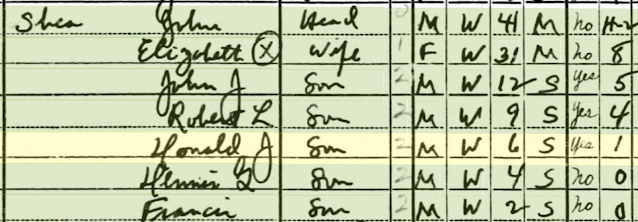
George Stimson posted a new video last week, The Murder of Donald "Shorty" Shea. Above is Donald Jerome Shea on the 1940 census with his family. First grade. Probably still smiled in school photos. The world hadn't had a ton of time to chew him up and spit him out yet. 

Good, bad, whatever. Every direction you turn in this milieu is filled with heartbreak. The bad guys are bad. The good guys are bad. Everyone is bad. 

Bruce Davis claims in a clip from a parole hearing that Tex Watson asked/told him to join in the killing of Shea. According to Davis, Bill Vance was present when Tex said this but decided not to take part in the murder. Instead, he stepped over to the canteen for the ice cream Charlie always talked about. 

You know the story. Shorty is driving. "Hey, pull over." Clem hits him with a wrench. BOOM! Tex and Clem drag dazed Shorty from the car. Charlie arrives in another car with a machete. 

Bruce "touched Shea's neck with the machete" but "couldn't do what he (Charlie) wanted me to do." Always willing to compromise, Bruce sliced Shea from his armpit to his collar bone. 

Charlie's version of events is Shorty was a big dude, a bully, and he was pushing Clem and someone else around. In a clip Stimson included from Manson's 1992 parole hearing, Stephen Kay (from his mother) has the board ask Charlie about his role in Shea's murder. Consistent in his refusal to to acknowledge California's conspiracy and aiding and abetting laws, in my opinion because of his mental illness, Charlie places himself at the scene and admits to rendering Shea immobile. 

"I'm gonna show you kids how to do this one time. And then don't invoke me to no violence anymore." 

"And uh I moved on Shorty and I put him in a situation where he couldn't move. And then I said, now can you understand what I'm saying to you? And he said yeah. And I stepped up on the highway and hitchhiked a ride and about three, four minutes later somebody stabbed him, and he was stabbed to death and he was killed." 

Inaudible from board. 

Charlie again. "Now, wait a minute. Anybody that knows anything about combat knows that when you go into a combat situation and you're on the line with something, that line can mean your life or your death. If you're on the line of life and death and you're gone and you're up on another line that other reality is a completely different reality -- it hasn't got anything to do with the other side of that line. I was on that side of the line and it was a violent situation and I did deal with it and I put it into where it was -- let me say this, there's only one way I can explain it...The Duke in the joint is a guy that can fight with his fists. The Cou..."

Board begins to interrupt. 

Manson stops them. "Wait a minute. Let me explain this. This will explain it. The Count is somebody who don't fight with his fists. He fights with his mind. He sets up on top of the count when the count is clear, he runs the radio. And the Duke does all the physical things like the first cop does his level, then the sergeant..."

"Mr. Manson..."

"I can't explain it to you, man. It don't have a yes or no."

"The question was did you kill Shorty Shea?"

"No no no. I didn't have anything..."

"You didn't personally kill Shorty Shea?"

"Not personally, no."

"Did you order him to be killed?" 

"No. It was a fight, man. It was uh..."

"Did you order him to be killed?"

"No."

-------------

I've been reviewing Charlie's medical reports the last several days. Did you know certain doctors were against moving Manson to a hospital facility for decades because they claimed Charlie was faking or exaggerating his schizophrenia? 

This was supposed to be Manson at his best and he acts bonkers. There's clearly a problem. His freedom was on the line but not really. Charlie, Kay, and the Board all knew this was a simple parading of a crazy man before a laughing public. 

Sometimes, I struggle to see how we've advanced as race beyond Hammurabi. At least we've stopped feeding delusional people to lions, tigers, and bears for sport. Our dark amusements come from mocking the insane via YouTube these days. 

Oh well. The gang did what they did and life comes with consequences even when you think you live in a different reality. Word to the wise. Don't kill someone when you're mentally ill. We'll poke sharpened sticks through the bars of your cell and delight in watching you yelp until the day you die. 

*Steps down from soapbox. 

Anyway. What'd ya think of the new Stimson? +ggw

Monday, December 27, 2021

Ivor Davis

Davis/Harrison 1964. Express Newspapers photo credit. 

Last week, I read Manson Exposed: A Reporter's 50 Year Journey into Madness and Murder by Ivor Davis. Nearly five hundred pages in length with sources, author notes, and etc, the Kindle version of Davis' book set me back five bucks. Davis also accompanied the Beatles on their first American tour and wrote about their adventures together. His links are at the bottom of this page.  

I'm feeling Joan Didion's passing a bit more than I would've imagined. I love Didion's version of the Sixties and search for her thoughts on this or that often while digging through the times. Slouching Toward Bethlehem should be on every Manson syllabus. Didion is cheap on Amazon if you're interested and likely free online if you spend a moment searching. Kindle readers are in luck. Didion's collected essays are available for the price of a small latte. 

Born after the 1960's, I rely on others to fill in the blanks for me on this stuff. Bo Emerson. Youtube. The Internet in general. I always say the comments sections here and elsewhere taught me as much as the posts. And I'm usually down to check out any Youtube discussion on the subject. This interview from Christmas week was an easy watch and the foundation of my post today. The quotes at the bottom of the post are from the interview and not the book. 

Ivor Davis first entered our study with Five to Die in 1970. The following is from Davis' Amazon page. 

At the time, I was the West Coast correspondent for one of Britain's largest circulating newspapers and my editors immediately assigned me to find out everything I could about this senseless massacre that was instant front page news around the world. What happened that balmy Summer's night became one of the most infamous chapters in the history of brutal murder in America. 

Eventually Charles Manson and his band of pitiful souls were arrested not only for the Tate murders but also for those of Los Angeles businessman Leno LaBianca, 44, and his 38-year-old wife Rosemary, whose bodies were found one day after the Beverly Hills killings in a house in Silver Lake some 13 miles from the first murder scene. 

A colleague, Jerry LeBlanc, and I wrote a fast book about the Manson murders called Five to Die. We had an early start on the case. As soon as the story broke that Manson, who had been taken into custody at the remote Barker Ranch in Death Valley on October 12, l969 more than two months after the murders, was a key suspect in the case, we began to dig into his background and that of his "family." Remarkably, as we progressed, we seemed to be several steps ahead of police investigators. 

Our book was rushed out in paperback in January 1970, seven months before the trial began. It was the very first book to catalogue the bizarre story of life with Charlie Manson. Several years later, long after I had covered the trials which resulted in first degree murder convictions for Manson and four of his acolytes, Charles "Tex" Watson, Susan Atkins, Leslie Van Houten and Patricia Krenwinkel, I met former Los Angeles Deputy District Attorney Aaron Stovitz. He had been head of the DA's trial division and the lead prosecutor in the case before he was removed by the District Attorney for contravening the Judge's gag order. 

Much to my astonishment Stovitz dropped a bombshell. "Your book was the blueprint for our prosecution," he said. "It was all there for us to follow." Five to Die had not been a best seller and it received scant attention at the time it was swiftly overtaken by new developments as the sensational trial unfolded.

You can pay a lot for Five to Die online. It's also out there gratis. Either way, Stovitz's bombshell got Davis moving on Manson Exposed...

To this crowd, Davis' book will resemble a long magazine piece. Some of that has to do with your inquisitive nature and lifetime spent peeking behind curtains. The remainder comes from the author's lack of desire to stray far from center these days as far as I can tell. Davis says he thought Helter Skelter was laughable but also recognized others like Lynette Fromme believed Manson was innocent and should be released. 

Davis also claims in his book that Fromme threatened him outside the courthouse and asked if knew how a sharp knife shoved down a throat felt or something along those lines. 

Yikes but also what are you doing tonight after court? 

Apologies. I made quick decisions on women for an embarrassing number of years and some of that is still inside me even though I'm old. Let's get back to it. 

Charlie was in court over dune buggy shenanigans in Independence, California, on December 3, 1969. Davis and Steve Dunleavy were there. This was Manson's first court date after Barker. Even though the charge was Receiving Stolen Property, guards brought him in with an extra security chain around his waist. I could not find any evidence Manson acted out in jail during his seven-ish week incarceration before the court date and even found contradictory evidence.

From cielodrive.com:  

"Manson is most definitely still the leader of the three other guys,” an officer said. “He gives them orders and they obey him. 

“We find Manson a model prisoner. He should be. He’s been in and out of jail since he was 15 years old. He seems to be very intelligent and well-read with a good vocabulary.”

The deputy continued, “Manson is cooperative and talkative to a point, but careful not to implicate himself in anything.”

This is the beginning of the jail stint where Charlie complains they won't let him shave or visit a jailhouse barber. Newspaper, tv, and radio hopped right on Manson's shaggy appearance and chains. According to Davis, the LA dicks took Manson to Los Angeles following his plea of Not Guilty.  

Remembering the trials in Los Angeles, Ivor goes in on Ronald Hughes' then recent UCLA Law School graduation, Hughes' garage office, and Daye Shinn's specialty in helping people apply for green cards. "Inept lawyers."  

On Manson: "He was quite eloquent. He made sense." Davis was present while Charlie testified for an hour with the jury removed. According to Davis, when asked by the bench if he'd repeat everything he'd just said but with the jury present, Manson refused to testify. The girls jumped to their feet and said the same about themselves. 

Expressing shock over the defense strategy, Davis said, "The lawyers all got up and said we have no evidence to present." The author/journalist believes Helter Skelter worked because the jury saw the girls following Charlie's orders in court. 

On Watkins: "Paul looked like a young Clark Gable. Smooth demeanor. Knew how to talk to people." 

On Charlie's ability to conquer female minds: "He had the gift of the gab. Within an hour, these girls had become a disciple." 

Will the book change your life? No. Did I have fun word searching and date hopping for $4.99 even if I forgot for a year and a half that I own the book? Yes. 

If you have thoughts on Ivor Davis and his role in the Manson study, please let me know below. 

-------------

In fairness and because I've read his post several times over the past few years, my blog colleague George Stimson had this to say about Davis and Five to Die. 

If I took a Stimsonesque or Schreckian position, or even without taking one, I notice the Ventura photo of Charlie has been filtered, redrawn, whatever'd, and Manson looks apelike on the front cover of the newest Davis book. 

But like an evil, hypnotizing ape amirite? Genius and idiot all rolled into one. +ggw

-------------

Stimson books.

Ivor Davis bio at The Authors Guild.

Ivor Davis books on Amazon.

Ivor Davis home. 

A bit on Ivor and The Beatles for Fab Four aficionados and fans. 

Sunday, November 14, 2021

George Stimson on The Paulcast - 13 Nov 2021


Goodbye Helter Skelter 
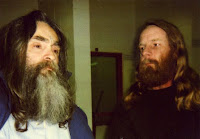
author and publisher George Stimson was interviewed on The Paulcast yesterday. George also podcasts about his book here. If you're new to all of this and haven't been advised to turn and run and never look back yet, or simply ignored the warnings, that's George on the right towering a full foot or more above (a 5'2) Charles Manson regardless of what your eyes tell you. 

(Forgive me while I adjust my snark levels down to the empathetic person setting. I put a few hours in at Manson High already this morning and lemme tell ya it's freakin exhausting sometimes always. Everybody has a name to drop and a time served number to share amirite? "Benny Banana Peels told me he was at Spahn's in '69 and watched daddy sex between Charlie and Sadie on a floating magical rattlesnakes cloud that continuously rained fresh Gerber speed atop a pile of freshly murdered headless corpses. Soon after, while everyone was writing their bloody nicknames in the BotD, Squeaky hipped BBP's to everything that happened since the day Charlie found her crying while clutching a dictionary. 

Btw, I met BBP's while we worked together at the Winter Haven Publix in 1983 but I'd already been into Manson since Johnny Swartz's car had back seats. I worked in the produce department and BBP's unloaded the delivery trucks until an assistant manager caught him stealing a plastic crate containing four gallons of chocolate milk one Tuesday morning. Haven't heard from old BBP's since that day in fact. Anyhow, here's what really happened at Cielo and Waverly, my dear Green...")

Actually, keep reaching out. I have little else to do like all big Lotto winners. Mostly, I try not to mention the lottery thing since I want the money for Smokey & The Bandit jet skis I sometimes wreck and need repaired/replaced and also endless buckets of Swedish Fish but people are always like oh my car died and I know a guy selling a never washed and muffler-less 1996 Grand Am I will race around Ohio in without using my turn signals, please homie Green. 

Shudder. Poor relatives are as exhausting as rich ones. Bootstraps thyselves already for crying out loud. 

What is not ideal when you reach out to me (however) is the big-timing. The power surge that courses through me every time I click the publish button makes me feel like Thanos watching a world disappear. No crappy BBP's stories will ever outshine Infinity Crystals. Take it down a notch. 
-------------


The NeRVe OF THAT SAM SHEppard! Sometimes GOD is THE CHICKen head and SOMETIMES god is THE SNake head. I'm just a stupid hiLLbilly getting an ICE cream FROM the CANteen so I don't KNOW.

 The rise of muslims. 
-------------

Truthfully, I'm honored to be in such deep thinking company but I also take the wife-murdering doctor's point. You further have my word I will neither make nor consume another drop of coffee before this post ends. Staying linear is clearly a problem for me right now. 

Retro Interlude:

-------------

Scene report ended. Everyone is welcome. Let's get to the main event! 

STIMSON ON THE PAULCAST...
Just so nice.
No downslope of life from the dark side of a mentally unwell mountain. 
No screaming. 
No yelling. 
No addictions taking center stage. 
No I hate women presented twelve different ways. 

Instead, Paul and Dani ask questions a viewer expects not crazy people to ask at acceptable speaking levels, using inside voices, and George answers in kind. What's also insane is the hosts don't even talk over Stimson when he attempts to answer. Avant Guard for sure.  

The third member of the Paulcast, Mr. Beckham, was not present for this interview. I envy his travel lifestyle and therefore shall never mention him again in any of my posts. 

Just kidding. The three of them fit together like peanut butter and jelly (and other jelly I suppose) and the mix works for me. I hang out on YT a lot and they've become a go-to show. Especially on Sundays when I'm lounging in Snowman pajamas after typing up my love letters to you. 

When I was young, Sunday was always the best night to go out. The amateurs all returned home because they had to be up at 6 am for work Monday. Evenings were rightfully returned to the misfits and outcasts. And oh how we loved to meet up after two nights sealed away in apartments and houses or somewhere unluckily working shit jobs during civilian party hours.  

At some point, I stopped going out and my world became screens. I waited decades for something not pointless to show up Sunday evenings while I tried and tried on various urls. Maybe we bumped into one another somewhere along the way. Summer in Siam was my username and Pearse was my profile pic. 

The 27% of me that is Irish wants me to shout Up the Ra when I remember that stuff. The other percents killed those dreamers in the name of the Crown. As a result, the six remain apart from the whole to this day. 

OKAY THE WRAP UP...
This second interview between the PC crew and George Stimson imo is their best episode to date. I hoped more Stimson interviews were in the works. 

I've always heard that Stimson and Good have a framed map hanging above their couch with a big red X marking the entrance to the desert hole but sadly I think they took it down for the podcast. That's my only complaint. The rest of the interview is great, a bit on the short side for me, and I'd be thrilled to see these folks get together again in the future. Next time, naturally, the questions should come from a more diverse group such as only me until my queries are answered to my complete satisfaction. After that, do the rest. 

Personally, I lean more toward more Hickam's Dictum than Occam's Razor on all of this why business. I was reading comments last week and found a post where the Col. said something along the lines of the older I get, the more I think a bunch of drugged out and panicked kids took the train off the tracks and crazy things happened. If faced with death for not picking a theory, I'd draw a triangle with those two points (Stimson and the Col.), add Schreck as the third, and place myself firmly in the middle. 

All the while saying O'Neill is the best typer with Fromme right behind him. 

Read Stimson. I'll (zero judgement) buy you a copy with my MFB spending account if you can't swing it. 

Watch Paulcast. They're live nearly every night. 

And if you feel like talking, please share your thoughts on Stimson's Love of Brother theory in the comments below. 
+ggw

-------------

Monday, October 9, 2017

In A Summer Swelter


Simon Davis' new book In A Summer Swelter: The Charles Manson Murders is out.

Because I knew that in Swelter Simon goes into some discussion of my own book, Goodbye Helter Skelter (he was courteous enough to contact me before his book was published to ask some clarifying questions about some of the positions I took in my book before he critiqued them), I was eager to see his finished product and see what he thought about GHS.

But unfortunately, even though I thought I had responded thoroughly to Davis' questions, he has still managed to seriously mangle many of the points I was trying to make. So herewith I will offer a rebuttal to his misinterpretations and (thus) misrepresentations of my viewpoint. (And although I disagree with very much else I can see that's in his book -- which, in all honesty, I have not had time to read through cover to cover -- I'm only going to take the time here to respond to the things he wrote about me and my book.) 

I first appear on page 59 of Swelter where Davis says that I support the drug burn theory of Gary Hinman's murder. But the drug burn argument as described by Davis in no way matches any drug burn argument that I have ever put forth. Davis has Manson ordering Bobby Beausoleil to kill Gary Hinman because Hinman wouldn't give him money. I argue that Beausoleil killed Hinman to keep him from going to the police over his Manson-slashed ear after he had given Manson his word that he would not. It's  a different set of circumstances leading to a totally different set of dynamics. Davis misrepresents my point of view and then goes on to criticize it. But I don't have to defend a position that I do not hold.  (I could go on and address most other aspects of Davis' interpretation of the drug burn theory as he understands it, but my fundamental criticism is that he doesn't understand it the way I understand it, and he should not assign positions to me that aren't mine.)


On page 97 Davis  brings up Voytek Frykowski's  51 stabs wounds and concludes that they were not indicative of a speed-induced "preservation"-style mechanical assault, as I assert in my book. Davis says that the attack on Frykowski was "static," and that his attempting to flee his killers rendered him too much of a moving target to fit the profile of a preservation attack wherein a stationary person would be stabbed multiple times in a mechanical fashion. 

Davis implies that I compared the stabbing of Frykowski to stabbing the arm of a chair, but that is not true. I simply encouraged the reader to "stab" the arm of their chair 51 times to get an idea of just how many times that was (because readers often don't really think about the numbers they read). In any case, Davis says that the stabbing of Voytek Frykowski doesn't fit the circumstances usually associated with preservation because the fatal attack on him did not all occur in one location. Well, as much as I don't like to get into clinical descriptions of how people are murdered (so as not to be considered as peddling gratuitous violence) I would say that it seems that Frykowski was initially attacked by stabbing by Susan Atkins in the living room of the Cielo Drive house. Apparently the accepted number of stab wounds inflicted by Atkins is eight. After those wounds were inflicted Frykowski made a break for the front door, at which point Watson (according to his book) caught up with him and stabbed him several more times and then beat him over the head with the butt of the .22 caliber Buntline revolver thirteen times (another repetitive mechanical motion). Frykowski was still going out the door, so Watson shot him twice in the back. Upon being shot Frykowski collapsed again and then crawled a few feet further onto the front lawn where Watson caught up with him again and stabbed him an additional (allowing for subtracting eight wounds from Atkins and maybe five wounds from himself) 38 times. So maybe the first part of the overall attack on Frykowski was somewhat static, but by the time he had collapsed on the lawn he was a pretty stationary and unresisting target. He was very likely nearly as inanimate as a chair arm when Watson delivered the final 38 blows. And I could say the same for Abigail Folger, who lay a few feet away. Chased out of the house by Patricia Krenwinkel, the coffee heiress was brought to the ground and into a supine and surrendered position ("I'm already dead!") before Watson took over from Krenwinkel and finished her off. How many of Folger's  28 stab wounds did Charles Watson inflict? We don't know. but the evidence indicates that she was likely submissive and relatively still when he did it. 

Pages 192 and 194 -- Here Davis tries to poke holes in the copycat motive by claiming that if the killers wanted the crimes linked they would have used the exact same writing at all three crime scenes. He writes, "Even allowing for possibly being stoned and usually pretty vacant, one would expect them to get the copying part of the copycat exercise right."  

I really love it when grounded, smart, educated people look at the actions of people from a druggie netherworld and try to apply their own carefully considered and linear thought processes to people who aren't just "possibly being stoned and usually pretty vacant"  but rather have been snorting amphetamines for a couple of weeks and are beyond not thinking clearly. I can't imagine that writers like Davis have ever done any quantity of amphetamines (or whatever you want to call the speed spectrum of drugs) or even spent any amount of time around (i.e., lived with) people who have. I mean, how can you wonder why they're not acting rationally? You can't even compare your minds. It's like wondering why a lion and a deer don't act alike. These were young people whose minds were affected by drug use and intentionally alternative thinking and who had little real criminal experience (at least with nothing approaching mass murder). In many ways they had no idea what they were doing. The Tate-LaBianca murders were not well thought out crimes by any means. Tex Watson was not Professor Moriarity, and it's not reasonable to expect him to be or wonder why he wasn't. 

On page 194 Davis points out that I don't mention the cross-examination of the copycat witnesses during the penalty phase of the trial where copycat was "exposed as a lie."  The main reason I didn't include mention of the cross examinations in my book was not because of any intention to mislead by omission as Davis implies (or to omit because of my not understanding the significance of cross-examination, as Davis also implies) but because most of Goodbye Helter Skelter was written in 1998 and 1999 before the Internet existed as we know it today and before TLB trial transcripts were as available as they are today. But since reading Swelter I obtained the transcripts of the penalty phase cross-examinations and read them. Sandra Good testified regarding copycat, but she was not cross-examined. Nancy Pitman also testified in favor of copycat, but in her cross-examination she was only asked about previous inconsistent statements that had nothing to do with it. Susan Atkins and Leslie Van Houten also testified in favor of copycat, but Bugliosi's cross didn't exactly expose them or tear their testimony to shreds. Rather, he merely confronted them with prior inconsistent statements and the insistence that they were telling the truth before but not now. (Atkins prior statements were from her December 1969 Grand Jury testimony and in letters to former jail mates Virginia Graham and Ronnie Howard. Atkins claimed that most of the information she testified to before the Grand Jury had in fact been planted in her mind by D.A. Bugliosi the previous day during a conference Atkins had with Bugliosi and her lawyer Richard Cabellero. She also said that the letters to Graham and Howard were simply exaggerations intended to impress them. Van Houten was confronted with her infamous interview with her lawyer Marvin Part. She said she got all of the information for that interview from Susan's Grand Jury testimony and had made the tapes in cooperation with Part, who wanted tapes of crazy testimony in order to submit an insanity plea.)

Page 223 -- Davis says that Manson claims through me that when he told the girls to "get a knife and a change of clothing and go with Tex and do whatever he says to do," he thought that they would be going on a garbage run. 

Davis counters by writing, "Knowing what we know about life and conditions at the Ranch, it seems like a joke that anyone thought that they needed "nice" clothes for the supermarket or that sanitation was such a pressing issue." This gratuitous insulting of is born of the myth that "the Manson Family" was a bunch of dirty hippies, a myth promulgated by law enforcement officers who would arrest Manson and the people around him during pre-dawn raids, round them up in the dirt, destroy all of the property in the buildings they were living in, and then take pictures of arrestees and the premises and say, "Look! They were dirty, and this is how they lived!" It's a mindset worthy of George Wallace in 1968 and a malfeasance clearly worthy of LAPD in 1969.

The thought that mostly middle-class (or even upper middle-class) young women would descend into living in filth defies common sense. And anyone who sees pictures of any "Family members" that are not sourced from the police can see that they have an obvious tendency towards cleanliness and style. Davis' use of this idea as a counter to Manson's claim is only evidence of a sneering condescension towards certain people who live, whether by choice or because of circumstances, a lifestyle other than his own. 

Manson passing out the glasses is a close call, but it should be noted that it's only a call at all because he said he did it. It fits, however, with the notion of sowing confusion at the scene of any crime that the car's occupants might have ended up committing that night in their efforts to get their brother out of jail (efforts that could have included robbery or burglary or any of a number of other illegal actions designed to do something to free Bobby Beausoleil). But even though the glasses ended up at Cielo Drive they are not evidence of any intent on the part of Manson that murders be committed there. 

Page 224 -- Davis here has totally misunderstood my point about "means, motive, and opportunity" as being investigative indicators as to whether a suspect could possibly be guilty of a crime. And the key word here is possibly. Where Davis ever got the idea that I would think a person who had the means, motive, and opportunity commit a crime would have to be guilty of that crime is beyond me. Really, this is such a fundamental investigative tool that I can't believe I would  actually have to explain to everybody about Billy being the only person in the room when the cookie went missing and how that makes it look like Billy very likely took the cookie since he loves cookies, he has hands and a mouth, and he was the only person in the room. But wait! It turns out that Sally was also in the room! And the dog! So, any one of them could have done it -- not did it; could have done it. We still don't know which one of them did it. We only know that they all could have done it. Is that clear? This is a fundamental evaluation that law enforcement officials make to either clear or set up for further investigation people who are suspected of committing a crime -- not crime on the legal end; crime on the police end. It has nothing to do with the court or any kind of legal requirement, and for Davis to imply that I think it does is really kind of insulting.

Page 225 -- Davis criticizes me for saying that the manner of the murders was not unusual, citing the numerous stab wounds of Voytek Frykowski and writing "It was small by the  standards of  international war atrocities like Katyn or My Lai, But for civilian killing in the suburbs is was incredible."  But I didn't have to go far to easily find information to back my claim, for just in Helter Skelter itself are mentioned the so-called "Scientology murders" of James Sharp and Doreen Gaul (both of whom received over 50 stab wounds on or about November 21, 1969),  Marina Habe (whose body was found on Mulholland Drive on New Years Day 1969 with over 150 stab wounds), and Jane Doe # 59 (who was found near the Habe dump site on Mulholland Drive on November 16, 1969 with 157 stab wounds). And those were just murders that occurred in the L.A. area at about the same time as the Tate-LaBianca murders. Extrapolate beyond those dates and locations and I'm sure you will find many more. So while I'm not trying to minimize the vicious violence perpetrated on the victims in all of these crimes I will stand by my assertion that unfortunately the massive violence committed against the Cielo and Waverly Drive victims was not that unusual. 

In the next paragraph Davis goes in just a few sentences from saying"most" of the participants in the crimes supported Helter Skelter as the motive to  that "all" of the participants supported Helter Skelter as the motive in an interesting sleight of hand that most readers probably won't catch. But Davis fails to mention that all of the participants in the crime have gone back and forth on motive and any person can pick any version that suits their preferred scenario, so perhaps it is time to call it a draw on that point altogether. 

As for all the evidence at the trial about Helter Skelter, I think I addressed most of those in my replies to David's post here. (If you don't have time to read them, the witnesses testified to the existence of Helter Skelter, which no one, not Manson, any of his co-defendants, and certainly not me, has ever denied was a reality in the minds of the people at Spahn's Ranch. But only a few of them said they heard Manson saying he would personally jumpstart the war by committing mass murder.) Here my "astounding" failure to acknowledge these supposedly "incontrovertible matters" forces Davis to step outside the bounds of temperate language, "unable, in the interests of fairness and justice to all parties, to shirk from making harsh calls on these types of statements." 

He chastises me for presenting my book as a "realistic examination of the murders," but Davis' "incontrovertible matters" are not so incontrovertible that participants on the MF Blog don't spend pages and pages of text disputing them. Davis is a TLB flat-earther, unable to see beyond the horizon of his own experience and beliefs. My book is a realistic examination of the murders. Simon's two books, on the other hand, are dogmatic rehashes of the worst kind of prosecutorial propaganda, lies and distortions, and condescending legal snobbery in such excess that it would be impossible for me to address them all here or probably anywhere. And yet "in the interest of fairness and justice to all parties" Davis has to call me out?  Please. Yes, I was cooperative with Davis when he told me he would be critiquing Goodbye Helter Skelter in his book. I only wish he had cooperated back and checked with me to make sure we were clear on everything before he completely misrepresented my points of view in his finished work. 

Page 226 -- Here again is a fundamental misunderstanding based on Davis ass-uming to know what I think. So let me explain the premise of my informal investigation into Manson's innocence or guilt. Yes, I assumed that Manson was innocent because I believe in the fundamental American (United States) concept that a person is innocent until proven guilty and I don't automatically believe everything I hear about people (even people who might not share my experience or values) from the police, the D.A.'s office, the "news" media, or in books. Then I looked for evidence of a plausible version of the circumstances surrounding the various crimes that Manson was accused or convicted of and wondered if amongst all of the different versions of those crimes there were scenarios that didn't point to Manson's guilt. Yes I was looking for them, and yes I found them. If "this is terrifically convenient for Manson, because such an analysis can only have one result -- innocence" then I guess I must have proved my point that alternative scenarios surrounding the various crimes could mean that Manson was innocent. That's the only point I was trying to make with my amateur legal analysis -- that there is a possibility that Manson was not guilty. (It's a possibility that I accept, by the way.)

And in the next paragraph we confront yet more examples of Davis' apparent  inability to comprehend a point I am trying to get across. He says "as I understand it" that I think if a jury is offered a more rational motive than the one offered by the prosecution they have to accept it and therefore acquit. Well, Davis doesn't "understand it" and  that is not what I'm saying. What I'm saying is that a jury has to accept a more reasonable version of an event or concept (including motive) than an unreasonable version. And if by accepting the reasonable version of motive the jury rejects the unreasonable version presented by the prosecution that is the only evidence of the necessary-for-conviction criminal intent then the evidence of criminal intent vanishes and the jury must acquit.

Further on he says, "The ultimate inference of guilt depends on proof of the essential elements of intent and killing. If there are rational alternatives to the prosecutions versions of intent and killing, then the jury must acquit the defendant. Motive is different. Presentation of a more rational motive does not mandate an acquittal." (underlines in original)

And here we get to the crux of my legal argument regarding Charles Manson. In order to obtain a murder conviction the state has the obligation to prove intent -- not motive, but intent. But in the case of Charles Manson, the offered motive, Helter Skelter, is the only evidence of that required intent. For if Helter Skelter is not the motive, why would Manson desire that these specific murders be carried out? If not for want of the personal gain of becoming ruler of a post-apocalyptic world (don't wince -- it's not my fantasy) why would he order those killings? There is a more rational and less sensationalistic explanation than Helter Skelter for the crimes of the summer of 1969. That's the explanation I give in my book. Copycat is a more rational motive than Helter Skelter. But copycat isn't a motive (indication of intent) for Charles Manson. And that is why it is unacceptable to the "Manson is guilty" crowd. If there was any evidence that Manson had ordered the Tate-LaBianca murders as copycat crimes to free Bobby Beausoleil I'm sure the prosecution would have been happy to run with it as a motive. But there wasn't, so they had to go with the fantasy concoction of Helter Skelter instead.

On 227 -- Davis expresses  "concern" about my apparent lack of legal bona fides. That is certainly a legitimate thing to wonder about, and frankly it's about time that somebody asked.  In the original manuscript for my book I included several paragraphs outlining my self-alleged legal experience but I deleted them from the final draft. What I said, however, was that while it's true that I do not have a law degree I do come from a family full of lawyers. My grandfather was a lawyer, my mother was a lawyer (in 1943!), my uncle was a lawyer, my brother is a lawyer, and I can think of at least three cousins who are or were lawyers. So certainly I'm not lacking in lawyerly genes. (I did briefly consider trying to get a pre-law degree in college but when they took us into the auditorium and informed us that pre-law students were in for some serious school work I begged off.) My family lawyers (both sides) were all very intelligent, educated, and bright, but they were also mere mortals. So I'm not one of these people who is impressed with someone simply because they are an attorney (or even a -- gasp! -- prosecuting attorney!), and I don't automatically give their opinion or mind any more validity than I do to my own. Sorry. 

During Sandy's three-year pro per visitation lawsuit against the California Department of Corrections I attended paralegal courses at the nearby community college (College of the Sequoias in Visalia, California). Not only did I graduate first in my class, but the professor told me that I was wasting my time there and should be in law school instead. Now I realize that that still doesn't make me a lawyer, but it doesn't make me an idiot either. Plus, one needn't be genius to know how to read a statute or even understand a court case ruling. Statutes are mostly written clearly enough that a couple of read throughs should enable any person of reasonable intelligence to conclude whether they fit their circumstances or not. It's usually not too complicated. In fact, lay people are expected to be able to understand the law. (Remember, ignorance of the law is no excuse!)

Plenty of books have been written about trials by non-lawyers who question the outcomes of those trials, and my book is nothing unusual. Is Davis saying that one has to be a lawyer in order to have an opinion on whether something is legal? What about anything else? Can a person who has not experienced a certain period of history write about it? Can a person who has not been in a war have opinions and write about it? Can non-athletes write about sports?

Am I claiming I could function as an attorney in a courtroom in a criminal trial? No. I'd get creamed for sure. But I do know my way around a law library and I think I can draw reasonable amateur conclusions based on what I read in law books. So until someone punctures my "no motive/no intent" theory I'll continue with whatever fantasist legal theorizing that suits my pleasure or purpose.

As for Manson severing his trial from that of his co-defendants, I thought made it clear that that was only my own opinion and nothing that Manson ever brought up on his own. I'm saying what he hypothetically could have done. In my opinion. 

Pages 228 - 229 -- Davis lays out  his whole premise of Manson as a diabolical dirtbag who was willing to engineer the executions of his co-defendants in order to save his own skin. He writes, "Stimson's claim of Manson sticking by his friends is incorrect. There is no doubt that the girls were 100% loyal to Manson, but it was a one-way street. Charlie was the epitome of disloyalty to the extent of positively engineering the plan for the girls to falsely testify to his innocence, so they would face execution and he would survive….

"Ultimately there were no debts owed to Charlie, nor were an favours granted by Charlie. The crimes cannot be explained by codes of brotherhood or loyalty within the Manson Family. Charlie's "IOU's" were fictions created by Charlie and propagated by Stimson, in attempt to mitigate the crimes which were in fact calculated and cold-blooded executions, almost all based upon the Helter Skelter prophecy. The code of honour was, and still is, a deception perpetrated by Manson. He used it to get his acolytes to be willing to kill or be killed (will you die for me?"). But there was no way he was ever going to kill, or be killed, for them."

But everything that Davis says isn't there is actually all there. Because Davis is overlooking the fact that on July 1, 1969 Charles Manson shot Bernard Crowe, fatally he thought, to keep Crowe from coming up to Spahn's Ranch seeking revenge for Charles Watson's marijuana burn. In other words, it's not a question of whether Manson would have killed for his friends -- in their minds he already had. And that level of love that he showed them, they showed him right back. And they all -- Manson included -- believed in that love enough that they were willing to go to the gas chamber together. 

Page 237 -- I'm really glad that Davis picked up on the ultimate non-conclusion in my Shea chapter! That was the hardest one for me to write, because I have never had or expressed any doubt that Shea was murdered or that at least Charles Manson, Bruce Davis, and Steve Grogan were involved with his death. So I really didn't know what to think about it. That's why I didn't come to any conclusions there. I felt it was best just to let Manson give his version of the murder ("mumbo jumbo" as Davis put it, but actually perfectly clear) and let the readers decide for themselves what they think.

Regarding whether there was some doubt that Shea had been murdered, I didn't make up that idea out of thin air. In The Family (1989 updated edition, pages 458-459) Ed Sanders wrote, "In addition to the thrill of having a case finally closed, the officers were very glad to find Mr. Shea for a very practical reason: There had always been the faint dread of Shorty Shea showing up. Attorney Paul Fitzgerald: 'They really did want to find this body. And they were subject to to a lot of kidding and a lot of some good natured and not so good natured ribbing about the fact that they railroaded these Manson people to jail, that this was all fictitious, it was all bullshit; that this Shorty Shea, the flake, would turn up one of these days to the embarrassment of all concerned.'"

Bruce Davis and Steve Grogan's confessions to the crime were made years later at parole hearings after they had been convicted,  Barbara Hoyt is a totally unreliable and discredited witness, and Ruby Pearl's nighttime observations regarding Shea and "the Manson boys" are only important in that they set up the fantasy testimony of Barbara Hoyt. and are evidence only of a possible encounter that was likely nine or ten hours before Shea was actually killed (albeit by those same individuals!).

It is also telling that the jurors in the Shea trials were not sure enough of the certainty of Shea's murder that they applied the death penalty to any of the defendants, especially in a supposed decapitation-dismemberment murder wherein one of the defendants (Manson) had already been convicted and sentenced to death for seven of the most atrocious homicides in U.S. criminal history. 

"No body" homicides are always difficult to prosecute because there is no corpse to prove that the alleged decedent is actually dead. Doubt is always a factor in such cases. But it's not accurate for Davis to say that I'm a doubter when it comes to whether Shea was murdered or that Charles Manson didn't have some involvement with that murder, because I never doubted that. How could I? Manson and I talked about it. 

That's about it. I don't have a problem with anything on page 242.


So, to sum up, I have always held that students of any murder case should get their hands on all of the case material they can, even including books. When it comes to Tate-LaBianca, In A Summer Swelter is no exception. You should definitely get it. It is a classic of its kind, a collection of stereotyped and hackneyed caricatures woven together in a fantasy fairy tale of misrepresentations and lies that only a complete naif could believe. Nevertheless it contains much food for thought, and I think everybody should read it. But just remember that although some of the food for thought you consume helps you to grow, a lot of it just ends up as shit.


Monday, April 25, 2016

Retrospective - Manson Family Web Site: History Rewritten by Losers

"History is written by the victors."
- Walter Benjamin

This old article, found in the NY Times archive addresses the original Access Manson (ATWA) site published by George Stimson and Sandra Good. I first read the article in 1997, but not since then until recently. I remember the media feeding frenzy that took place, including on those trashy pre-prime TV tabloids like Inside Edition. Among other things they made it sound like Manson had his own website.

Hindsight being 20/20 and now knowing George personally I have a more objective perspective on the media and their portrayal of this issue (the original Access Manson [ATWA] site). Kay's comments in the below article were responded to on Access Manson here.

It would be interesting to hear feedback from readers after reading this article and reading the archived website's rebuttal. With the authors' permission we have hosted that previously defunct website for almost a year, for those curious to (re)visit it.


Manson Family Web Site:
History Rewritten by Losers

By REBECCA FAIRLEY RANEY

On the Internet, Charles Manson is not just an innocent man. He's four inches taller. So says Access Manson, a Web site created by followers of the man who led one of the nation's most bizarre killing sprees.

The webmaster, George Stimson, is an environmentalist and friend of the Manson Family member Sandra Good. He developed an interest in the case as a crime buff and describes his occupation as writer -- "It says I'm a writer on my 1040." He found the state's case hard to believe and visits Manson in prison regularly.

Credit: White Devil Incorporated
Charles Manson
"The district attorney's book, Helter Skelter -- I thought, this doesn't even sound real," Stimson said. In response to the Web site, "I've had people say, 'For 20 years I thought I was crazy, and now I see the site and know I'm not.' They thought Manson had been railroaded."

Like most webmasters, Stimson asserts that 90 percent of the e-mail he has received is positive.  But he had to disable e-mail access to the site at least once; last spring someone started bombing it at the rate of 3,000 e-mail messages per hour.

For the Manson Family, the Internet provides the first opportunity to publish their point of view, uncut and unfiltered, in a place where history is no longer written by the victors. It's fair to say the Family has been disappointed by their treatment in the press.

"Before, if you wanted to get your point of view across, you had to deal with the mainstream media," Stimson said. "They'll humor you to get you to cooperate. I thought it was pointless to deal with the mainstream media. You're just burying yourself deeper in the lies. We're not interested in having someone balance you and talk to the prosecutor."

That prosecutor, Stephen Kay, says he has been alarmed by what he sees as the rewriting of history on the Internet.

These days, he works as head deputy of the Los Angeles County District Attorney's Long Beach branch. He has an oceanfront office with a view of the Queen Mary, and the walls are hung with plaques thanking him for winning cases in some of California's most grisly murders and banners congratulating him for being named this year's Prosecutor of the Year by the Los Angeles County Bar Association. He received the accolade after successfully prosecuting the county's latest high-profile murder case, the death of a model, Linda Sobek.

Even after 25 years of endless press inquiries about the Manson case, Kay takes all the time he needs to make sure the record is straight. His patience comes from a basic philosophy: He doesn't want these people ever to get out of prison.

So he rattled off the story again, the details and events spilling out strangely, in dry lawyerly tones: the bikers, the Beach Boys, the drugs, the movie stars, the record business, the race war the Family wanted to start by framing black people for murdering white people.

Credit: Access Manson
Sandy Good in November, 1996
Kay took more than an hour recently to examine Access Manson, the first time he had seen the site. He started groaning from the opening lines, which say that Manson does not participate in the production of the Web site.

"That's absolutely untrue," Kay said, "because Sandy Good would not do anything without his approval. Just like I thought he put Lynette Fromme (another Family member, known as "Squeaky") up to trying to assassinate President Ford. These girls do not do anything unless he tells them to."

Kay took a hard line against the Web site. He disputed the notion that if Manson could have published a site in 1967, he might not have felt the need to lead followers to murder to get his point across. Quite the contrary, Kay said: If Manson had had a Web site 30 years ago, "he would have had a bigger Family."

"I think it's sad there is this Web page, because it obviously is sucking in unsuspecting young people who have no idea what a bad person Manson is," Kay said. "Manson is not a cult hero. He's a despicable excuse for a human being."

The Manson persona has attracted moderate attention on the Web from outside the Family. There's an interview with Stimson featured in Revolting, a section on Manson on White Devil Records' Web site and a fan page by a Canadian Web publisher.

It's not much, but from the prosecutor's perspective any lionizing of the man who serves as America's monster-in-a-cage is cause for concern.

Even so, Kay feels no need to counter Access Manson with a Web site of his own. He figures he's made his point.

"Hey," Kay said. "He's convicted."


Saturday, December 19, 2015

LA Beat Article: "Stoner Van Houten - Guardian of the Ranch"

Stoner Van Houten: Guardian of the Ranch
Posted on December 18, 2015 by Mike Ritchie

"I want to show the positive side of Spahn Ranch." Says ranch caretaker and history buff Stoner Van Houten.

Local Manson expert Stoner Van Houten dedicates most of his time to preserving the history and upkeep of Spahn Ranch for anyone who wants to come and see the sights for themselves. He's made numerous YouTube videos chronicling his ranch visits. He's also happy to take people on sight-seeing hikes, bestowing his knowledge with little known facts, anecdotes and his own experiences. He'll take you to places, other tours won't or don't know about, surprising even the most educated on Manson history.

He portrays a genuine love of the area, taking pride in care-taking the land. He's cleaned up graffiti in the Manson cave several times. He's even caught a supernatural occurrence on film during one of his older ranch videos with Manson expert, collector and mentor Michael Channels. He's also a history and geology teacher of sorts showing how the land has changed from time, weather and erosion.

Van Houten, George Stimson (Goodbye Helter Skelter), Barker Ranch
 He admits that many people think what he does is morbid and ‘glorifies' that period. He's been to the ranch thousands of times and besides two unexplained events he's never experienced any bad vibes, events, happenings or hauntings. In fact he finds the area peaceful and inspirational. After all "it is a state park" he says and has seen many people in his visits including walkers, hikers and people just coming to see the place on their own.

He encourages people to seek legit information, look up case files and find out for themselves. Not rely on sensationalistic books and movies. He has his opinions as everyone does. However he admits he's not the first to do what he does and was introduced to the Manson saga by Channels. There are things he probably doesn't know about the cases and history that others within his group and network do. He knows that even though the Helter Skelter motive is widely accepted by many at face value, the real history and motives were much different and he's trying to get that information to the public. He encourages anyone interested to pick up George Stimson's Goodbye Helter Skelter focusing on Tex Watson's involvement.

Van Houten has made numerous on location videos at the ranch along with many Manson related locations in LA and the Haight, Ashbury district in San Francisco where Manson began recruiting women after his prison release and The Russian Embassy. He's also been to the former house of Sandra Good and Lynette Fromme in Sacramento. He's filmed in front of the Hall of Justice at Temple and Broadway where the girls held their trial long vigil, and the tree where Fromme gained infamy for trying to shoot Gerald Ford. He's been to Ballarat near Death Valley and Barker Ranch where Manson and the family were arrested. More recently he received a personally signed note with photos from (Blue) Sandra Good, thanking him for his work at the ranch.

He's led the way to the Zodiac car, the baby caves and recently found the remote area where the outlaw shacks once were. A while back with help from Channels, they uncovered the truck frame laying hillside under the main area, believed to be the truck with the Spahn Ranch sign in vintages photos, later debunked by Pete Porteous.

In January, he did an on location video interview with Porteous, who as a 10-year-old boy was mentored by ranch hand Donald "Shorty" Shea, later murdered by the family. Porteous gave invaluable first-hand knowledge of life on the ranch and personal insight of the happenings and power structure between the ranch hands, bikers and Manson. He also gave insight into experiencing the ranch through the excited, magical eyes of a child, being at the ranch for the first time in over 40 years. His training with Shea turned into a 30 year career as a stuntman.

He talked about riding to the ranch on his minibike wanting to become a stuntman. Ironically, the first person he met on his first trip there was Manson. He and Shea hit it off and Porteous learned the safe way to run a chainsaw, ride a horse and do a saddle fall under his mentorship. Shea christened him "The Kid." He talked about the group barbeques, the live music and the Wild West shows. He described the ranch as a very happy place. It's a shame that no historical landmarks documenting what was there have been placed due to a short period of time at the end.

Porteous said contrary to widespread belief, Manson did not control the ranch. The ranch was a business and Charlie was not the dominating force as media has portrayed. The family was kind of a separate group in a different area occupying the same large space. As far as Manson being a dark powerful figure, he had influence over the family but not the rest of the ranch occupants. Porteous said, besides the girls, the cowboys and ranch hands didn't pay much attention to the family.

Van Houten with Mansonblog.com, Michael Channels, Pete Porteous.

Though most of the ranch's history has been forgotten and eclipsed under the shadow of the family, their stay only lasted roughly two years. The ranch burned down in September 1970 during the Tate/LaBianca trial. The ranch itself was owned by silent film star William S. Hart and purchased by George Spahn in 1948, giving it its name. In its heyday many westerns, movies and TV shows were filmed there including Duel in the Sun, The Creeping Terror, Bonanza, The Lone Ranger and Zorro along with various cigarette commercials. By the time Manson and Co. got there Spahn was 80 and the ranch was in severe disrepair with horse rentals being the main income source.

Among lesser known local spots, Van Houten has taken people to the Munch Box where Manson ate hot dogs waiting for the girls to get off work. One of the actual ‘garbage run' grocery store back lot dumpsters dived in by the girls. The Candy Cat bar where Susan Atkins (Sadie) danced. Gypy's Waterfall, (a name bestowed years later) a ‘natured' off the path spot and hard to find unless you know exactly where to look. Seeing it up close you can imagine what the lay of the land would have looked like without modern developments as Chatsworth was considered ‘out in the woods' back then. The waterfall usually doesn't run due to the draught but you will see the exact spot where the family stood and bathed under the water from Robert Hendrickson's Inside the Manson Gang DVD.

Van Houten recently made a video standing by the 118 Freeway and De Soto talking about it. He's paid homage at the gravesites of Steven Parent and Sharon Tate. He's also visited the location where the Spiral Staircase (an early Manson haunt) once stood and Dennis Wilson's house. There are other ranch sites to be seen, depending on your love of hiking such as the Zodiac car, the Manson (stoner) caves, and the dune buggy graveyard down the road

Once at the ranch, you'll see the tree riddled with bullet holes that the family and the Straight Satans used as target practice. He'll point out a vintage tree that can be seen in some old shots of the ranch days. You will see the pile of rock, concrete and debris that was dumped over the side by bulldozers after the fire that destroyed the ranch and left to be forgotten.

The first thing seen walking up to the main area is the dirt mound where Spahn's house once stood. He will point out some vintage rocks, a piece of the concrete foundation from where a fuel tank once sat and one of the last remaining manmade remnants of the ranch days, a telephone pole burned in the fire.

Many people from around the world enjoy his videos, hoping to someday walk the trails. He has announced through Facebook that he will be going on to the next chapter of life and moving north soon. Before he leaves he's doing a "31 Days of Spahn Tour," filming a daily video and taking viewer location requests. He will try and return from time to time and hopes people will follow his example and keep the place nice for those who come to see history.

Van Houten's videos can be found on YouTube under spahn ranch worker, Michael Channels' videos under MichaelsBackporch.


Monday, September 14, 2015

Not In My Back Yard!


It is with great sadness that we are reporting our newest blogger and good friend George Stimson and his partner Sandy Good have lost their home to California's latest wildfire.  The Valley Fire in Lake County has been fast moving and ferocious, they are by no means alone in their loss but when it's someone you know it somehow makes it more personal.

The Valley Fire started early Saturday afternoon while George and Sandy were out of town.  It began about two miles from their home, as the crow flies.  In less than 24 hours the fire grew to 40,000 acres.  It is now at 61,000 acres and counting.  California's drought conditions coupled with last week's 100+ degree temperatures in the area no doubt contributed to the aggressiveness of the fire. Over 10,000 people have been displaced and more than 400 homes lost.  Entire small communities were wiped out. 

George and Sandy do have some place to stay.  They are not in a shelter or living in their car and for that they are grateful.  They may be in a state of shock now but they will bounce back.  We wish them good things for the future.

-----------------------------------------------

George,

We've been emailing back and forth for the last few days trying to keep each other informed and follow what's going on. You're safe and in the end that's what matters. Glad you were able to save the rabbits. Take care friend, and let us know if you need anything.

Matt & Julie


Friday, July 10, 2015

Bill Nelson Taunts Sandra Good In The Barker Ranch Log Book


Hello my friends!

Sandra Good will screw up once too often and qualify for California's 3 Strikes Law. Then it will be good-bye "Blue" stay alone George.
Myers Ranch is burned out -- Where were you George & Sandra Good?
Spahn Ranch burned the last day of Barbara Hoyt's trial testimony, now Myers!

Bill Nelson
Author
www.mansonmurders.com
P. O. Box 1585
Costa Mesa, CA 92628

OK Blue -- Guts enough to keep this statement in this book?

6-30-99 Bill Nelson


Thursday, May 28, 2015

A Reader's Rebuttal to George Stimson's Chapter on "Manson and the Law"

In George Stimson's recent book Goodbye Helter Skelter, Stimson includes a chapter entitled "Manson and the Law". This rebuttal has been supplied by a reader. While the reader  disagrees with most of what George says, and believes that his logic and reasoning is flawed, he does credit him for taking a stance and attempting to support his position in a non-confrontational manner.
------------------------------

George Stimson makes several erroneous conclusions. First , and foremost, he takes Charles Manson's word as gospel, that only Manson was capable of telling the truth. What he ignores, is the nature of Manson's various comments, testimony, and storytelling which often conflict with other self-made comments, testimony, and storytelling. Stimson ignores that Manson will often avoid answering direct questions, give ridiculous answers, or simply obfuscates the truth does little to establish Manson's credibility.

Stimson avoids Helter Skelter as even a possible motive that may have been believed by some of the Family. Instead, he relies on stories of possible drug-dealing by others, though no credible evidence has ever been presented. Yet, he wants to ready to accept his version as fact, without allowing for the possibility of anything else. Simply saying that HS was not the motive does not make it viable.

Stimson ignores the jury's decision by making comments such as Manson could very conceivably be found not guilty” ignoring that he could have, and was conceivably found guilty. He states that since there was no testimony that stated Manson gave orders to kill the LaBianca's, Manson could not be guilty. That HS was not a motive, that Manson merely entered a home in which two murders were subsequently committed, and as such, guilt does not apply to Manson. Specious claims such as not knowing the home was occupied, or that a door might not of been locked does not absolve someone of responsibility of guilt, even through a felony murder application. Stimson is good at looking at a penal code, and attempting to apply it, but he fails when he focuses only on a specific code, and that the subsequent or supporting penal codes that apply.  Nor does he acknowledge volumes of case law which support the states' lawful, and accurate prosecution for these crimes.  It is like arguing with a child in which the child hopes that if it keeps giving the same answer, eventually you will give up, and the child will think that they are correct.

In re the argument against conspiracy, we only have Manson's word that he said he would not get involved. There are no corroborative statements given by others.

To state that he was denied a fair and speedy trial is foolish. The hearing dates fell within the prescribed timeline. Because a trial did not start tomorrow, or Monday does not amount to a delay of justice. Filing other charges to hold a defendant is not illegal, no unethical. Manson made various nonsensical claims to the court that brought his ability to defend himself into question. Manson used jailhouse knowledge and tactics to delay his trial, and he was called on those tactics. The fact that he did not like the outcome does not equate to a denial of constitutional rights.

The claims regarding the jury instructions ignore the fact that instructions are submitted to the presiding judge, and both attorneys then agree on the language within each instruction. What Stimson fails to recognize is that the jurors believed that the elements of the crime fit the instructions, and rightfully applied the facts to the law, and came to its conclusion. Stimson simply cannot understand how this could be because it does not fly with his narrative.

Probably the biggest error Stimson makes is his analysis of Bittaker v Enomoto. While he cites Faretta v California, it is obvious he does not understand the entirety of case law or its application. Every case cited is always dependent upon other case law no single case lives in a vacuum. As such, there are nuances, or specifics of other cases that can limit, or minimize the effective of a case. Had Stimson researched more, and had been honest with himself he would not have relied on Bittaker.

What is interesting is if Stimson had researched another California case, Davis v Morris, he would have seen why reliance on the Bittaker decision was not wise. In Davis, which by the way was the very Bruce Davis, the appellant attempted the same claim of constitutional violation by denying the right to pro se representation. In that case, the court held:
.2d 1056 in Petitioner contends that he was unconstitutionally denied the right of self-representation guaranteed him by the United States Constitution and expressly held absolute in Faretta v. California, 422 U.S. 806, 95 S. Ct. 2525, 45 L. Ed. 2d 562 (1975).

Petitioner was tried in 1972 and so the Court must find Faretta (supra) retroactive before petitioner can receive the benefits of that Supreme Court opinion. The California Supreme Court in People v. McDaniel, 16 Cal.3d 156, 545 P.2d 843, 127 Cal.Rptr. 467 (1976) eschewed the retroactivity of Faretta. This Court finds no reason to disagree with the searching analysis made by Chief Justice Wright writing for a unanimous court in McDaniel.

Petitioner argues that although Faretta may not be held to be retroactive that he is entitled to relief nonetheless because the Ninth Circuit had determined that the right of self-representation was a constitutional right. He relies on Bittaker v. Enomoto, 587 F.2d 400 (9th Cir. 1978) and Walker v. Loggins, 608 F.2d 731 (9th Cir. 1979) to support his contentions. In this regard he reads too much into those decisions. Relying on Arnold v. United States, 414 F.2d 1056 (9th Cir. 1969) and Bayless v. United States, 381 F.2d 67 (9th Cir. 1967) the Court in Bittaker and Loggins (supra) held that a state defendant had a constitutional right to self-representation before the Supreme Court's decision in Faretta. In its reliance on Arnold and Bayless (supra) the Ninth Circuit in Bittaker and Loggins does not clearly define this right as "absolute" and as such California courts were free to make determinations of competing rights of fair trial not addressed to "convenience or efficiency of the trial." Bittaker (supra) at p. 403, but rather to a fundamental concern that defendants undertaking to represent themselves appreciate the seriousness of the charges and present a meaningful defense in cases involving liberty and possibly even death. This case presents the question classically for the trial judge found only superficial understanding of substantial procedures that would seriously compromise petitioner's defense in a capital case. Fair trial rights can have no less importance in the administration of justice than can the right of self-representation now raised to constitutional dimensions of absolutism in Faretta. *fn1"
The trial judge was right. Petitioner's constitutional rights have not been violated by the intervention of Faretta.

The petition is denied.

While Stimson can be recognized as an ardent friend of Manson, his ability to make accurate legal conclusions or analysis is far less. His arguments, while entertaining, would not even get him a passing score on an LSAT.