Showing posts with label Ventura County. Show all posts

Monday, December 13, 2021

Mary Brunner and PTSD


Was PTSD a factor in Mary Brunner's bizarre courtroom behavior? 

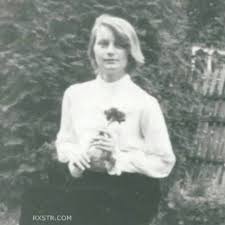
Empathy comes a bit easier when I see people as kids. I always search for everyone's youngest photograph online before doing anything else. Wondering wtf happened in Cali and staring at the photo is the next step. For many of these folks, I never move beyond the wondering stage. Everything is just so crazy. And some of the explanations seem crazier. 

The last month or so, I've been working on a Mary Brunner timeline. Mary's performances across courtrooms from trial to retrial to trial etc shocked me to say the least. I wondered if I could follow her personal arc through literature and official documents and arrive at some place that made sense. 

Additionally, my cousin and I made family trees for Mary's Brunner (paternal) and Baker (maternal) families. Mary's DNA profile is consistent with the white European population of the Upper Midwest in the decades surrounding the start of the twentieth century. Wonder Bread before Wonder Bread. I found a black and white photo of Mary's dad doing a handstand. Total research career highlight. The champ is here. 

Anyway. Mary intro via Fromme. 


Babes in the woods. Summer 1967. Burton Katz said Mary was "well on her way to a Master's Degree" but I can't find a confirming source. Mary is twenty-three and the right age to be a grad student but many accounts have her moving to California in 1965 after graduating from Wisconsin. Graduate students aren't typically library assistants either. That is more of an undergrad thing. 

Our traditional introduction to Mary is at the Berkeley gate where Charlie is strumming a guitar and Mary's dog Muffin runs up yip yip blah blah blah, "Woman! I'm gonna kick your dog! 

"You better not!" 

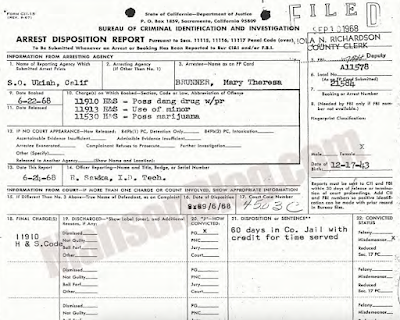
I prefer Emmons for this scene but to each their own. Let's set the dune buggy time machine for mid-April, 1968. Law Enforcement  arrives late night in Ventura County at the scene of a bus wedged into a deep drainage ditch. Beside the bus that is assumed stolen but not yet verified, a group of fifteen-ish hippies are asleep naked on the ground. Among them is Mary Brunner and baby Pooh Bear. 

Charlie stole the bus in San Francisco nine days earlier on April 12th. Kind of romantic in a Hollywood movie way but not when you get locked up for it in real life. And then of course since the gang is the gang, they crashed their stolen bus into a ditch. Somehow, no one was injured. A celebratory bonfire and weird group unclothing followed. 

I pictured the first policeman on the scene, a Vietnam vet or something like that, shining his light on their pale bodies and thinking everyone was dead. The scene likely resembled something straight out of Roswell. If you're unaware of what happens next, Charlie is arrested for the stolen bus and having two driver's licenses. Other nude people also receive false identification charges. Yeller and Brenda are charged with disorderly conduct. I imagined them fighting the police naked in slow motion while Japanese girl group surf rock blasts. 

Mary gets busted for her underdressed and shivering baby sleeping beside her. No charges are filed against Charlie over Pooh Bear even though the infant is half his responsibility. Oh how times have changed. 

Knuckleheads pops into my head a lot when I think about these kids and Charlie in their early days. He was older but at a similar maturity level. Charlie lost his mom for several years at the age of five over the The Great Heinz Bottle Stickup of '39, fell into the care of Glenna, toothless Bill, Uncle Jess Kaboom, and finally the clink at age thirteen. 

Ohio River payback cake from an Easy Bake Oven is the order of the day but not yet. Here is the first time tiny Gen X'er Pooh Bear, later named head of the Manson Family by Clem Grogan, is taken into custody. While a social worker will later tell Mendocino investigators this arrest was little more than police harassment of hippies, Mary is now on paper. She receives a suspended sentence, two years probation, collects her baby, and promises to return to Wisconsin where she belongs. 

Which is slippie code for Mendocino. Here are a few highlights contributed by an anonymous friend. 
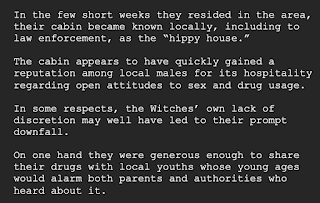
(I want to feed that cute baby goat and raise it at my house!)

You remember little Allen's snake legs and all that plus how the other boys tore the place up. Everyone arrested or questioned at the scene except Mary gives a fake name. Mary rented the cabin using her real name and knows she's doomed. The gang admits to the LSD and some pot seeds and help the police find the drugs in either the woods behind the cabin or a shed in the woods behind the cabin. Mary takes the fall. 

Pooh Bear is sheltered and cared for in the home of Dr. Roger Smith upon Charlie's request. My opinions are whispers in the wind of course but I think Smith got a raw deal in O'Neill. 

More germane to this discussion is what was Mary's state of mind at this time? My quest was how does a person go from taking their flute out to California with them to their library job to sitting naked with Kenneth Como or even the machine gun photos. How did she get there? When did the changes occur? 

All of this is from cielodrive.com. Thank you, Mr. Bo. 
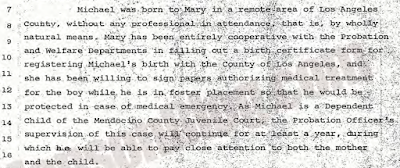

Mary could be playing the game because she wants her baby returned but she's not displaying any red flags. 


Professional references are provided including Dr. Smith. 


The final paperwork.


This far into it, do you think Mary is cracking under the pressure or displaying any overt revolutionary tendencies? She seems like she's holding up okay to me. The gang is still getting arrested for stupid things and maybe nothing feels real but Mary is playing a game with inescapable consequences. 

George and Elsie Brunner surely begged Mary with genuine fear in their voices to return home. But Mary loved her baby's father like many girls love their baby's father and ignored her parents. Everyone always talks about cult this and mind-controlled that and while they might be right, I just don't know for sure. What if it was a simple perfect storm type of situation and the train came off the tracks in the worst ways? 

Viewing Mary as a girl who wanted to live with her friends and child's father more than returning to her parents and their I-told-you-so's resonates with me. And if neither option was ideal, Mary was stuck somewhat like the stolen bus in the ditch with nowhere else to go and that's a different issue. 

Which brings us to Gary's. 
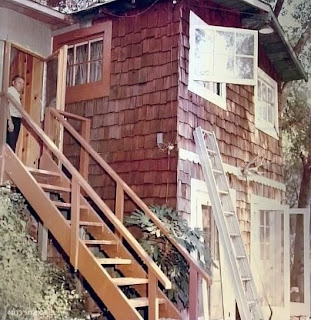

That photo triggers me every time and I wasn't there. How many times do you think Bobby viewed it online over the years and wished he'd never taken that ride? I wonder if Mary ever looked into all of this? I bet she'd do anything to go back in time and keep everyone from walking up those stairs. 

Bobby, do you read these? 

It's impossible to gloss over what happened at Gary's or write an apologetic piece. Gary's life became a nightmare until he ceased to exist over the course of a gruesome weekend in July 1969. Bobby lured Mary into going to Gary's because they were friends and Mary would put Gary at ease. Mary to her great detriment is unable to keep from admitting to things she's done wrong. Because of that, we know she told Guenther and Whitely that Bobby informed her of the robbery about to take place at Gary's during the drive there. 

Her first version of events places the amount they sought at Gary's at three grand btw. 

Mary said she thought nothing of Bobby's comments because she knew Gary had no money. Evil Bruce McGregor Davis dropped them off and scurried away into the darkness like a rat. Sadie gave the signal once the coast was clear. Mary stood inside like a foolish girl from Wisconsin until there was no chance to leave. 

Guenther and Whitely also found out from Mary that Bobby shared with her his decision to kill Gary. Put yourself in Mary's shoes. What could she have done? Die with Gary? She must've been terrified. I'd never recover from that hellish scene. 

We all know Gary's ending. Mary and Sadie took turns smothering his death rattle after Bobby told them to do it. There's no escaping what they did. Awful isn't a strong enough word. 

Over the next week and some as July works into August, we don't hear much from Mary until what Dreath dubbed The Sears Caper. 
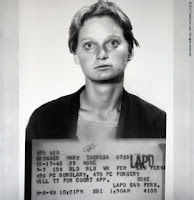

Mary looks scared. She's thinking her goose is cooked. And has a thousand yard stare. Here's a scholarly article on the relationship between witnesses to violent crimes and PTSD. Google is filled with many others. Mary fits the profile every time.  

Eventually, Kitty from the sidewalk tries to nuke Mary in court by saying she witnessed Mary driving Gary's vehicle after his death but she is too late. Guenther and Whitely have already talked Mary into cutting a deal. Texas high hurdles state record holder (4A) Tex Watson later writes that Mary would have been at Cielo if she wasn't in jail. 

When I'd see that Tex quote in the past I always thought yeah right whatever weirdo man. Anymore, I'm not so sure. If the story about Tex retrieving Pooh Bear from Dr. Smith's house in Melcher's car is true, maybe Tex and Mary were close. Whatever the case, Mary and Sandy were unavailable the night of Cielo after bungling a simple retail hustle. And I'm happy about it. 

Somewhere between Gary's murder and the Twinkie truck accident, Mary's brain changes. Clear evidence exists. She becomes agitated and emotional every time we see her in the public record afterward. The first Wisconsin interview. Her affidavit. Court. 

Mary should be forever grateful to Judge Keene. I wonder if she ever watched him on Divorce Court? Boring program but on right after school in my day. Countless peanut butter sandwiches were consumed while actors in their forties who looked old to me pretended to divorce one another. 

In the coming year, I'd like begin a discussion on Mary's court appearances after the Hinman murder. At one point, Mary tries to die for or alongside Bobby before Judge Keene steps in and saves her life. She is safe for awhile but more astonishing blunders are coming. 

Something is wrong with Mary. No one gives a shit because she suffocated Gary and has a baby with the boogeyman but by Christmas of 1969 the time bomb is activated and ticking. An appointment on the wrong side of these bullet holes awaits Mary at the semi-conclusion of her antics out west. +ggw

Monday, September 18, 2017

Five To Puke

One of my recent meanderings took me to the Santa Barbara, California area, during which time Deb presciently hipped me to the fact that Ivor Davis would be making an appearance (that very night!) at the Museum of Ventura County in nearby Ventura.


Ivor Davis, as students of TLB know, was the co-author (along with Jerry LeBlanc) of Five To Die, one of the earlier books written about the Tate-LaBianca murders. Like Lawrence Schiller's The Killing of Sharon Tate, Die was actually published before the murder trial of Charles Manson and his three co-defendants even started. Thus, it serves as one of the earliest proponents of many aspects of the case that are accepted as fact even today. It's all there: the drug use, the orgies, the rituals, the mind control, the failed music career, the "Family," the Bible, the Beatles, Helter Skelter -- it's all really there, in a book published seven months before the beginning of the trial of Manson and others.

Above, Ivor Davis
Below, the original edition of Five To Die

Five to Die is the result of Davis being assigned the task of reporting on the murders by his bosses at The London Daily Express. The Express was (and is) a sensationalist tabloid that was once characterized by Britain's Prince Philip as "a bloody awful newspaper. It is full of lies, scandal and imagination. It is a vicious paper." Lies, scandals, and imagination -- that description fits Five to Die to a T. 

Die is based in large part on interviews conducted at Spahn's Ranch with Paul Watkins, Brooks Poston, and Juan Flynn, a trio of malcontented "Mansonites" who early on recognized the value of peddling sensational stories to the bloodthirsty media. How riddled with errors and untruths is Five to Die? I hadn't read this book in decades, so I skimmed it again in preparation for this post. Time and space prohibit a point by point refutation of all of the errors in this book here, but suffice it to say that aside from some interesting historical photos it is full of myths, sensational fabrications, misrepresentations, exaggerations, innuendoes, and untruths. 


Nevertheless, Die had a major impact on the entire TLB phenomenon, and Davis is very proud of that impact. Although Bugliosi dismissed the book in Helter Skelter as "a quickie paperback" (see Helter Skelter, Bantam paperback edition, 1975 page 399) Die in fact was instrumental in establishing much of the mythology that surrounds the Manson case to this day. "Our book," Davis later wrote, "was rushed out in paperback in January 1970, seven months before the trial began. It was the very first book to catalogue the bizarre story of life with Charlie Manson."

An example of Five to Die fear-mongering

But Five to Die was more than just one of the earliest sensational accounts of the Tate-LaBianca murders and "the Family," for according to Davis the book was actually responsible for the state of California's victory in the murder cases against Charles Manson et al. "Several years [after the murder trials] I ran into former Los Angeles Deputy District Attorney Aaron Stovitz," Davis later wrote. "Much to my astonishment, Stovitz dropped a bombshell, a complement to me, but a bombshell nonetheless. 'Your book was the blueprint for the prosecution of Charles Manson and his Family,' he said. 'It was all there for us to follow.'"

In 2009 Die was rereleased with a forward and afterword sandwiching a reprint of the original book. The new edition featured a summary of the police investigation leading up to the trial and a recap of the trial itself. (As an aside, I was surprised to find a reference to me on page 28, a reference which I consider inaccurate, if it's at all true.)

The updated 2009 edition of Five to Die. (Is it a coincidence that its 
publishing company was located in Ventura, California?)

Ventura was an apt venue for Davis' talk since Ventura County is where the famous mug shot of Charles Manson that was taken on April 22, 1968 after he was arrested on suspicion of grand theft auto when the bus he was driving got stuck in a ditch on a secluded road in the eastern section of the county. As much as anything that mug shot encapsulates the popular perception of Manson as homicidal madman. "Just look at that picture!" Davis exclaimed to the shuddering crowd. (Other people just see a guy making a face for the camera.)

Ventura County's claim to fame: Homicidal maniac or goof? 

The audience begins to assemble in the events hall at the
Museum of Ventura County before the program. 

The program at Ventura was pretty much a regurgitation of the 2009 edition of the book. Davis recounted the police investigation into the murders, taking particular delight in pointing out the ineptness of LAPD (e.g. a television news team found the killers' clothes, not the police, and Steve Weiss' father had to remind the department that his son had found the murder gun and that they already had it in their possession). This incompetence was greeted with laughter and snorts of disgust from the audience until a retired FBI agent stood up and reminded everybody that the police do, after all, make mistakes. Davis also laid into Vincent Bugliosi, mentioning both the DA's huge ego and his indictment for perjury. In fact, no one escaped Davis' critical eye (of course, everybody in "the Family" from Manson on down was treated with snarky disdain, and even the cooperative Paul Watkins was described as just a "wannabe musician") except for Aaron Stovitz, who was likely spared Davis' wrath because he credited the writer for solving the mystery of the Tate-LaBianca murders.

In addition to Davis, two other book authors appeared on the dais and lectured the audience about Manson, "the Family," and the murders. They were the father and daughter writing team of Mark J. and Aryn Z. Philips. The Philipses cowrote Trials of the Century, a compendium of the most sensational murder trials of the 20th Century, one from each decade (Harry Thaw, Mary Phagan/Leo Frank, Roscoe "Fatty" Arbuckle; Richard Hauptmann, Wayne Lonergan, Sam Sheppard, Richard Speck, CM, Jean Harris, and O.J. Simpson).


Mark and Aryn Phillips and Ivor Davis on stage

The Philipses' presentation was, to be polite, really, really bad, and quick reading of the source notes for their book chapter on the Manson trial reveals why: most of their information was gleaned from Helter Skelter. (Another oft-quoted source was the book The Trial of Charles Manson, by Bradley Steffens and Craig L. Staples. I was unfamiliar with this book so I got a copy. This slim -- 112 pages including notes and index -- volume is part of the Lucent Books series of "quality nonfiction for libraries and classrooms." Lucent has a series of books called "The Famous Trials Series" which includes other famous criminal and legal cases such as the Dred Scott Decision, the impeachment of Bill Clinton, the Nuremberg Trials, the Rosenberg espionage case, the trial of Adolf Eichmann, the Pentagon Papers, Roe v. Wade, and the Salem Witch Trials. Sources used for Trial include most of the better known TLB books and periodicals. The main recommended Internet source was www.mansonmurders.com, an URL that will surely invoke a nostalgic cringe in longtime students of the case.)


The audience of about two hundred, which consisted of mostly well-to-do older white folks, took it all in. Even the few longhairs in attendance seemed to go for everything. I quickly gave up on any attempt to reply to the onslaught of lies (although I did loudly say "He is not." after the moderator exclaimed, "First of all, Charles Manson is only 5 foot 2 inches tall!") as I was quickly overwhelmed by the avalanche of misinformation coming from the stage. The moderator had requested that all questions and comments be held off until the presentation was over. By then I knew that the audience was a lost and dangerous cause. (If I had asked a question it would have been "If you thought everything you heard from Watkins, Poston, and Flynn was unbelievable, why did you believe it?")

But after the event I was compelled approach the lawyer and his daughter with my evaluation of their presentation. After identifying myself and laying out my background (the lawyer noticeably started when I told him that I had visited Manson in prison almost two hundred times) I told them that their whole spiel was "so wrong" and misinformed that they had no business pontificating about the case. The daughter was visibly taken aback. Her father defended the book as being intentionally superficial re the specific cases, but I said that if that was the case they shouldn't pass off their superficial knowledge of the Manson case as if they were any kind of authority. We exchanged books and they seemed very glad when I left. (Before the event I introduced myself to Ivor Davis as a decades-long student of the case and told him that I was glad to meet one of the authors of one of the first books about the case as I had written a book about the case myself. He wrote down the title of my book and said he'd check it out.)

In addition to the Ivor Davis event, Manson and "the Family" were featured in an ongoing museum gallery exhibit dedicated to "Really Awful People" who included Nero, Attilla the Hun, Vlad Tepes, Gilles de Rais, Torquemada, Ivan the Terrible, Jack the Ripper, Joseph Stalin, Adolf Hitler, and…. Vladimir Putin? (Okay, I know that in progressive Ventura they probably believe that Vladimir Putin helped Donald Trump win the election for president of the United States, but does that really warrant his being presented alongside two figures who were responsible for the murders of tens of millions of human beings?)

Really awful people Joseph Stalin, Adolf Hitler, and Vladimir Putin 

The Manson exhibit consisted of a large black panel decorated with a sparse description of the case, some photos of Manson, Spahn's Ranch, and Sharon Tate, and a blurb tying Davis and Five to Die in with the whole thing.


Five To Die is an interesting period piece, but it is also a sensational example of the worst of British tabloid "news." Its "unbelievable story" is literally just that. But what's even more unbelievable is that after almost fifty years the public still eagerly laps this garbage up.