Showing posts with label Books. Show all posts

Wednesday, September 28, 2022

The Manson Family in Fiction: Some Short Takes, Part One

   When it comes to all things Manson related, the truth is often stranger than fiction. While there have been quite a few attempts at film dramas, there aren't a lot of novels and stories that deal with Manson and company. Kind of surprising considering the people and events involved. 

  There are two types of fictional treatments to look at: stories directly about the people and events, albeit in a fictional context, and stories based on the people and events. The latter will feature characters that may be easily recognizable as being based on Charlie, Squeaky, Sadie, etc., but the stories do not directly mention the crimes or the people involved directly by name, and the events will often be similar to what actually transpired. 

    The books that are directly about the Manson Family will obviously be held to a different standard than ones that are loosely based on the events. Readability will also be factored in. No point in taking the time to read it, if it isn't ultimately entertaining. Oddly, a majority of these books are directed towards the young adult (YA) market, and they often have a feminist slant. For the first post, I thought I would tackle two that deal directly with the Manson Family.

    First up is the short story 'Charlie's Girls' by Laura Elizabeth Woollett, which appears in the short story collection The Love of a Bad Man (2016). The book itself is a collection of short stories from the point of view of the wives, lovers, etc of various bad men throughout history. 


  'Charlie's Girls' starts right smack in the middle of the murders on Cielo. We are not sure who is actually narrating the story, other than one of the 'girls.' At first it seems like it could be Katie or Sadie, until they are in the car (being driven by 'Darling') leaving the residence, and the narrator mentions what Tex, Sadie, Katie, and 'Darling' are doing. The addition of an unnamed fifth person at Cielo totally destroys the credibility. This one is not worth it, particularly since it is only 10 pages. Check it out at the library if you are really interested.   

   Next up is the novel American Girls (2016) by Alison Umminger, which goes by the much better title My Favorite Manson Girl in the UK. this one is marketed toward the YA market, and it definitely does have a feminist slant. The story revolves around a young woman, Anna, who is in high school and moves to Hollywood to spend time with her older half-sister. The older half-sister is an actress and is working in B Movies. Her director puts Anna to work researching the Manson Girls for a project. The book is mostly about Anna interacting with the various people in her life, but a decent amount of it is her musings on the Manson Girls. These observations make the book worth reading. Some key passages:

- when discussing Mary and Katie: 'it's not like either of those girls had crazy written all over them- more like ugly with a big fat side of alone.' 

- referencing Sadie: 'Atkins was like a lot of the other Manson girls- their lives were kind of screwed up, but definitely not screwed up enough to go out and start killing people.'

Sharon Tate- 'I kept going back to that part of the murder- a bunch of okay looking girls killing the really beautiful one. Not because it was creepy, but because it wasn't so terribly hard to imagine after all.' When someone says a friend of hers reminds her of a Manson girl, she muses that she 'was more like Sharon Tate. Pretty, but pretty boring.'


Barbara Hoyt- 'looked every bit as crazy as the crazy girls.'

One of the best lines is when she refers to the Family as 'Manson's battalion of zombie bimbos.' That would make a great title for a B-Movie. 

  Anna's overall take on the Manson girls is that they should never have been the Manson girls. She doesn't excuse their behavior, but she does feel that they weren't monsters, and that the right turn of events could have turned even her into a Manson girl. They were the children of America at the time.

 There are only a couple of errors as far as the history of the events- the author has six people killing the LaBiancas, forks in both of their stomachs, and the killers wearing the LaBiancas clothes

American Girls is worth a read, mostly for Anna's commentary on the girls and their place in society. Her observations are sharp and funny and thought provoking. The point of view of a teenage girl works well, since she is very close in age to the Manson girls, and can relate to them on some of the same levels. 

    Next up: The Girls and Cold: a novelized biography of Susan Atkins. 


Monday, December 27, 2021

Ivor Davis

Davis/Harrison 1964. Express Newspapers photo credit. 

Last week, I read Manson Exposed: A Reporter's 50 Year Journey into Madness and Murder by Ivor Davis. Nearly five hundred pages in length with sources, author notes, and etc, the Kindle version of Davis' book set me back five bucks. Davis also accompanied the Beatles on their first American tour and wrote about their adventures together. His links are at the bottom of this page.  

I'm feeling Joan Didion's passing a bit more than I would've imagined. I love Didion's version of the Sixties and search for her thoughts on this or that often while digging through the times. Slouching Toward Bethlehem should be on every Manson syllabus. Didion is cheap on Amazon if you're interested and likely free online if you spend a moment searching. Kindle readers are in luck. Didion's collected essays are available for the price of a small latte. 

Born after the 1960's, I rely on others to fill in the blanks for me on this stuff. Bo Emerson. Youtube. The Internet in general. I always say the comments sections here and elsewhere taught me as much as the posts. And I'm usually down to check out any Youtube discussion on the subject. This interview from Christmas week was an easy watch and the foundation of my post today. The quotes at the bottom of the post are from the interview and not the book. 

Ivor Davis first entered our study with Five to Die in 1970. The following is from Davis' Amazon page. 

At the time, I was the West Coast correspondent for one of Britain's largest circulating newspapers and my editors immediately assigned me to find out everything I could about this senseless massacre that was instant front page news around the world. What happened that balmy Summer's night became one of the most infamous chapters in the history of brutal murder in America. 

Eventually Charles Manson and his band of pitiful souls were arrested not only for the Tate murders but also for those of Los Angeles businessman Leno LaBianca, 44, and his 38-year-old wife Rosemary, whose bodies were found one day after the Beverly Hills killings in a house in Silver Lake some 13 miles from the first murder scene. 

A colleague, Jerry LeBlanc, and I wrote a fast book about the Manson murders called Five to Die. We had an early start on the case. As soon as the story broke that Manson, who had been taken into custody at the remote Barker Ranch in Death Valley on October 12, l969 more than two months after the murders, was a key suspect in the case, we began to dig into his background and that of his "family." Remarkably, as we progressed, we seemed to be several steps ahead of police investigators. 

Our book was rushed out in paperback in January 1970, seven months before the trial began. It was the very first book to catalogue the bizarre story of life with Charlie Manson. Several years later, long after I had covered the trials which resulted in first degree murder convictions for Manson and four of his acolytes, Charles "Tex" Watson, Susan Atkins, Leslie Van Houten and Patricia Krenwinkel, I met former Los Angeles Deputy District Attorney Aaron Stovitz. He had been head of the DA's trial division and the lead prosecutor in the case before he was removed by the District Attorney for contravening the Judge's gag order. 

Much to my astonishment Stovitz dropped a bombshell. "Your book was the blueprint for our prosecution," he said. "It was all there for us to follow." Five to Die had not been a best seller and it received scant attention at the time it was swiftly overtaken by new developments as the sensational trial unfolded.

You can pay a lot for Five to Die online. It's also out there gratis. Either way, Stovitz's bombshell got Davis moving on Manson Exposed...

To this crowd, Davis' book will resemble a long magazine piece. Some of that has to do with your inquisitive nature and lifetime spent peeking behind curtains. The remainder comes from the author's lack of desire to stray far from center these days as far as I can tell. Davis says he thought Helter Skelter was laughable but also recognized others like Lynette Fromme believed Manson was innocent and should be released. 

Davis also claims in his book that Fromme threatened him outside the courthouse and asked if knew how a sharp knife shoved down a throat felt or something along those lines. 

Yikes but also what are you doing tonight after court? 

Apologies. I made quick decisions on women for an embarrassing number of years and some of that is still inside me even though I'm old. Let's get back to it. 

Charlie was in court over dune buggy shenanigans in Independence, California, on December 3, 1969. Davis and Steve Dunleavy were there. This was Manson's first court date after Barker. Even though the charge was Receiving Stolen Property, guards brought him in with an extra security chain around his waist. I could not find any evidence Manson acted out in jail during his seven-ish week incarceration before the court date and even found contradictory evidence.

From cielodrive.com:  

"Manson is most definitely still the leader of the three other guys,” an officer said. “He gives them orders and they obey him. 

“We find Manson a model prisoner. He should be. He’s been in and out of jail since he was 15 years old. He seems to be very intelligent and well-read with a good vocabulary.”

The deputy continued, “Manson is cooperative and talkative to a point, but careful not to implicate himself in anything.”

This is the beginning of the jail stint where Charlie complains they won't let him shave or visit a jailhouse barber. Newspaper, tv, and radio hopped right on Manson's shaggy appearance and chains. According to Davis, the LA dicks took Manson to Los Angeles following his plea of Not Guilty.  

Remembering the trials in Los Angeles, Ivor goes in on Ronald Hughes' then recent UCLA Law School graduation, Hughes' garage office, and Daye Shinn's specialty in helping people apply for green cards. "Inept lawyers."  

On Manson: "He was quite eloquent. He made sense." Davis was present while Charlie testified for an hour with the jury removed. According to Davis, when asked by the bench if he'd repeat everything he'd just said but with the jury present, Manson refused to testify. The girls jumped to their feet and said the same about themselves. 

Expressing shock over the defense strategy, Davis said, "The lawyers all got up and said we have no evidence to present." The author/journalist believes Helter Skelter worked because the jury saw the girls following Charlie's orders in court. 

On Watkins: "Paul looked like a young Clark Gable. Smooth demeanor. Knew how to talk to people." 

On Charlie's ability to conquer female minds: "He had the gift of the gab. Within an hour, these girls had become a disciple." 

Will the book change your life? No. Did I have fun word searching and date hopping for $4.99 even if I forgot for a year and a half that I own the book? Yes. 

If you have thoughts on Ivor Davis and his role in the Manson study, please let me know below. 

-------------

In fairness and because I've read his post several times over the past few years, my blog colleague George Stimson had this to say about Davis and Five to Die. 

If I took a Stimsonesque or Schreckian position, or even without taking one, I notice the Ventura photo of Charlie has been filtered, redrawn, whatever'd, and Manson looks apelike on the front cover of the newest Davis book. 

But like an evil, hypnotizing ape amirite? Genius and idiot all rolled into one. +ggw

-------------

Stimson books.

Ivor Davis bio at The Authors Guild.

Ivor Davis books on Amazon.

Ivor Davis home. 

A bit on Ivor and The Beatles for Fab Four aficionados and fans. 

Monday, November 29, 2021

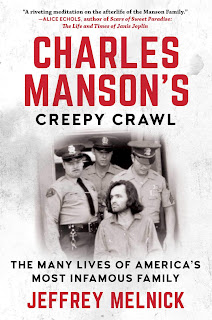
Book Review - Jeffrey Melnick


Dr. Melnick's book, on Kindle, was a Black Friday purchase for me. I paid $13.99 and received a $1.40 credit Amazon will screw me out of by not automatically applying it to the next Kindle purchase I make after I forget there's a code to retrieve or something similarly exhausting. 

In euros and rupees that's one million and seventeen million, respectively. Pounds I haven't worked out yet. I enjoyed Charles Manson's Creepy Crawl over a long weekend of endless Thanksgiving leftovers and football. 

Many Manson books start the same way. "Charles Manson was born on November 11th or 12th, 1934. His mother Kathleen was a dancehall girl specializing in the Lindy. She sold her private parts and little boy for draft beers and pickles from a barrel behind the bar. A head rolled down a set stairs in front of Kathleen once at the prison, blinked three or four times and said, 'Helter Skelter.'" 

Melnick graciously spares us that tiresome routine. It's been done to death and a lot of it is malarkey. I made genealogy trees for both Charlie and Mary's families and my findings support none of that red-haired prostitute business. The traveling head story I can neither confirm nor deny. Sounds fishy to me but what do I know? My job is removing heaving bosoms from romance novels and explaining how no one likes fifteen commas per sentence.  

I know this is a deal breaker for some readers but Melnick's book also lacks the secrets everyone craves about 8/8 and 8/9.  However, if you can look past his egregious omission, Melnick's book is an absolute page turner filled with endless citations that open conservatively a million rabbit holes if you're interested. From Allison Umminger:

"Jeffrey Melnick's Creepy Crawling is a compulsively-readable guide to the American fascination with the Manson Family. Expertly weaving psychology, sociology, history, and pop culture, Melnick's work covers everything from the Family's Freudian roots to its continued commodification, from Joan Didion to Nicki Minaj. We know the Manson Murders have been part of the cultural landscape for the past fifty years, but Melnick shows us why. The book is a must-read not only for those fascinated by the Manson Family, but anyone fascinated by America."—Allison Umminger, author of the highly acclaimed Manson novel American Girls

From author Dana Spiotta:
"A capacious, witty, and insightful take on how and why we are still so fascinated by Charles Manson and his Family. Melnick is a keen reader of high and low artifacts, and he is wonderfully precise in tracing all the Manson-related references and ramifications from 1969 to the present. He has a gift for presenting complex ideas in savvy, compelling prose. A must read not just for Manson aficionados but for anyone interested in recent American pop culture."--Dana Spiotta, author of Innocents and Others

I definitely had to look up capacious. The word simply does not exist in Ohio. 

CMCC is surely for you if you dig pop culture. If you've already read the book, I'm interested in your thoughts. Oddly, dude has Barbara Hoyt introducing Susan to Charlie in SF during the Summer of Love. Not sure if I noticed any other mistakes but that one made me chuckle. 

Melnick spends over five hundred pages discussing why we're still talking about Manson today. I sometimes think I know why I'm here. Nature/nurture. Sex. Drugs. Rock n roll. The warm California sun. 

And I mean who could walk away from all the love Donna Jean gets on the blog? Plus there's my spending account. The hearty email banter. My ability to click "Publish" when trolls can only post comments. 


But what about you? What keeps you in the Manson study or keeps you returning to it for periods of time?

Victim advocacy? Wanna save Sexy Sadie? Have a thing for black busses? Why this world out of all the others? Just as a side note, I will in no way judge you if you're in Manson because you like photos of naked women shooting machine guns. 

I have a second question today for anyone who wishes to participate. Pretend for a moment we're allowed to use the Magic 8 Ball (M8B) from Lookout Mountain. Not some knockoff from this Spencer Gifts 1969 Holiday Catalog. 
I'm talking the real M8B locked away deep within Counter Revolution HQ. Let's say Col Tate, Mae Brussell, Nixon, and Diana Ross approach you at a Benedict Canyon cocktail party and allow you to ask the M8B one single question that will be answered completely and truthfully. The only rule is you can't ask the reasons behind that bloody weekend in August of 1969. Anything else regarding Manson and ephemera is fair game. 

The biggest publishing house with world rights, and same goes for the Hollywood crew with the most juice worldwide, are waiting in the wings to make you the richest creator of all time if you can convincingly crack the cases. 

What do you ask the M8B?


Aside: The Ed Sullivan performance linked above is the Supremes' final tv appearance as a group. Diana was going solo even though their song was the top Soul Single in the country. Loneliness is a backup singer. 

Guenther and Whitely are out in Wisconsin leaning on Marioche and holding the Sword of Damocles above her head around the time the Ed Sullivan show first airs. Charlie enjoyed Christmas Dinner in the clink. I can't figure out where Pooh Bear is during the holiday season of 1969.  

Sword of Damocles is a great line but sadly not mine. I can't give the backstory because someone somewhere else in Manson will get mad at the person for saying hello to me and banish them from their realm for eternity. So goes life in this gory time tunnel where students of the crimes conduct their research alongside the envious and unhinged. 

Both of those words at various times are synonyms for Manson "expert" btw. Be shrewd all ye newbies. Check sources and install a rear-facing camera. A suit of armor probably isn't a bad idea, either. 
-------------

I think that's it for me this week. Melnick's book is one I wish I read sooner but I was off chasing other rabbits when he published. Enjoyed it regardless. Better late than never, I suppose. 

My world is open woods and oak leaves as we wrap up 2021 here in old Ohio. I know the holidays are rough on a lot of people but we will push through this month right here together. At least four more indecipherable posts are nearly ready in my drafts folder. Pop culture, music, hippie sex. Maybe even a Santa cap on Karate Sue.  

Please be kind to drive thru and retail workers this holiday season wherever you are. +ggw

If the fumes don't getcha, the 350° oven (176.7°) will.
-------------

Sunday, November 7, 2021

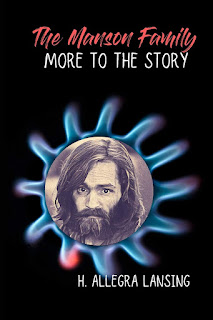
Book Review - H. Allegra Lansing - The Manson Family More To The Story


November 7th, 2021 
Sunday

This post accompanies a discussion I'm co-hosting live tonight at The Paulcast starting at 730 pm CST. 

My topic is: Unique Perspectives, Research Methodologies, and Cognitive Dissonance in the Manson Study. 

A reception with refreshments and a Make-Your-Own-Waffle bar will immediately follow our presentation. I believe the breakfast is located their green room but I'm not positive. You will definitely need your lanyard to get in. I have a small guest list and can possibly rush you past the doormen if you arrive late but keep in mind that hillbillies have lots of hungry cousins. 
-------------

Previously on Manson High...

"The Lunchroom In High Dudgeon!" 

The T-Birds (never Danny) and Stockard Channing placed a girl new on campus upon the dunce stool and forced the triangle hat upon her head while everyone pointed and cackled over her assuming she was the first Manson researcher to unearth the real name of Bill Vance. Oh, the arrogance.

Carrie without the blood for real. I called an actual Methuselah for his thoughts and he said, "The noive of that woman!"

I'd be duplicitous if I didn't cop to writing this not informative article about Bill Vance. Never doubt that my cultural and literary criticism and commentary originates at the contact point of my own thin skin. Same for everyone really no matter what they say. I'm just foolish enough to admit it. 

A smile crosses my dopey face every time I think about giant shoelace nets tbh. Seriously, in my case at least, when I don't know some fact or get it wrong, just tell me, I'll own it and we can move on. Not that my research will ever get close to Sanders or Lansing levels. Dumb cannot be fixed. 

Anytime I think of the word dopey I remember the scene in Statman where Rosie looks up from packing a box wearing a dopey grin. Unsure why. Read her book if you're new and haven't already. Never ignore unique perspectives in this thing. Word to the wise. 
+ggh
-------------
OKAY THE REVIEW
Last week, I grabbed the Kindle of Lansing's book to see what all the hubbub was about.  

510 pages
1.36 pennies per page

After riding in as the worst imaginable white knight a gal could ever dream of, I gotta do the Abraxas thing and say this book probably isn't for any of us unless you're looking to blow away the cobwebs and update yourself on what the normies think. Lansing wrote The Manson Family More To The Story for civilians. Which is actually one of the reasons I do not understand why she has to be Sissy Spacek but whatever. 

I'm sure you've heard of the True Crime genre. A lot of people publish there. None of them will ever know what you know about Manson but they will continue to pass through Sneakyville until we die. 

True Crime and Romance (but mostly Romance) are the main genres keeping the book stores open anymore. Naturally, I use Amazon and etc (websites) because of my multitude of fears like germs and talking in public and then also more generalized inconveniences such as driving to places where mask wars are fought daily. 

That was thoughtless. Please accept my apologies if you are a struggling brick and mortar book shop owner during these dark times. It's me not you but I always try to make things seem otherwise. Constantly trying to make everyone laugh is a failing. They say it comes from growing up in a tumultuous home. Hook me up with your website and I shall become a customer. 

Anyway. Lansing caught me up on the last half century of mainstream Manson for the price of a small latte with an extra espresso shot in a flyover city like my own. What a grifter. I was devastated. But then I remembered that in just about every profession, law, medicine, the police, the military, Washington, academia, insurance, basically everything where people earn nice livings and deeply stack their 401ks, everyone writes up their research exactly like Lansing does in her book because it words. Tried and true. 

All those examples and many others employ a practice (which ranges from completely foreign to mocked in this unbalanced noir drama) commonly referred to in the daytime world as research methodology.

Increasingly, such tasks farmed-out to mole people Curt Gentry losers like me who can usually be found eating day old donuts for dinner at desks in dark, mildewy rooms while getting paid much less by the farmer-outters than they pay themselves. No medical, vision, or dental ever also but hey working that way somehow provides special freedoms politicians always promise in tv commercials while I'm watching wrestling. 

The farmer-outters will tell you it's not their fault I got the wrong framed pieces of paper and they are correct. Same for the politicians. 

No clue how we ended up there. Overshare thy name is Green. The point is we'd do better with some standard of intuitive research methodology. More science basically. Explain why you think what you think and show how you got there. 

Let's get back to one of the writers doing what I just described. Lansing's book is an easy read. All the players are in the front of the book with their relevant info, and she moves on from there. Have I seen that list online before? Of course. Did it make me angry? Nope. Including it was a good idea. 

Reading Lansing was more like reading a magazine piece. Do you get angry at magazines? All those pages that won't turn themselves. Don't even get me started on the cologned rectangles sticking out everywhere. The beautiful faces and haunted eyes. Just a total horror show. 

Candice feels you. Quick swerve but how cringe was the scene where crazy Tex rolled up with two girls and Candice gave them the cold shoulder? That memory would haunt me in my cell at night while I stared at the ceiling. Her dad was a ventriloquist. 
  

I know you knew that already about Edgar but there was zero chance we were name-dropping Candice and not Charlie. Those dudes are waiting to slide out from beneath your bed tonight and watch you sleep btw. Pleasant dreams. 

Conceivably, a new person to all of this could read HS, then Lansing, and be caught up to the point where they'd be ready for Stimson and Schreck and the few others on that level without reading the ten books in the middle if they chose. The better idea is reading them all of course.  

Everyone always says each Manson book has one fact that is found nowhere else. Lansing collected those single facts and put them into an understandable report for her readers. The author has a nice sense of humor and it comes through in her writing. She shows concern for women and children while carefully tiptoeing around the triggers so have no fear. You're safe for a refresh there. 

Do I think Charlie and them were a cult? No. But people less weird than me surely do. In this live from last night, Lansing explains her interests in the case, admits to her lack of expertise in the field as she learns, and explains her research and plans moving forward. The author is also creating additional video content on her YT channel that I enjoyed watching. 

Lansing comes from the punk rock squats of the 80's and so do I. Maybe that's the reason I don't understand the hate directed toward her or maybe it's some other reason I'm missing. My guess is because she is newer and therefore unaware there were rings to kiss and parrots to repeat. 

The plan moving forward is to review every book that comes out and also look back on a few. I always say I'm not on a team but I suppose that's untrue. Without question, I love writers. I especially love you if you're a Curt because I am he as you are he as you are me but I also love you if you're the big shot getting paid while the mole people do the work. 

We inhabit strange days. Let's be kind out there. 

-------------
next week: standing in a shaft of light

Wednesday, August 27, 2014

Road Mangler Deluxe: some footnotes

Here at the Mansonblog, we have already paid much attention to Phil Kaufman's fascinating autobiography (see here and here). Patty finally got around to reading it herself and has a few footnotes that she'd like to add to Matt's report.

In the early 60's, Phil jumped bail for a Mexican drug smuggling charge out of the bordertown of
Sonoita, Mexico. He obtained a fake passport he got with UCLA student and friend Harold True's birth certificate, and actually traveled as True.

He had Hollywood and drug culture contacts long before he was finally caught and ended the last year of a six year sentence at Terminal Island. He had been an extra in movies like "Spartacus" with Kirk Douglas and "Pork Chop Hill" with Gregory Peck. Ram Dass, friend of Tim Leary, sent him LSD in a letter that he ate in its entirety until "paisleys were coming out of (his) ears." Old friend Harold True would bring him "space cakes" as well.

It was at Terminal Island that Phil met Charlie playing guitar in the prison yard. When Charlie was released, Phil introduced Charlie to publicist Gary Stromberg. Stromberg gave an interview to CNN in 2012: "In the 1970s, I ran one of the leading entertainment business public relations firms. Celebrity clients were wildly indulging themselves, accountable to no one. It was money, power and prestige, with no one to say, "That's enough." 

My office, on the Sunset Strip in West Hollywood, was set up like a huge living room with couches, overstuffed pillows on the floor, rock star posters lining the walls and a coffee table, the centerpiece of which was a large crystal bowl, filled at all times with a generous supply of cocaine. The house rules were "help yourself if you're here on business -- but no take-outs!"...As you could imagine, my office was a very popular place."

Phil left TI in 1968 and still occasionally talks to Charlie in prison: "Charlie occasionally calls me collect and does his Manson rap with a silent "c" if you get my drift" meaning Charlie speaks about biker culture quite a bit, Patty supposes ("Harlie?"). This reminds Patty of something that A.C. once told her: that Charlie was actually a skilled motorcycle mechanic which may have been an "in" for him with the Satan's Slaves?

Of Joshua Tree, Phil remembers that Gram Parsons was introduced to the area by Keith Richards of the Rolling Stones. Phil, Gram, and Michelle Phillips started a film project out there about UFOs that never came to fruition. Gram spent lots of time with the Mamas and the Papas.

These facts are interesting to Patty because they show that the links between Charlie, his associates and The Brotherhood of Eternal Love go way, way back. They predate Charlie's 1967 release by several years and have all the elements that Patty has touched on here: bikers, hollywood royalty, drug smuggling and passport fraud.
If you look for "the truth", it's there. Patty will reiterate, it's NOT Helter Skelter. Helter Skelter was discussed as a concept, but it was NOT what the Family was ultimately about. It was what Bugliosi was about, and history continues to remain on his side because he is seen as "respectable" and "law abiding." It was a tidy little story meant for public consumption because the actual truth was too far out for anyone, much less a jury, to comprehend and convict.


In 1969, there was a huge, powerful infrastructure of
under the table associations that at first accepted Charlie, then rejected him. This criminal subculture had its own laws and believe it or not, Charlie did and still does abide by them, though they are not as well understood in the mainstream as the kind of laws that the government makes for you and Patty to follow. Many of these laws are taught in the California prison system: Stoner Van Houten, who actually has spent time at Corcoran has recently been kind enough to explain some of them to her. The prison culture that Charlie is a part of is a real culture, just like mainstream American culture or any other. Because it is foreign to most of us, it is often misunderstood. But that doesn't make it untrue.

No one likes change, or people who go against the rules of the game as you understand them, including Charlie. After all, he had it made there for a while. If you were an aspiring underworld drug lord, what would you do?


Monday, July 7, 2014

Prison Threats!

Brook Carey was the warden of California Institution for Women (CIW) Frontera for a year from March 1975 until February 1976.  She applied for the job almost on a lark having had no training or experience working in the law enforcement field in any capacity.  To her surprise she landed the job only to find out later that she was hired to fail.  The book The Accidental Warden (2008) is about her year of being the warden at the only women's prison in California at that time.  It was during this year that four Manson Family women were incarcerated at the prison, Atkins, Brunner, Krenwinkel and Van Houten.

The book was okay, a short and easy read.  Prison politics make up the majority of the book as well as the things that Carey felt she had done to improve the system and make it work better.   There are bits about the Manson Family women and even a chapter on a visit she made to Manson while he was in San Quentin.  She went to visit him to tell him the women did not want him to try to make contact with them any longer.  They felt that further contact would hurt their chances of getting parole, they just wanted to do their time and get out.  (We know that hasn't gone so well!)

The one thing in the book that I had never heard about was a threatening letter sent to the FBI, presumably by a Family member on the outside, saying that unless all the Family members were released by a certain date, five people a day would be killed.  They already had the first five chosen.  Here is an image of a transcription of the letter as it appears on pages 90 and 91 of the book.  The letter was postmarked Chicago Illinois.
I tried to find if this threat ever hit the newspapers and I could not find anything about it.  As this happened around June and July of 1975 before Squeaky tried to assassinate President Ford and before Sandy Good and Susan Murphy were arrested for writing all those letters threatening corporations and the heads of those corporations.  I'm inclined to think that it was Sandy and Squeaky who were behind the letter being sent even if they did not send it themselves.

While doing the newspaper search I found an article that tells about Manson threatening to send five people to kill Nixon and Reagan.  There seems to be a theme with the number five here between the two threats.  This article is from the Edwardsville (ILL) Intelligencer, September 11, 1975.  Had Squeaky never tried to assassinate President Ford we probably never would have known about this threat either.


Thursday, January 30, 2014

Anybody know what's going on with Debra Tate's Book?

Is there anyone in the know who knows what's going on with Debra Tate's book? I pre-ordered it, but now the publication date has been pushed back and the description of the book has changed. I thought it was going to contain "hundreds of rare and unpublished photos". I was actually excited. Now I'm not so sure it's going to be the same book I pre-ordered.

cielodrive.com
 This is the book description I ordered - the yellow highlights are the major changes:
Considered by many to be the most beautiful woman of her generation, Sharon Tate remains a fascinating pop icon and a poster child for the 1960s. What most struck those who knew Sharon was her gentle nature and the sheer perfection of her face, but she was far more than just a beauty. The few films she made during her brief career, including Valley of the Dolls, Eye of the Devil, and The Fearless Vampire Killers, have taken on a cult status. Over forty years since her last film, Sharons spirit and charisma lives strong in the memories of those who knew her best, and her style continues to inspire the worlds of fashion, beauty, art, and film.

Sharon Tate: Recollection is a one-of-a-kind celebration of Sharons life and career, her influence as a fashion icon throughout the world, and in effect presents a sociological portrait of the 1960s - its youth culture, the sexual revolution, Hollywood's changing studio system, and the rise of independent cinema. In this dazzling photo book, Sharon Tates story emerges through quotes and short essays -recollections- by her sister, Debra Tate, as well as by those who knew and who have been influenced by her. An all-star cast contributing memories and thoughts on Sharon includes Jack Nicholson, Warren Beatty, Robert Evans, Mia Farrow, Raquel Welch, Hugh Hefner, Michelle Phillips, Patty Duke, Barbara Parkins, Jane Fonda, Drew Barrymore, and Kelly Osbourne. The book is filled with hundreds of rare and unpublished photos of Sharon Tate taken by the likes of Milton Greene, David Bailey, Terry ONeill, Richard Avedon, Bert Stern, Norman Parkinson, Philippe Halsman, John Engstead, and more.


What emerges from these pages is a stunning tribute to an unforgettable life.
This is the description of the book I'll supposedly get:
Considered by many to be the most beautiful woman of her generation, Sharon Tate remains a fascinating pop icon and a poster child for the 1960s. What struck most about Sharon was her gentle nature and the sheer perfection of her face, but she was far more than just a beauty. The few films she made during her brief career, including Valley of the Dolls, Eye of the Devil, and The Fearless Vampire Killers, have secured her position as a Hollywood legend. Over forty years since her last film, Sharon’s spirit and charisma lives strong in the memories of those who knew her best, and her style continues to inspire the worlds of fashion, beauty, art, and film.

Sharon Tate: Recollection is a one-of-a-kind celebration of Sharon’s life and career, her influence as a fashion icon throughout the world, and in effect presents a sociological portrait of the 1960s—its youth culture, the sexual revolution, the rise of independent cinema, and Hollywood's changing studio system. In this impressive photo book, Sharon Tate’s story emerges through quotes and short essays—recollections—by her sister, Debra Tate, as well as by those who knew and have been influenced by her.

What emerges from these pages is a stunning tribute to an unforgettable life.

Highlights include:

A foreword note by Sharon's husband Roman Polanski.
An introduction and remembrances by Sharon's sister Debra Tate.
Previously unseen childhood photos from the Tate family album.

Original quotes and recollection essays written specially for this book by Jane Fonda, Kelly Osbourne, Bert Stern, Michelle Phillips, Patty Duke, Lee Grant, Elke Sommer, Joan Collins, Viva, Tony Scotti and Trina Turk.

Retrospective quotes by Truman Capote, Diana Vreeland, Richard Avedon, Dominick Dunne, Warren Beatty, Mia Farrow, Orson Welles, Barbara Parkins, George Harrison, David Niven, Deborah Kerr, Yul Brynner and Kirk Douglas.

Rare and classic photographs by David Bailey, Milton Greene, Philippe Halsman, Shahrokh Hatami, Terry O'Neill, Peter Basch, John Engstead, Peter Brüchmann, Neal Barr and Jean Jacques Bugat.

Never-before-seen or published images of Sharon in the classic film Valley of the Dolls, digitally reproduced from their original negatives and transparencies specially for this book by the 20th Century Fox archive.
Also, two of these has-been actors are people who hurt Sharon - one in life, Michelle Phillips by boinking her husband, and one after death by publishing false rumors about her (Elke Sommer who along with her husband Joe Hyams trashed Sharon's character in the media with all kinds of crazy stories).

At this point I feel a little ripped off. I was told a photo book with 100's of rare and unpublished photos with an all-star cast of recollections. Now I feel like I'm getting a bunch of re-ashed, easily found on the internet photos and quotes from Beatty, Farrow, Parkins, and Dominick Dunne etc, new recollections only from has-been actors looking to cash in, and, wait, what? Kelly Osbourne commenting on what fashion is? Is this a joke?


Wednesday, December 18, 2013

Ginny Good: The Missing Link?


Patty recently got a copy of Gerard Jones' loving tribute to his ex girlfriend, Ginny Good (older by three years sister of Sandra). The book was enlightening for Patty because of the many details that it contains. You can read or listen to the book yourself, here.

Ginny had an aunt in Laguna Beach that she would visit with some frequency. Laguna Beach is the home of the Brotherhood of Eternal Love and former location of their Mystic Arts World headshop (pictured at right). Ginny and Sandy's dad George lived at 265 Hilton Drive in Boulder Creek (below: thank you DebS) which backs up onto the Boulder Creek Golf and Country Club.

George lived at this address until he died in 1973. Gerard writes that he, Ginny, Sandra and Joel Pugh went there for Christmas, 1964. Sandra and Joel are also in a photograph together at Christmas 1967, so it is interesting to Patty to learn that Joel courted Sandy for at least three years.

Boulder Creek is fairly close to where the Chateau Liberte once stood at 22700 Old Santa Cruz Highway (pool pictured below is still visible on Google Earth) until 1975. "The Chateau" was known in the very early days as Chateau Boutisse, from 1965-1967 it was called the Redwood Chateau, and from 1967-1971 it was the Chateau Regis. It was a known BEL, Gypsy Joker and Hell's Angels hangout where the Grateful Dead, The Doobies, Hot Tuna, Quicksilver, et al would perform.

Ginny was on a first name basis with the Grateful Dead, and she got her acid from a guy who got it directly from Owsley, the Grateful Dead chemist known to history as "Bear." In fact, Ginny's acid connection goes back to at least 1964, because Gerard remembers her introducing it to him in early 1965 at La Honda (she had already tried it at this point). La Honda, which is near Stanford University, was the home of Ken Kesey and the Merry Pranksers: Gerard claims that Ginny hung with them, too.

The timeline in which Ginny lived in San Francisco spanned from at least 1963 through her college graduation in 1968. She had roommates on Clayton Street during this time who were studying chemistry at SFSU and/or UCSF, which is walking distance from the Haight. Ginny had emotional problems every Christmas that either landed her in jail or in a mental hospital like the lockup at UCSF, or Scripps down south in La Jolla. As such, it took her at least six years to finish her bachelor's degree at San Francisco State University. Her troubles were so extreme that she may not have made it through college at all, had it not been for a substantial amount of help from George's (unnamed) lawyer.

She had at one point a boyfriend named Hank Harrison, who was the original manager of The Dead when they were still called The Warlocks (he is also Courtney Love's father). He formed a group called "LSD rescue" that he claims later became the Haight Ashbury Free Clinic. Bob Ackerley of the BEL claims that they helped found the Free Clinic, as do the Folgers. As you know, the Mansons were regular fixtures at the clinic. Not only were they frequently treated there for the various STDs they picked up along the way, they were also written about by Dr. David E. Smith in the scientific literature regarding their "common marriage."

The free clinic, unlike most other reputable caregivers of the day, had no issues with their clientele being on crazy amounts of drugs. It was accepted and even expected. Today's Rock Med, which is solely dedicated to caring for people who freak out at bay area rock shows, is today's outgrowth of the free clinic. Patty distinctly remembers seeing these people help a soaking wet deadhead with an infant who'd been dyed bright blue in one of the ladies' rooms at Autzen Stadium (June, 1994). It's a long story.

By now, you are probably saying, "so what?" Let Patty backtrack a bit.

Abigail and Voytek had MDA in their systems when they died, which was not a common drug back then. Patty has been working backwards to try and figure out where the MDA came from.

About MDA: it is the precursor for MDMA, aka ecstasy, aka "N-methylated MDA." It is closely related to STP (aka DOM), which freaked out the entire Haight Ashbury during the summer of love. Another variation is called PMA, which is just one molecule different from MDA, but can be fatal because it causes severe hypertension. All of these were referred to as "synthetic mescaline" back then, and they all contain an amphetamine component which alone is known as methamphetamine (trade name methedrine). Patty is a bit stymied here because MDA is a common biological metabolite for the entire cluster, and therefore, it's not very clear what the drug was when Gibby and Voytek ate it. What the coroner found was likely already metabolized.

Dr. Alexander "Sasha" Shulgin (pictured at left), the famous drug researcher and author of PIKHAL, claims that MDA was first introduced to him by a grad student in SF, circa 1964. Shulgin also taught at UCLA where Gary was studying chemistry. (By the way: remember that van that's supposed to be Gary's in a remote area of LA? It DOES NOT have a UCLA parking sticker on it: it's a gate pass for gate 9, or maybe 8, pictured below. What was at gates 8 and 9? Patty is still looking into it.) The feds not only knew about Shulgin, they tolerated him and his research until his PIKHAL (and, later, TIKHAL) started showing up in clandestine labs all over the world. The feds shut Shulgin down in the '90s. He is doing fairly well for a man of his advanced age (87), but his memory is probably not what it used to be. You can see his original laboratory notes, here.
All these years, people have assumed that local law enforcement was totally inept when they conducted their murder investigations. But, what if it's not that, it's that these investigations were consumed into a larger investigation of global drug smuggling and manufacture? MKULTRA, as overused as it is in conspiracy theories, was an actual thing, and many of the drugs in question are confirmed MKULTRA test drugs. Patty was also interested to hear that when Brian Davis called the LAPD recently to inquire about the "Tex Tapes", he was told that they are part of an ongoing investigation. They did not specifically say MURDER investigation, which sent a chill down Patty's spine.

Can you see where Patty is going with this? Of course you can. But, what evidence does she have?

Howz about we let the above sink in for a little? Patty will be back because, of course, THERE'S MORE.


Friday, October 18, 2013

Flashback Books: Communism, Hypnotism and the Beatles


Below: from flashbackbooks.com, a Canadian mail order book store run by Michael Horowitz, hippie/beat author and close friend of Timothy Leary (he is on the board of The Timothy Leary Archives).

The title alone of this religious tract tickles Patty's funny bone. How could anyone logically come up with this combination of things? The 1960's American Religious Right, that's who:

"Communism, Hypnotism and The Beatles are all instruments of (...wait for it...) THE DEVIL. Evil incarnate! Satan! Lucifer! Beelzebub! The Beast! There are subliminal messages in rock music, especially in the music of the Beatles. Play this one backwards...hear it? "Paul is dead! Paul is dead!" With their atrocious long hair, loose morals and hidden messages, the Beatles are turning God fearing clean cut American youth into Godless communists! It's true: they do it with mind control. And once our best and brightest minds have been taken over, who knows what Satan might bid them do? One moment our children are homecoming queens, football players, All-American types fixing meatloaf for the church potluck, and the next thing you know, they are eating garbage with their hands. Communally! Like communists! And even worse, the garbage will be...gasp...VEGETARIAN."

Mr. Noebel's manifesto was no longer available through Flashback, so Patty purchased copies of the 1972 and 1974 Senate Hearings on the Marijuana and Hashish Epidemic instead. And while there was nothing too compelling in them relating to our topic of study, Patty was interested to learn that the BEL was heavily involved in a passport fraud operation in order to mask their comings and goings abroad. This, the hearings read, was confirmed by Interpol, who once investigated Bruce Davis' undocumented presence in London on at least one occasion (that slippery little git).

Michael is a very nice man and he will do you right. We chatted a bit over email, and he sent me in the mail, free of charge, these photocopies of some rare BEL ephemera. Apparently, these cards were the ones that Orange Sunshine was distributed on at free concerts and gatherings. COOL SHIT. Thanks, Michael. You are positively lovely.


Wednesday, July 3, 2013

Charles Manson: “Freemansonry” Meets Mothman

January 28th, 2010 |    Author: andrewcolvin


Next we have a selection from Chapter 23 of The Mothman’s Photographer III, where we look at the enigmatic Charles Manson, who grew up next to the Carbide plant in Mothman’s old stomping ground of Mound, WV. The Manson family has been in the news in recent months, as former Manson girlfriends Sara Jane Moore and Squeaky Fromme – who both tried to shoot Pres. Ford and thus bring an unelected Nelson Rockefeller into the White House – were released early from prison.


“He was great. He was unreal – really, really good. He had this kind of music that nobody else was doing. I thought he really had something great. He was like a living poet.”

-musician Neil Young, speaking about Charles Manson

“War, fascism, concentration camps, rubber truncheons [and] atomic bombs are what we daily think about, and therefore – to a great extent – what we write about (even though we do not name them openly). We cannot help this. When you are on a sinking ship, your thoughts will be about sinking ships.”

-George Orwell (1903-1950)

“The Constitution has never greatly bothered any wartime president.”

-Francis Biddle, Franklin D. Roosevelt’s Attorney General during WWII, on Roosevelt’s 1942 decision to place Japanese-Americans into internment camps.

———

Charles Manson is probably America’s most famous criminal, convicted of directing members of his “family” to commit the gruesome Tate-LaBianca murders in 1969, which effectively ended the peace movement by making it seem as if “hippies” were wildly dangerous. As time passed, researchers learned that Manson was actually not a hippie at all, but a fascist and possible police informant with dreams of a one-world government. The random “Helter Skelter” murders began to look more and more like the contract hits that Manson always implied they were, with drugs and sex looming in the background… Manson lived for at least a couple of years on my street in Mound, WV. Even in the more exhaustive Manson bios, this is usually alluded to only indirectly, embedded in the tale of his mother stabbing a patron in the head at Mound’s Blue Moon Tavern.  When his mother was on the run, Manson’s guardian was a matriarch in the Fisher family. The Fishers are friends of my extended family in the Sissonville area. While attempts have seemingly been made in the media to overlook or perhaps sanitize the Charleston connection to Manson, the connection is real. Van, the owner of “Van’s Never Closed Market” in  Mound, once stated on TV in the early 1980s that he remembered Charlie and Sara Jane Moore coming into his store together, arm in arm. The mile or so of land between Van’s and the Blue Moon Tavern straddles Blaine Island’s Union Carbide plant… The other place Manson was known to have lived in WV is the town of McMechen, along the Ohio River, upstream from Pt. Pleasant. It happens to be very close to an infamous Hare Krishna Temple and to Moundsville, a town with a haunted prison built over leveled mounds. McMechen is also close to Wheeling, where ET “believer” Budd Hopkins was raised. Wheeling’s Sterling Corp. bought and helped reconstitute the Bayer Corp. after its links to I.G. Farben and the holocaust were exposed. Wheeling was a bustling industrial town in the war years, known for its freewheeling nightlife. It could have been in Wheeling, or nearby Pittsburgh, that Manson’s purportedly promiscuous mother might have run into Judge Francis Biddle, federal prosecutor for W. Pennsylvania. In this suppressed interview with the BBC, Manson alludes to being raised by the “judge at Nuremberg.” This had to have been one of two men: Robert Jackson, whom Manson does not resemble, or Francis Biddle, whom Manson greatly resembles. Manson makes a number of interesting comments here that paint a puzzling picture of man who seems, on the one hand, to be an idealistic ecologist who cares about the planet yet, on the other hand, admits to being intimately involved in organized crime, secret societies, and – as should be obvious to anyone who looks at his forehead – Nazism and the New World Order.


Manson, Charles – “Freemansonry” Interview – 1994
Photo of Manson prior to attending Boys' Town. Manson's biography is hazy, confusing, and incomplete, but he would have been living in WV and hanging out with Sara Jane Moore around this time. Attempts were made to construct a public profile for Manson, even early in his youth... The tight-lipped Moore was known to go missing for days at a time, possibly with Manson. As an adult, she more or less abandoned her three kids and went missing for ten years starting in the mid-1950s. She later emerged after marrying an Oscar-winning film editor from Hollywood. The secretive Lookout Mountain editing studio was at the top of Laurel Canyon, one of Manson's favorite neighborhoods. One wonders if Manson and Moore reconnected there during the tumult of the late 1960s.


Q: Somebody once said you’re the most dangerous man alive. Do you think you are?

CM: It makes no difference… All men are dangerous, although mainly to themselves. I’ve studied criminology. I’ve studied all the “ologies” from Sean Connery to the Hindus. Through time [I’ve gotten smarter. I have become more] literary. And, I speak a little Gaelic on the side…
Photo of Manson prior to attending Boys' Town. Manson's biography is hazy, confusing, and incomplete, but he would be living in WV and hanging out with Sara Jane Moore around this time. Attempts were made to construct a public profile for Manson, even early in his youth... Moore was known to go missing for days at a time, possibly with Manson.

Photo of Manson prior to attending Boys' Town. Manson's biography is hazy, confusing, and incomplete, but he would have been living in WV and hanging out with Sara Jane Moore around this time. Attempts were made to construct a public profile for Manson, even early in his youth... The tight-lipped Moore was known to go missing for days at a time, possibly with Manson. As an adult, she more or less abandoned her three kids and went missing for ten years starting in the mid-1950s. She later emerged after marrying an Oscar-winning film editor from Hollywood. The secretive Lookout Mountain editing studio was at the top of Laurel Canyon, one of Manson's favorite neighborhoods. One wonders if Manson and Moore reconnected there during the tumult of the late 1960s.

Q: You’re certainly one of the most famous people in the world.

CM: Well, there’s good news and there’s bad news…

Q: A lot of people don’t know you and your mission. Let’s talk about that a little bit.

CM: [It started] years before I got to California. I tried to tell that to the court in California, but I haven’t been able to find anybody in California yet. There doesn’t seem to be “anybody home.”

Q: Because you started in San Francisco playing the guitar?

CM: No, it started in Morehead, Kentucky in 1945…

Q: Did you ever learn to write music?

CM: No, I’ve never slowed down [enough] for that. I move awfully fast. My mind is [like] a rattlesnake.

Q: [You knew] some pretty famous musicians. Do you remember Dennis Wilson?

CM: He had trouble with the truth, because he was raised in Hollywood. Hollywood is a seedy place. Hollywood is a hard place. It’s not [what] you think it is. It’s about control. [It’s the] mind control center of the world.

Q: How did you meet him?

CM: At Elvis Presley’s house…

Q: You did some recording with him?

CM: Yes. They opened up their own house. I wasn’t into what they were doing. I rejected it because I’d just gotten out of one prison and wasn’t looking for another one. The lifestyle that they lived was pretty much controlled by [their] business manager from NYC with the red Ferrari. Did they tell you about the red Ferrari? The electricity [of political power] runs off of a brotherhood that runs off of a cross. It runs off of a piece of clover, that runs off of “666,” that runs up and down the hallways in juvenile hall in Boystown, Nebraska. The heart of man [pumps from] the Brotherhood [of] the Cross. The Brotherhood, on some levels, is very violent and very nasty and very mean. It’s a struggle for points of reality. Some people say that the Maharishi from India is the living God. I say, “No, our Father which art in heaven is the only God.” Then, there’s an argument. And the fire is thrown on me, and I burn up with that. And then… Union Carbide blows up, and a whole bunch of them burn up. [But] who’s burning who up? Where is the center of the mutiny? France, wearing the pants with Eldridge Cleaver and Huey Newton?

Here Manson seems to be referencing a global ideological battle between West and East, Christianity and Islam.  The references to the “Ferrari,” piece of “clover,”  “666,” and “Brotherhood of the Cross” seem to indicate Irish-Italian political and religious involvement, perhaps using occult front groups seeming to be “satanic…” Manson’s reference to fire being “thrown onto him” seems somehow reminiscent of both the Garuda mythology and the Philadelphia Experiment. According to Karl H., an informant in my last book, Manson liked to draw fearsome bird imagery. In addition to claiming links to the Philadelphia mob, Manson also refers to Union Carbide, France (perhaps a reference to the Masonic orders), the civil rights movement and mass mind control. Is this an oblique linking of the Jesuits to the CIA’s Operation CHAOS? It was known at the time of Manson’s interview that Pope John Paul II had worked for Solvay Chemical, which had corporate links to I.G. Farben and Carbide. Solvay now has a facility 5 minutes away from where Manson’s “uncle,” Darwin Scott, lived. Scott was brutally murdered about a year before the Tate killings.

Q: That was all [back] in those days.

CM: It’s still [happening] today. They’re all [having sex] to Michael Jackson. They’re controlling the music in the abortion clinics. Music controls little girls, you know.

Q: Did you like that the Beach Boys changed the name of your song “Cease to Exist”

CM: Not at all. You see in prison, you write songs and send them to people outside, to brothers at recording companies. When the brother’s recording company gets them, they don’t exactly use [it the way it was meant]. I wrote a song: “I know I know I know I know I know I know I know; I know I know I know I know I know I know I know…” It’s a meditation song. I send a tape to someone. They send the tape to the brother’s recording company, and then you hear the song, “Ain’t No Sunshine (When She’s Gone).”

This may be true, because the singer of “Ain’t No Sunshine (When She’s Gone)” was Bill Withers, a native of WV who may have met Manson at one time or another.

Q: So they change [the songs]?

CM: Yes… They take the catchphrases and the feeling that you put into the music. Then that becomes a part of what they call “soul.” All the sound and the soul that comes off of prison [is altered by the time] it gets to your ears. You hear the bottom part of what’s really happening on the top… All [the woman] is doing is giving up sex. She’s going to back up to her fear. A man doesn’t back up to his fear. He goes straight into his fear. We’ve got to have a one world government. We’ve got to have it, man.

Q: You were talking about the music…

CM: The whole world [makes music]. You do it automatically. For instance, you’ve got a music called “Rock and Roll.” Where does it come from? What does it mean? Do you have a level on this [microphone] that you can’t go any louder than?

Q: Don’t worry about [the volume]. You’re fine…

CM: Okay [but] how loud can I go with this? [screams loudly!] Now that’s where Rock and Roll comes from… Music comes from the Crown. Music comes from your King. Music comes from your lord. Music comes from your soul. Hollywood plays music to little girls. I don’t play “little girl” music. I play music for God. I play music for myself. Then, I come up with a song, and they [go and] change the words. I say, “Don’t change the words!” If you change the words, my shadows are running fast, man. I’m running out of monk school. I’m running out of Boystown – Father Flanagan’s in Nebraska. I’m running out of an Irish Catholic Church. I’m running from the IRA. I’m running from everyone that wants to live on the planet Earth, man. I’m running from nowhere and doing nothing. I’m all the same, on and on, as if Shakespeare was a clown.

Q: [So] Shakespeare changed it?

CM: He changed it for his little girls – for money. He compromised himself for money. You don’t compromise yourself for money. If you got a poker game you can’t win, you take your pistol and take the money. You play, and [if] you see that you can’t win, you just take it. You pull your Claymore out and do what any black pirate does: you take everything on the board and go in another direction. This [technique] is very intricate… The Black Hand that comes from the Catholic Church [and] the Romans have been using [it] for years. The Black Hand is supposedly the Hand of God from the cross that’s really upside down and comes from the Negroes and slaves that Abraham Lincoln played with.

Was this a reference to the Moorish/Egyptian underpinnings of Catholicism, or to an amoral, “pirate” intelligence unit within the Catholic Church, such as the Jesuits?

Q: Do you remember any of the famous people you [hung out with]?

CM: Yes, it was alright. I used to play around at Frank Costello’s and Abbot and Costello’s. I knew those people. I got around. That was my neighborhood. Jimi Hendrix lived 3 doors from Dennis, and Elvis lived 2 blocks [away. Still] that is like looking in somebody else’s icebox. See, here’s the thing: I’m not impressed very easily by much. I more impressed by my counselors and associate wardens, to see if I can get a guitar [here in prison]. Everything here is upside down. Everything you do goes off someone else. Humphrey Bogart and James Cagney were not real criminals. The real criminals died somewhere in San Quentin and Folsom, and the actors took them off – what we call a “take off…” Prison is a big machine. A prison is run by black inmates. It’s run by the fear of black inmates. Fear has a lot to do with music. Music has big controls that come out of Boston… They use the black people to control the music. They’ve got a lock on it from James Brown, and from the chain gang. They got a lock on it from the prison. Playing music [onstage] is not the same as “getting down” with music. Getting down with music is going into the mountains, throwing up a fire, getting the drums, and getting down. It’s getting “funky.” The Buffalo Springfield comes off the Kentucky rifle. The Kentucky rifle comes off the Queen of England [because] she comes over to Kentucky to get her horses. It is a horse’s head on the front of that Ferrari – that 200 horsepower car that the business manager drives. He’s got the hitmen on the telephone over there at the brother’s recording company. In other words, they’re in a poker game losing the house… We got into spiritual music, Indian sweatlodges, peace pipes, peyote, and mushrooms. I got the mushrooms from a mighty warrior in the underworld. I live in the underworld. There’s a lot of clarity to the underworld that would be fantasy to you. [It] really is real on other levels. You go out into the desert. You get into the mushrooms and the peyote of the Sundance. The Sundance is another place music comes from. There’s a reality in the Sundance that brings up all the music in you. It brings out all of the cross in you – all the suffering in you. It brings out all the majesty in one’s soul.

Q: What about things like Scientology?

CM: I was in prison when Dianetics first started in 1950. A lot of the guys were interested in studying ways to process the mind [in order] to clear it from past confusion – to resurrect the soul and be reborn within yourself. That’s where Scientology started. Then, they started selling it. Then it got to be The Process Church of the Final Judgment [in England]. I couldn’t go myself, but I sent some people there to do certain things – to [create] an effect. To cause an awakening – an awareness in death… See this mark on my forehead? Do you know how the occult [operates]? You get involved in all kinds of darkness running under [the surface]. It would take too long to explain it all [but, either] God or the Devil opens up – whichever one you’re going to use. [You might begin] believing [certain] things, but then the wind blows in another direction and you [end up] saying, “Woah, that hurts too much. I change my mind.” [If you’re] in the [dungeon] and you’re laying up on the rack, you’re going to do whatever they tell you to do. It’s simple.

Q: I guess we don’t know the answer to that but [are you a Satanist]?

CM: Satan? What is that? They’ve got guys play-acting that for the public. What is a Satanist? No [I’m not a Satanist.] I’m too stupid for any of that… You don’t lay with the snake, because the snake is going to eat you sooner or later.

Q: [What about] the Beatles’ song “Helter Skelter?”

CM:  [They] didn’t know what [they] were doing. “Helter Skelter” was their song. It didn’t have any particular meaning to me. The District Attorney picked up on that and made it into his trip. You’ve got to [understand] a convict’s mind… In 1944, the music was [a certain way, and] people were on that level. Say you got locked up; you were in a vacuum. If you got back out in 1950, they were singing a little faster. Then you got locked back up again. [Your contact with trends] stopped again. You got out in ’59 and people were really [rocking, but] you got locked back up and [the fun] stopped until you got back out in ’67. You went over to see the Grateful Dead, and it was [far out]. That [very process] is what I call confusion, or “helter skelter.”

Q: What does “helter skelter” mean?

CM: It just means “confusion.” The Beatles came up with it [but] they were playing for teenyboppers. I’m not a teenybopper. I liked their music; their music was okay. But my music is still on the bagpipes, you know. I haven’t lost the perspective for that…

Q: So you weren’t getting messages about “helter skelter” [from the music]?

CM [pleadingly]: Oh come on, man! Music gives everyone messages. That’s what music does. Why do I have to be some kind of maniac because I could hear something that the music says? When the music said, “Somewhere over the rainbow,” I was over the rainbow. When Kate Smith came out with There’ll Be Bluebirds Over the Righteous, I was still in Dover. I don’t think anything went wrong… If I could get to somewhere where I could write or have a tape recorder, I could explain a lot of this. It’s very difficult to explain ten or fifteen years in two or three minutes. Words only say so much. The reality of motion in prison – life and death on what they call the “mainline” – comes from handball and weightlifting, from somebody dropping weight on somebody else’s head, of somebody owing something, of a blood-family debt, of the way it burns back and forward. If Watson has something he can’t face, I go face his death for him. Then, he owes me back. Then the Frenchman takes his foils and goes off into battle for me, and I owe him one. So then I come back to Watson and I say, “You pay the Frenchman what you owe me.” He says, “How do I pay it?” I say, “Don’t ask me how. I’m not your father. Do what you’re told. Pay your debt or get off my road.” So, he pays what he has to pay, and does what he has to do. I didn’t direct him to do anything. I told him to be a man and stand up for himself. I didn’t tell him what he should do, or how he should do whatever he had to do. I [simply] said that he has to do what he has to do. Wilson knows that. The street knows that. The penitentiary knows that. And, the Brotherhood knows that…

Q: Didn’t you direct [people] to kill?

CM: I never directed traffic about anything, man. I haven’t got time for that. I’m not going to get involved. I’m not that insane. I may be crazy, but I’m not going to take a chance of putting myself back in jail. For what? You deal me the hand, I’ve got to play it. You gave me the cards [that say] I’m a “mass murderer” – a “hippie cult leader.” I’m [supposed to be] all the things that the D.A. was laying out, so that he can bring in the mafia from New York [like] Rambo in the movies. In other words, he’s got a lot more going on than Helter Skelter. Helter Skelter is just one little [scam] he’s playing. He comes back to me from Geneva and wants to be my sunshine if I’ll agree with him on his “helter skelter” theory. I didn’t have any “helter skelter” in my mind. Let me tell you something: the oven has “SS” written on it. I came out of the bake in 1954. I’m Duke on the yard. There was nobody on the yard who could beat me. They had one or two German kids that were raised in the Hitler youth movement of WWII that were very good, but they couldn’t beat me. I ruled the cigarettes. [At some point] someone had to be killed. Somebody told somebody some lies and somebody had to kill somebody. I came out of the bakeroom pushing the broom. They had this guy in the butcher shop stabbing him to death. I’m walking the line. I’m not a snitch. I don’t run and tell the cops tales. I stand on my own two feet. One of them looked over and said, “Manson, get on the point.” So I took the broom and got on the point. I was watching and thinking, “That tramp better not move for me. If he moves for me, I’m going to take him home to his mama,” you dig? He didn’t move for me and I didn’t move to him. They stabbed him to death. You [normally aren’t supposed to] kill anyone in the penitentiary kitchen, because it makes it bad for the food. It’s bad for everyone; it creates a lot of paranoia. [But] they were cutting this guy in half, trying to put him in a garbage can. They got the elevator and smashed the elevator down [on him] – trying to put him in the can. [They ended up putting] half in one can and half in another can. They smuggled him out of the kitchen. I was [the lookout]. The [guard] comes up and asks, “What happened? What did you see?” I said, “See what? What are you talking about? I didn’t see nothing man.” All of my life, I’ve been on that [same] line. I don’t ever see anything. I know nothing; I’m zero. I don’t get involved. I don’t run and tell. I protect myself. And whatever happens happens, man. People getting killed around me is no new thing. There are people getting killed in prison all the time. [It would be nice to] wear a shield, man. You’ve got all kinds of violence and fear that runs in these places. When you live a life like that, it becomes a natural thing.

Q: Did you give Tex [Watson] orders to kill?

CM: Tex was a rumpkin. He came to town. He was a “momma’s boy.” The prostitutes took his money. He said, “Can I live with you?” I said, “Can you live with me?” He said, “Yeah.” [So I said] “Let me have that pickup truck.” So he gave me an old pickup truck from Texas. I’m letting him stay around the ranch. He’s hanging around. A lot of guys like to hang around me, because I’m underground. I’m what you call “cool.” I’m what everybody tries to be. When I’m down on the street, I ride a motorcycle and I get a lot of girls. I play. That’s my road for a while, until they grab me up and put me back in the cage again. But anyway… Tex sees women lighting my cigarettes. He’s saying, “Yes, ma’am, can I open the door for you?” In other words, he’s the matriarch and I’m the patriarch. He sees the way I’m doing it. He wants to do what I’m doing, so he’ll get his money back. He went and burned the [prostitute] for five grand. He beat her for five grand. Some black guy called me and said, “You took my money. All you white brothers are together. I’m coming up there. I’m going to burn everybody up and take that ranch.” I said, “No, not around me you’re not. You [may] talk that shit to them little girls [but] when you come to me, I’ll take your hat home.” I told Tex to go down there and face that man. He said, “I can’t. He’ll kill me.” He couldn’t do it, so I had to go down there. I ended up shooting the guy and cutting some other people up. That’s the world I live in. I ride in a motorcycle group of crazy people. We’re fighting and cutting each other all the time. That’s no big thing. I’m always smart enough to get away without killing someone, because I don’t want to go to that gas chamber. I’m not going to kill anybody. If I can get away, I’m going to wiggle, jiggle and push that broom and [say] “I didn’t see anything…” There’s a place called Indian Mesa where we’d have fires and play music. We’d make big circles like you do with the stones. We’d put our souls in each other. We’d have sex. We’d do all the things that you guys are not allowed to do in your culture. In the culture I lived in, we’d throw all that out the window. I guess that’s what you would call “Satan.”

Q: That’s right…

CM: I wouldn’t call it Satan. I’d just call it “whatever.” You can call it the time of day if you want. But that’s what was happening in those days. A guy from Texas, who’s a momma’s boy, got me in trouble… Now here’s one of my sins [which] I’ll confess clearly and openly to the world. I never realized how much [power] I held with those people. I never realized how weak people outside [of prison] are. I’ve been raised up inside with these powerful guys – strong men. I’ve been amongst men all my life. I go outside and tell someone, “Come over here and sit down.” They go, “Whoops,” and sit down. How did I do that? I don’t know. They did it to me in prison. The [guard] goes, “Get over here against that wall. Put your hands up.” I learned to do what he said. So, I’m reflecting reflections that are reflected to me. I can [amplify] them… Remember when you were in school and the bully came by and said, “Are you looking for trouble?” You said, “No, no, I wasn’t looking for no trouble.” That’s calling you up. It calls your mind up to start looking for trouble. You’re not thinking about trouble until someone comes to yell in your ear. Pretty soon, you start looking for trouble [even though] you don’t know why… You’ve got [hundreds of] people running through Hollywood, playing music, smoking dope, having sex orgies, and riding motorcycles. I was just [a member of a] small music group called The Family Jams.

Q: [Did] you seduce young girls?

CM: Wait a minute! All those girls that you keep attributing to me were just girls that happened to be in the “free love” subculture. The only reason they’re still with me is because I’ve never lied to them. I don’t lie. I quit lying a long time ago.

Q: You don’t lie to us now?

CM: I’ve got no reason to… The time is done… Damn, I don’t know whether you’ll understand it or not. [Let’s say] a young kid is walking down the street… A cop comes up to him and shines a flashlight in his face and says, “Up against the wall!” This scares the kid, so he gets up against the wall. The cop says, “What are you doing out here? It’s after ten o’clock at night. Are you out here to burglarize the stores?” The kid says, “No, sir. I’m not here to burglarize the stores.” The cop is a rookie cop. He doesn’t realize that he is programming this young mind to burglarize stores. Being a juvenile delinquent, I went through that. I burglarized stores and I ended up in reform school. That’s how I figured that out, you dig? So they came and they raided the ranch. They [asked] “Are you causing trouble, Manson?” I said, “No. I’m not causing trouble, and you’re not going to program my mind to [cause] trouble, either.” Fear don’t work on me anymore. You can pile ten dead bodies up there and [let them] bleed all day. It don’t bother me one bit. I’m not affected by fear games. [However] I didn’t realize that they were setting everybody else’s minds [against] me. I didn’t realize [that I was about to become] “His Holy Majesty” [of evil]. I was just a dumb kid who had [recently] gotten out of prison. I had just done 22 years, from 1944 to 1967. I had no idea what was going on outside. I was at that ranch just like I was in the joint. I was still walking that same line that I was walking in prison. I was not [about to] break any laws. Creepy Karpis once told me, “Son, you want to stay out of jail? [Then] don’t break the law. If you don’t break the law, you don’t have to go to jail. It’s that simple.” I said, “I’ll try.” And I tried it. There are a whole lot of people who know me that will witness and tell you that I did not break the law.

Q: You had nothing to do with [the killings]?

CM: I was on the edge of everything that happened. I unknowingly affected everything that happened. But I didn’t realize the affect I was having on people. I never in a second flashed about being a “walrus.” I’ve been in the minds of millions, but I have never been in my own. I’m not in my own mind until I get outside. I’m living in the mind of the guards. I’m living in the mind of the people next to me, down the hallway. I [always have] to balance everything around me to stay alive. In prison, you have to get along with everybody [in order] to stay alive. If you don’t, you get crissed and crossed, and somebody’s going to push you over the edge.

Q: Why did the girls go to that house that night and kill those people?

CM: Alright, this is going to get heavy…. The Jewish [music bosses] rejected me – on a universal level – from Cary Grant’s apartment space, because I wouldn’t [exploit] the black people. I wouldn’t get into the middle of the [music industry] sexuality that [started] after we lost the Korean War. We had to give them Doris Day and let Rev. Moon come in [as payment. That same sexuality is now being sold] to build kibbutzes and machine guns in Israel [while] the Arabs [only] have rocks [to throw]. So when I passed on that, I fell into the Beach Boys’ [scene]. The Beach Boys are being run by the Italian Mafiosos from the East Coast. The Mexicans kicked the [Italians] out of Rosarita and told them stay out of California. They didn’t like them. When I went to the Beach Boys [about them] owing me money for music, they put me onto the Italian business manager. He said, “You get nothing. Sue me…” I said, “I won’t sue you. I’ll bomb your car and blow your house up.” He said, “I’ll call NY and the Mafia.” So, I backed off. That’s why I moved in with Denny. I was [thinking] “If you won’t pay me on one level, I’ll sneak you on another level. You’re going to pay me sooner or later because I’m that guy that always gets paid. And I always pay.” In other words, I walk a line, and it’s hard.

Q: Tell me about the other reasons why [you don’t lie now].

CM: One thought can change a million perspectives. One word changed Tex’s head. Somebody else was being called up into a negative thought by harassment from others.

Q: What do you mean by that? What happened?

CM: Well, the ranch was being raided every other day by the L.A. sheriff. Every time [authorities] would become afraid of black [riots] they’d run over and raid the white people to make themselves feel a little more powerful. When you’re white and you’re “underneath” the establishment, you’ve got to deal with all the white people in the establishment who are afraid of blacks… I don’t want to start pulling people’s covers, but all the [Hollywood stars around Polanski] weren’t as wonderful and nice as you think. There are all kinds of things happening in the darkness. How does someone [like Polanski] come from Poland to Hollywood and go all the way over the top and have [blockbusters like] Valley of the Dolls? I don’t play on the level of little girl music. I play on the level [where you] flat out see Christ dying on the cross. In other words, it’s scary. It’s really, really far out. A lot of people try to copy [it] but it’s got to come from the soul – from certain levels of the mind… Your mind is a pattern. If it gets [interrupted, you] go crazy. When you open up the soul, you open up the hole in the soul.

Q: Great [but] we’ve still got a pile of bodies in this house. How did they get dead?

CM: The [Oriental] came up to me and said, “You must be [the leader of The Family].” I said, “Get away from me with that.”

Q: Who’s The Oriental? Do you remember his name?

CM: A blond-haired, blue-eyed Oriental came to me and [said] “This music is mine, you little bitch. I’ll take your heart out of your chest, tramp.” Terry Melcher (Doris Day’s son) had sent this clown over to me. To Terry Melcher, Rev. Moon was “the man.” He’s not the man to me. Put [Rev. Moon] in the mainline of San Quentin, and he’s not the man [anymore]. Put him over on death row and he’s not the same guy he was in the clown outfit, playing some game. There’s a lot of men on this road. Don’t touch what you don’t even know exists.

Q: So, it’s got something to do with Terry Melcher…

CM: The Oriental came there wanting to fight. I told him I didn’t want to fight. I ducked him and ran out behind the barn. Somebody else fought him. I [ended up] putting [a canvas bag] over his head. I laid him down and asked, “Do you want me to cut your head off? I [can] take your life right now.” I got him right up to the point of taking his life then said, “Look man, I don’t want to go to Death Row for you. I don’t want to go to San Quentin for you.” He said, “Stay out of the music or cut my head off.” I said, “Go back to your wife and get under her bed and beg her for forgiveness. Because if I take your head, it won’t be where anybody will know it.” And I said, “Now get.” I ran him off. But when I ran him off, the war didn’t end.

Q: But we’ve still got these dead people in this house. Everyone points to [you].

CM: That’s because the DA told them that. He told them the Helter Skelter [story].

Q: So you didn’t send them [to the Tate-Polanski house]?

CM: I didn’t send them anywhere. I’m not the director. I don’t send people places.

Q: It wasn’t for Helter Skelter? You weren’t going to start a big revolution?

CM: [I was in prison for] 25 years. I [have almost] no intelligence. Doesn’t it make any sense to anybody [that maybe] I wasn’t [the leader]?

Q: But what you’re saying now isn’t making a lot of sense to a lot of people.

CM: You can’t just explain it [easily]. It’s not that simple. There [had been] two to three years of sex orgies, and fights [around those sex orgies]. When you open up a sex orgy, what happens? You get 4 or 5 bulls in the same ring [and] all the bulls start banging on each other. You get all kinds of fights. Outlaws are always fighting and killing each other. This ain’t no new thing where I live, man.

Q: So, you’re saying the people in the house were outlaws. too?

CM: The only thing that made any difference is that [Sharon Tate] happened to be an actress. If she hadn’t have been an actress, nobody would have even heard about it. And probably no one would have gotten busted… At the L.A. morgue, they bring in [dozens of] bodies every night. In other words, “that’s life.” People are killing all the time.

Q: They didn’t go [kill] for you?

CM: They did not go for me.

Q: I’m going to accept for a moment that they didn’t do it for you, okay? So I’m asking myself, “Why did they do it?”

CM: They did it because they had to do it.

Q: They did it because they had to do it? They had a beef with those people?

CM: No, life pushes them to do that. Life pushes them, and it’s got to be done. It’s got nothing to do with personality. It’s not me.

Q: Of course it has to do with personality.

CM: What am I? God?

Q: If you [are saying] that they didn’t do it because of a beef with those people, you’re almost joining up with Bugliosi, because you’d be saying it was done at random.

CM: All Bugliosi had was a bunch of murders and a bunch of people. He wanted to win [the case]. He took advantage of it completely. Let’s face it, everybody in this world is out for number one. Everybody uses everybody else, any way they can. He wasn’t doing it for the betterment of humanity, because he doesn’t give a shit about humanity…

Q: But if it had anything to do with it being Terry Melcher’s house once…

CM: Yes, it was Terry Melcher’s [former] house. People at that ranch were mad at Terry Melcher because he didn’t [sign us to a music contract, and because] he sent somebody over there to fight. He caused some trouble. He almost got some other people killed. Some people put their life on the line because of Terry Melcher. Terry Melcher didn’t even know about it. No one ever told him about it. This is the first time I’ve ever even brought it up. A lot of that poison goes under the bridge. I just forget it, and let it go. Because it doesn’t matter… To dig it up only brings up more negativity. The time is done. The crimes are over. It went through the changes. [All I can say now is] give me my rights. Give me the rights you didn’t give me [at trial].

Q: Some people say you should get a new trial.

CM: If you don’t give me a new trial, I’ve got no rights at all. I’ve been kept in handcuffs for 23 years. They can do anything they want. They take my mail any time they want. They do anything they want to me. Where does that put you? You’ve got no rights [either]! It all comes back to the King. You’ve only got the right to do what the King tells you to do. The rights go to the King. You know who the king is? King George, who is from Ohio, you dig? In other words, we’re in this world together. Don’t put it all on me and leave me locked up the rest of my life. Be responsible for your part of it.

Was Manson referring here to former Pres. George H. W. Bush, who was from Ohio and descended from British royalty? If so, how did Manson come to know these relatively obscure facts? I have often joked that Charles Manson and George W. Bush have similar speech patterns and somewhat resemble each other. Could they be related? There have long been rumors that Manson was associated with the Solar Lodge of the Ordo Templi Orientis, which was founded by Aleister Crowley – possibly Bush’s grandfather. In the next section, Manson alludes to using a sword as a power object, not unlike the SE Asian shamans with their rattling Garuda swords. He also mentions spending time in Mexico City, where famous patsies James Earl Ray and Lee Harvey Oswald also visited.

Q: If you were ever going to have another trial, you’d have to go into court and give reasons why those people were killed.

CM: [It’s just] semantics. I didn’t push them. They did what they wanted to do. The only thing I did [was] hang a Confederate sword in the kitchen. I said, “Don’t lie. Anybody at this ranch, don’t lie. You lie, the sword might jump off and come and get you.” But I never had anything to do with directing traffic. I don’t know how many ways it can be said. Give me my rights in a courtroom. You’ve had a little time to listen to me talk. Do I sound like I’m incompetent? Why did they take my rights in a courtroom? Because Bugliosi was scared to death… I knew what had happened. I could have taken it apart and explained it. There was nobody in that family that wasn’t willing to tell the truth. All of them said, “Yes, I did it to stop the war.” You’re saying, “It’s all Charlie’s fault.” [But] I didn’t write the songs. That’s not my generation. My generation was Bing Crosby, not the Beatles. I was Charlie Tuna in the penitentiary during the 1960s. I was in Mexico City in the 1950s. I wasn’t even in the U.S. I was in jail south of the border.

Q: There was a story that you went to the house after the killings. Did you?

CM: No, and do you know [where that came from? My] lawyer, Fitzgerald [colluded with] the D.A. Why? Because [selling out is] easy. That’s why the Reverend Billy Graham’s daughter is having Italian babies right now. [That’s why Protestants become] Catholic. The Queen of England is [practically] doing it with Gandhi, a convict out of prison. Hitler [was an ex-con]. All [ex-cons] are in the same spot I was in when I got out. Fitzgerald read up on the law and [found] that the only way they could keep from giving me a trial was to prove that I was in the house when, or after, someone was killed.

Q: Okay. So you didn’t [go to the house]?

CM: No.

Q: But somebody did. Somebody went back to the Cielo Dr. house after the killings. Somebody on the other side of the canyon heard people in that house, at 4:00 in the morning – 4 hours after the killings – having an argument. Who do you think they were?

CM: Probably the maid. Maids do a lot of things. Maids get around a lot, you know.

Q: No, she didn’t get in until later on. [Plus maids] don’t move a lot of bodies around.

CM: You are an intelligent being. [Listen, it’s all] rumor. There’s not a cockroach, rabbit, or fox in that town that I don’t know. There’s not a raccoon or rat in the sewer pipe that I don’t know. I tell you, nobody was in that house from that ranch.

Q: So somebody from outside the ranch?

CM: That house was randomly [chosen] by mistake. It just was there, man. The whole thing jumped from the soul. The guys took it off and decided what they wanted to do. There was no direction. [Say] we’re standing in a circle, and it’s hot. Someone comes in with an orange sweater. Somebody says, “Man, I sure wish we had something cold to drink.” Someone says, “How about some orange juice?” Someone else says, “Alright.” Whose conspiracy is it to go get the orange juice? The guy with the orange sweater? The guy who said it was hot? The guy with the air conditioner? Who are we going to blame it on? Let’s blame it on somebody we can get away with blaming it on! Let’s blame it on some convict who ain’t got no money. Let’s blame it on somebody with no education. [As soon as] Bugliosi saw me [he knew] I was custom fit for his ambition. When he got what he wanted, he moved from New York City to Hollywood. [He imagined himself as] Rambo in the dune buggy with the machine gun. [He imagined] himself being on Rat Patrol, with the black box [and] the helicopter. [He imagined] himself as Tom Selleck [fighting] the Blackfeet Indians, playing all the games [of the old West]. The whole thing was a play – a [drama]. A game that [some] children got stuck in. This is important.

Q: There’s [obviously] more to you than just the murders. But I tell you… All of these people all over the world, when they hear your name, they just think, “Sharon Tate.” That’s all they know about you. So [your story is that] Bugliosi comes along and dumps it on you. It wasn’t your fault – it just happened around you. You once said that you weren’t even there – that you were in San Diego that night. Is that true?

CM: [Yes] I got a ticket in San Diego.

Q: How come you got a ticket? Did anyone else see it?

CM: I got a ticket for driving in a milk truck. It was an old raggedy truck. Deputy Schramm, Highway Patrol, gave me a ticket. But, they moved me to the East Coast. The D.A. has the power of the Supreme Court. The court system in the U.S. needs a lot of work if it’s ever going to get back on its feet. It needs a lot of readjusting. The D.A. has the arbitrary power to indict anyone. He can control time. That’s the reason Bugliosi said I stopped his watch. Actually, he stopped his own watch. But he keeps blaming it on me because he [can]. I got a note from him from Geneva, Switzerland [asking me to] compromise with him, because he was beginning to see the “immediacy of the soul.” Let me say this to all of you: the soul moves things beyond our comprehension. We can’t blame one human being for the Second World War. We’re [probably] going to keep blaming Hitler, but Hitler was just [another] person who was thrown into the world…

Original Article HERE