Showing posts with label Ed Sanders. Show all posts

Monday, December 16, 2024

Bill Nelson and Doris Tate interview Ed Sanders

 This is an interview I've never seen. It's not the best quality visually but the sound is good all the way through. The interview is raw, unedited footage. While there no date on the interview there is mention that it had been 20 years since the TLB murders.

Bill Nelson conducts roughly the first hour, then Doris Tate takes over for about 15 minutes, the last couple of minutes are of Nelson preening before the camera.

Ed Sanders seems a little exasperated with Nelson at times. Nelson's questions mainly revolve around other murders the Family may have committed. Of course Nelson wanted to slip in questions about whether or not Sanders had entertained the idea that anyone in the Family could have been the Zodiac Killer. Sanders largely dismissed any such notions. 

Sanders did offer up one murder where the Family was investigated that also had a Zodiac Killer component. When the murder was first brought up Sanders couldn't remember the victim's name though much later in the interview he did finally come up with a name. He qualified the accusation by saying that another man, Stanley Dean Baker, was believed to have committed the murder. 

The victim was Robert Salem who was found dead April 19, 1970 in San Francisco. It was a very brutal murder. Salem had been stabbed, he had a missing ear, and his heart cut out. On the wall of his apartment the words Satan Saves and Zodiac had been written in the victim's blood along with what was possibly supposed to be an Ankh symbol. It was the writing in blood on the wall that drew the attention of Los Angeles detectives that had investigated the TLB murders.

In all likelihood it was Stanley Dean Baker who committed the murder though he was never charged. 


Here are some articles about the murder that Baker was convicted of committing. The first is an anniversary article which has all of the basic information about the murder of James Schlosser in Montana and how it came to be that Baker was arrested in California for that murder. The second is an article written at the time of the trial for Baker's accomplice in the Schlosser murder. It includes questions asked of Baker, while he was in the witness stand, about the Robert Salem murder.


The other murder that Sanders said was investigated as a possible Manson murder was that of a black drug dealer named Super Spade, true name William Edward Thomas. Super Spade's body was found in a sleeping bag that had been tossed down a cliff near the Pt. Reyes Lighthouse in Marin County on August 6, 1967. He had been shot and relieved of a hefty amount of cash. I feel like it was far too soon after Manson was released from prison in March 1967 to have been committed by him. The crazy had not begun to set in, yet. The murder is still unsolved.


The remainder of the possible murders that Sanders spoke about have all been discussed at one time or another here at the blog.


The Manson Family Archives YouTube channel is hosted by James Dawson. He has many Family related videos.

Monday, August 7, 2023

Fugs Avalon Ballroom Poster


Every once in a while, you run across something that marginally has to do with Charles Manson. This is one of those things.

April 12, 13 and 14, 1968 The Fugs played at the Avalon Ballroom in San Francisco. They were the headliners. On the bill with them were the Ace of Cups, an all-girl band that not only played all the instruments but also wrote their own music. Rolling Stone magazine did an article on them in 2022 if you want to learn more about the band. The opening act was Allmen Joy. Allmen Joy was psychedelic rock band. 

Those particular dates were Easter weekend, Good Friday, Saturday and Easter Sunday which undoubtedly inspired the theme of the poster. It was drawn by Jaxon, a pseudonym of Jack Edward Jackson. Jackson was a co-founder of the Rip Off Press and was the art director of the poster division for Chet Helms’ Family Dog productions.

April 15, 1968 is the legal birthdate of Michael Brunner aka Pooh Bear. It’s safe to say that mother Mary was not exactly sure when Michael was born, she admits it freely, but apparently the birth was sometime around Easter week of 1968. It’s too bad the Family didn’t keep track of time and dates; they missed a golden opportunity to declare that Michael was the second coming of Christ. They were off by one day.  


The poster is set up a little like a playing card but instead of mirror images, right side up and upside down, it features an image of a serene Rasputin-ish Jesus Christ on top with the opposite, a disorganized, chaotic antichrist, on the lower half. I wouldn’t go so far as to say the lower image is the devil but it’s close.

While we all know that Manson projected a Christ like persona, whether he actually stated this himself or his followers deduced it from his many lectures, it is the lower half of the poster that contains more Manson-esque parallels.


The first thing that jumps out is the swastika that dangles overhead in the spider-like doo-hickey. There are three more swastikas in the crown.

The military medals in the poster remind us that Manson had a fascination with war, particularly the Civil War and World War II. The lone head at the bottom hanging off a ribbon used for medals appears to be the head of Hitler.

The dark pink, dare I say Barbie pink, circle on the left eye of the antichrist is reminiscent of the “okay” hand gesture Susan placed over her left eye in a photo op on one of her many trips to the courthouse during the trial.


The overall feeling of the lower half of the poster is doom with many skull-like figures. On the left, looking at the lower half reversed, there are seven skulls and seven crosses that could signify all the victims of the Tate and LaBianca murders.


The bands did not have any say-so on what the poster for their show would look like. The posters were drawn for specific shows and specific dates and were only used at that particular venue. In other words, The Fugs did not have any input as to the poster’s content.

Ed Sanders and The Fugs were not darlings of the establishment at the time. There’s a page in the FBI files on The Doors that discusses The Fugs.  It relates the damage done to our nation’s youth because of the lyrics in their songs. The Fugs were vilified in the document dated one month before the Avalon Ballroom concert.


Little did anyone know in the spring of 1968 that Charles Manson and the Family would make an about face from a slippy, dippy band of carefree souls to become one of the most discussed bands of criminals to span two centuries.

Nor, in the spring of 1968 did anyone know that a counterculture singer and songwriter, Ed Sanders of The Fugs, would write a best-selling book with multiple updated editions about Manson and his Family.

Artist Jaxon created one heck of a coincidence when he drew the poster in the spring of 1968.


OO-EE-OO


The poster or postcard can be purchased at Wolfgang’s or other online retailers.

Monday, November 7, 2022

The Process, Gypsy Jokers and Ed Sanders


Sometimes it takes a while to locate where a particular story got its beginnings. Ed Sanders, The Family, is one of the early books in the Manson Saga and he has quite a few stories in the book that make you wonder if they are true or not.


A number of years ago I wrote a post about Filippo Tenerelli who had been pegged as being a Gypsy Joker. Apparently, Sanders leapt to that conclusion because the Gypsy Jokers had a member named Dago. Dago being a slur for an Italian person. Since Tenerelli was Italian surely, he must have been the person who the Gypsy Jokers nicknamed Dago.

The post puts to rest that the Gypsy Joker named Dago was not Filippo Tenerelli. Phil Cross was the president of the San Jose chapter of the Gypsy Jokers. In 2013 Cross wrote "Phil Cross: Gypsy Joker to a Hells Angel". I contacted Phil through his publisher to ask about Dago and he replied with one of the more memorable emails I’ve received.

Hi Deborah,

I’m glad you enjoyed the book.

In answer to your question, Dago’s name was Donald Ragante, and there was no Gypsy Joker named Filippo Tenerelli.

I have no problem with you posting my photo of Dago at the Chateau.

One other thing you might post is that Ed Sanders statement that the Gypsy Jokers were “heavily into the occult” is complete bullshit. We could have cared less about any of that shit. We rode, partied and fought, and that’s what we lived for.

Best,

Phil Cross

So, where did Sanders get information that the Gypsy Jokers were into the occult, possibly tied to The Process? I have the answer and it came from an unexpected source.

Most of the recent documents I have been posting are from the Inyo County investigation and arrests of Charles Manson and other members of the Family. In with all of the documents I received there were some pages of information on The Process and a police interview with a woman who was the girlfriend of Victor Wild. Wild, as you might recall, had a leathercrafting shop in San Jose CA. He is said to have made the leathers that Manson was wearing when he was arrested at Barker Ranch. Wild, also known as Brother Eli, had been a member of The Process but dropped out to apparently start his own cult.

The address and name of the leather shop.

74 San Fernando E San Jose CA 


The unexpected part of the story is that the girlfriend’s interview with the police was conducted during the investigation of the Doreen Gaul and James Sharp murders.

Victor Wild’s girlfriend was Leslie Bouffard, she contacted law enforcement after the Gaul/Sharp murders because she wanted to give a statement. She is mentioned on pages 18 and 19 of the Gaul/Sharp police report which is linked in the post about their murders. The date, November 15, 1969, on page 18 is the same date that is on the following interview.

Sanders, in the first edition of The Family pages 114-116, relates some of this interview, particularly the information on page three of the interview which involves the Gypsy Jokers.

Pages one and two of the interview give some standard information about the Process and mentions that Moore was once a member of Scientology. Bouffard states on page two that The Process tried to take over the Jokers.

Note: at the top on page one someone has written the word NO and over and underlined it. I did not do that; it was on the page when I received it. It does lead me to think that Bouffard’s statement may not have been taken seriously or considered not relevant to the Gaul/Sharp case by law enforcement though.


Page three of the interview gets into the connection of Victor Wild and the Gypsy Jokers. Leslie says that in 1967 Victor Wild had some success incorporating some of the Jokers into his group called the Agents of Satan. I could not find anything on the Agents of Satan that wasn’t bible related. I took Leslie to mean that the Agents of Satan was a motorcycle club.


The Labor Day 1968 run to Mendocino County is the only part of the interview where Bouffard gives a firsthand account of what took place among the Gypsy Jokers. The rest of her statements would be considered secondhand knowledge or hearsay in a court of law.

The account of the Mendocino run has a few problems. A newspaper article written just before the Labor Day weekend warns of influx of several motorcycle gangs for the weekend.


The Hells Angels were to meet near Squaw Rock in southern Mendocino County. Squaw Rock has been renamed to Frog Woman Rock in the last couple of years due to wokeness, “squaw” being derogatory to Native Americans. Leslie’s account has them meeting at Red Rock. There is an area in Mendocino County named Red Rock but it’s very remote with no paved roads and in the far northeast section of the county.

Leslie goes on to say that the Gypsy Jokers along with other clubs were meeting in another canyon. The way it is stated in the interview it sounds like the Hells Angels and other clubs were not a great distance from each other but the Gypsy Jokers were going to party on some land one of the members owned about eight miles west of Willits. Willits is a good 50 miles north of Squaw Rock. She continues, saying there were many guns being fired as well as explosives. She also tells of a girl having been “turned out” by some of the riders. The girl was raped by multiple men, threatened with a gun and stabbed. The girl did get away alive.

If all of that happened Mendocino County law enforcement missed it because an article written after the weekend said there was no trouble caused by the cyclists. There was no mention of a rape and stabbing or of gunfire and explosives.


Page four of the interview goes on to give more details about the Gypsy Jokers. Three Gypsy Joker’s were arrested for killing a Black man and injuring another for no apparent reason in February 1969. There were not three Black men killed.


Next on page four Leslie talks about a Gypsy Joker, Dirty Doug, and a Hells Angel being killed in a bar fight which started a war between the Jokers and Angels. There may have been a bar fight but no one was killed. Dirty Doug, T/N Doug Bontempi passed away in 2009. However, there was a war between the Jokers and Angels. It went on for a number of months though I could not find any deaths of either Jokers or Angels that were related to the war. Lots of fights though, many of which are recounted in Phil Cross’s book. The majority of Gypsy Jokers who died were killed in vehicle accidents or by law enforcement. The San Jose chapter of the Gypsy Jokers patched over to the Hells Angels June 11, 1969. The Jokers knew they could never beat the Angels so decided to join them instead.

I can’t speak to several students being stabbed in Santa Barbara. I could not find any articles saying there had been a rash of stabbings.

Leslie claims to have seen Grant Molan (Steve Grogan), and possibly Mary Scott (Patricia Krenwinkel) and Sadie Glutz in the leather shop. She does not say when she saw them. Because Leslie used the aliases of Grogan and Krenwinkel I suspect she was shown mug shots taken before law enforcement had a handle on the true names of the Family members.

As for the claim that the motorcycle clubs were discussing potential contract murders that went to the lowest bidder, I can only say that I looked through newspaper articles for murders for hire arrests. I found a handful that took place between 1966 and 1969. No motorcycle club members were named as suspects. Either they were very, very good at not getting caught or it just didn’t happen. I suspect the latter.


Sanders didn’t write about most of what was in Bouffard’s interview, that was probably a wise decision on his part. But what he did write obviously came from the interview and created a shit storm of controversary.

I attempted to contact Victor Wild. I told him I had Leslie Bouffard’s police interview and would like to ask him some questions. He did not reply to my email.

Saturday, September 3, 2022

Hotel California Lyrics Saga


Welcome to the ‘Hotel California’ saga: Missing lyric sheets, rare book dealers and a relentless Don Henley


BY NATE ROGERS

AUG. 25, 2022 6 AM PT

Los Angeles Times


In the late 1970s, Ed Sanders had a choice to make.


The writer and musician had earned a central place at the counterculture table in the 1960s, releasing influential work as a poet and publisher, as well as through his underground rock band the Fugs, but his book about the Manson murders, 1971’s “The Family,” brought him out of the underground and into the grisly mainstream. The increased attention led to offers for more deep-dive nonfiction work, and Sanders had narrowed the search for his next major project to be either an investigation of the 1978 Jonestown massacre or a band-commissioned biography of future Rock & Roll Hall of Famers the Eagles. He picked the latter. “I didn’t want to go down and smell those rotting bodies in the jungle,” he explained in a 1994 interview. “I did my spell in mass murders.”


Ed Sanders           npr.org

The Eagles’ co-leader Glenn Frey had befriended Sanders when the writer was reporting “The Family,” so Sanders was given unprecedented access to the group just as the seams of it were beginning to tear. He spent years working on the book, which was to have been titled “This American Band — The Story of the Eagles.” By the time the four-volume text was finished, however, the band had broken up. In 1982, People magazine reported that Sanders’ “official saga” of the Eagles was still forthcoming, but eventually the decision was made to shelve it. “It’s a good book,” reflected Sanders in ’94. “It’s an exhaustive account.”


A decade later, in the mid-2000s, a rare book dealer, Glenn Horowitz, was presented with the opportunity to buy an item of great interest to music fans: Eagles co-founder Don Henley’s handwritten lyrics for much of the band’s landmark 1976 album “Hotel California” — including for “Life in the Fast Lane,” “New Kid in Town” and the album’s era-defining, Grammy-winning title song. Some of the lyrics were in draft form, offering a window into alternative versions of the songs, and some had notes and lyrics written by Frey as well. The pages served as one of the more significant finds in recent rock ‘n’ roll history, culturally and financially valuable in equal measure.


“Hotel California” holds the title of being the second best-selling studio album of all time, behind only Michael Jackson’s “Thriller.” But even with that statistic, its impact can still be underplayed. The fifth album of the Eagles’ storied, debauchery-filled run, “Hotel California” was the culmination of years of momentum they had been building, and served as the celebratory banquet for the entire Southern California soft-rock sound that they had adopted and perfected. (Henley and Frey were from Texas and Michigan, respectively.)


“I’ve learned over the years that one word, ‘California,’ carries with it all kinds of connotations, powerful imagery, mystique, etc., that fires the imaginations of people in all corners of the globe,” Henley explained in a 2016 interview with Rolling Stone. He told of a time when he was in “a remote village in a mountaintop jungle in Honduras,” without plumbing or electricity, and a local approached to show his “Hotel California” tape. “The song got around,” Henley said.


Today, 45 years later, Henley and the Eagles are hopscotching the country, playing the album in its entirety to sold-out arenas, in a multi-year tour that could likely continue indefinitely, if they wanted it to. When he sat down to write the words for the album on yellow notebook pages (based on concepts developed between him and Frey), it was a moment that changed the course of popular music.


What happened to those pages between 1976 and 2019 is the focus of an indictment handed down last month by Manhattan Dist. Atty. Alvin Bragg, in which three prominent figures in the entertainment artifact world — Horowitz, Edward Kosinski and Craig Inciardi — were charged with crimes related to their efforts to sell the “Hotel California” lyric sheets.


“The manuscripts were originally stolen in the late 1970s by an author who had been hired to write a biography of the band,” reads the D.A. office’s press release summarizing the indictment. “Despite knowing that the materials were stolen, the defendants attempted to sell the manuscripts, manufactured false provenance, and lied to auction houses, potential buyers, and law enforcement about the origin of the material.”


Glenn Horowitz glennhorowitz.com

Horowitz, who, according to the D.A.’s office, purchased the documents from said author in 2005, has been charged with conspiracy, attempted criminal possession of stolen property and hindering prosecution. Kosinski and Inciardi, who both subsequently purchased the manuscripts from Horowitz, are charged with possessing stolen property and conspiracy. All three pleaded not guilty, and their lawyers released a statement saying that “the D.A.’s office alleges criminality where none exists.” (The attorneys had no further comment.)


It’s a high-profile case that surprised people within the rare book and memorabilia world, partially because it’s typical for disputes centered on provenance — the history of an item’s ownership — to remain in civil litigation, rather than criminal. But it was also a surprise because of the caliber of the people involved — particularly Horowitz.


“I’m like, is that the Glenn Horowitz?” said Travis McDade, a professor at the University of Illinois College of Law specializing in rare manuscript theft, describing his first impression of the case. “Because he’s a big deal, especially when it comes to archive stuff. He sells high-profile archives to big institutions. He’s at the top of the game when it comes to that sort of thing.”


Horowitz, 66, has been a big shot in the rare book world for many decades, but really separated himself through his work arranging and placing, at various institutions for vast amounts of money, the literary archives of household names: Kurt Vonnegut, Joseph Heller, Gabriel García Márquez. His brokerage of Vladimir Nabokov’s estate in 1992 is said to have been the first of its kind to surpass $1 million, and, in 2016, he placed Bob Dylan’s archive for approximately $20 million. More recently, Horowitz was the dealer behind Eve Babitz’s archives landing at the Huntington Library, Art Museum and Botanical Gardens in San Marino. His fee reportedly ranges from 10% to 20%.


Inciardi, 58, is not famous like Horowitz, but his presence in this case is, to some, even more peculiar, due to his role as director of acquisitions at the Rock & Roll Hall of Fame, where he’s worked for nearly three decades.


“It’s unprecedented, in my experience, that someone who works for an institution is also dealing in this kind of material privately,” said a person with knowledge of the rare memorabilia industry, who spoke on the condition of anonymity due to the sensitive nature of the subject matter. “He’s been doing this for a long time. And no one could understand how somebody whose job it was to acquire things for an institution could be buying and selling stuff independently.” (When reached for comment, the Rock Hall provided a statement explaining that Inciardi had been suspended from his position and would remain so until the conclusion of an internal investigation.)


According to the indictment, Horowitz and Inciardi, along with Kosinski, 59, spent years working to sell the documents, splitting the 100 pages or so of the whole set — cited in the indictment to be worth over $1 million — into separate auctions at different institutions. The first instance was in 2012, when four pages of working lyrics for “Hotel California” were listed by Kosinski’s Gotta Have Rock and Roll auction house, which led to a communication with Don Henley’s attorney. Before long, a deal was arranged for Henley to purchase those pages for $8,500 — but a few years later, more pages were listed for sale by Sotheby’s, and another offer was sent to Henley to purchase some of them. That’s when things became far more antagonistic.


“[Longtime Eagles manager] Irving Azoff and Don Henley are the last people on Earth you would want to get into a fight with,” said the person with knowledge of the rare memorabilia industry. “Part of Irving’s reputation — and I think it’s something he takes great pride in — is being combative to the maximum. And Henley as well.” (Azoff and Henley declined to comment for this story.)


The list of previous legal disputes involving Henley, 75, is long and varied. Henley has battled with his former Eagles bandmate Don Felder, his record company Geffen Records and various other entities: In 2015, he used a lawsuit to remove an advertisement for a clothing company that jokingly used his name, and, in 2017, the Eagles filed a lawsuit against a Mexican resort calling itself the “Hotel California” in order to cease any implied association with the band. In 2011, when Frank Ocean included a reimagining of “Hotel California” on his mixtape “Nostalgia, Ultra,” Warner Music Group, the owner of the master track of “Hotel California,” threatened to sue if Ocean so much as performed the song in public. Henley later called Ocean “a talentless little prick.”


Given Henley’s track record, getting him to purchase back any of his own material was a surprising initial victory for the three dealers. But when an opportunity was subsequently offered to buy more pages piece by piece, Henley’s representatives instead “lodged complaints” with the Manhattan D.A., as a spokesperson for the D.A. explained via email. Because it was within the D.A.’s jurisdiction, the complaints led to an investigation.

Don Henley usatoday.com


“One of the problems we see in the fine art world a lot,” said Katherine Wilson-Milne, an attorney specializing in art law and the co-host of “The Art Law Podcast,” “is that there’s no one in the current chain of the market that’s interested or benefits from finding out that there’s a problem. … [Henley is] a rare person who’s interested in kind of exploding the chain.”


As for the biographer referenced in the D.A.'s press release, they are not currently being charged for any role in the saga, and are referred to in the indictment only as “Individual 1.” But several people with knowledge of the case, speaking under the condition of anonymity, cited Sanders, now 83, as having been the author at hand — and interviews and research suggest that Sanders was the band’s only documented, authorized biographer in the late ’70s. Sanders did not return requests for comment, but there’s one bit of online evidence that further establishes his role. Using the Internet Archive to see how it appeared in 2016, Sotheby’s original online listing for an additional 14 pages of “Hotel California” lyrics describes the item’s provenance as follows: “Don Henley and Glenn Frey — Ed Sanders — Present Owner.”


Who, exactly, the rightful owner is of the “Hotel California” papers is at the center of the case. In the indictment, the earliest description of how “Individual 1” ended up with the documents comes in the form of an email that person sent to Horowitz in 2005: “I was staying at Henley’s place in Malibu,” Individual 1 wrote in the email, “and had total access to his boxes of stuff, and there was a lot, and I compiled a box of files I wanted and his assistant mailed them to me.” Then, noting Henley’s propensity to be “aggressive,” Individual 1 suggested that “maybe we don’t want to sell them at all?”


In the years that followed, the details of this provenance appeared to shift with relative ease, often following overt suggestions and guidance by Horowitz and Inciardi, as documented in a chain of emails cited in the indictment. In 2012, for example, Inciardi sent an email to Horowitz in which he wrote out a script of sorts for Individual 1 to use, in order to claim provenance for the documents. “It was about 35 years ago and my memory is getting foggy!” Inciardi wrote in the voice of Individual 1. Then: “I remember finding the material discarded in a dressing room backstage at an Eagles concert.” Horowitz replied, “[Individual 1] won’t go for that. Let’s talk later.”


At one point, Horowitz noted in an email to Inciardi that Individual 1 was “almost ready to have his ‘explanation’ shaped in to [sic] a communication.” In 2017, after Frey’s death in 2016 at the age of 67, and as the D.A. was beginning to inquire about the documents, Horowitz wrote to Individual 1, “In an earlier communication you once suggested Frey was the person from whom you got the document. If Frey, he, alas, is dead and identifying him as the [sic] source would make this go away once and for all. Your thoughts, please?” According to the indictment, after some back and forth, Individual 1 later sent an email that appeared to be a new declaration of provenance, pointing to Frey as being the provider of the lyric sheets.


“There’s a lot of good faith misunderstandings when it comes to collections sold by one person to another,” McDade, the specialist in rare manuscript theft, noted, speaking specifically about the detail of Frey being seemingly roped into this after his death. “I mean, that stuff happens. But this seemed to be a deliberate effort to obfuscate who the rightful owner was.”


This is not the first controversy involving Kosinski. In 2015, an arbitrator ruled against him for having cut out a client from the sale of high-value Michael Jackson memorabilia; the lawsuit filed to affirm the ruling states that Kosinski was ordered to pay over $600,000. He was also embroiled in a court battle with Madonna, who attempted to stop Gotta Have Rock and Roll’s sale of her personal belongings — including a letter written to her by Tupac Shakur — which had been provided to the auction house by Madonna’s former friend. A judge dismissed the case in 2018 partially because the statute of limitations to claim the items had passed.


As for Horowitz, a colleague of his said, in a 2007 profile in the New York Times, that Horowitz describes himself as a “terrific combination of a scholar and a grifter.” In a recent podcast appearance, Horowitz proudly confirmed his status as “notorious” in the industry.


“There is a bit of a black box involved in auction items that are in part valuable because they’re mysterious and elusive and exciting,” said Nick Rosenberg, one of the attorneys who won the Michael Jackson claim against Kosinski. “But that also provides a lot of opportunities for either genuine mistake or outright fraud. … It is a tough industry.”


Various factors — including the rise of both baby boomer-era nostalgia and a boomer class of high-end investors — have driven an exponential growth in the value of rock ‘n’ roll memorabilia. In April 2020, Paul McCartney’s “Hey Jude” lyric sheet was sold by Julien’s Auctions to an anonymous buyer for $910,000; a few months later, Julien’s sold Kurt Cobain’s guitar from the “Unplugged” concert for $6 million to Peter Freedman of Rode Microphones. “The biggest reason that this market has exploded,” Darren Julien, the CEO of Julien’s, recently told the Journal of Antiques and Collectibles, “is due to the hedge funds and financial institutions who are looking at rock and roll historical artifacts as blue chip investments and a way to diversify their portfolios.”


“Rock ‘n’ roll memorabilia is exciting, it’s fascinating, it’s desirable,” said Rosenberg, the attorney. “I think that we end up placing a lot of false comfort at times in the purported provenance of the item or in our general desire to trust established entities.”


If the Eagles case reaches trial, the D.A. will presumably have to demonstrate beyond a reasonable doubt that the items were stolen in the first place, which may be tricky. “You gotta have proof — you have to have a real police report,” said Pete Siegel, Kosinski’s former partner for over 15 years. (Siegel is not named or implicated at any point in the indictment.) “And as far as Henley, I think he [filed a report] much after the fact.”


The D.A.’s press release seems to confirm this timeline, saying that, after Henley learned that Inciardi and Kosinski were attempting to sell portions of the documents, the Eagles’ drummer “filed police reports, told the defendants that the materials were stolen, and demanded the return of his property.” A source with knowledge of the filings said that Henley filed police reports with the Los Angeles County Sheriff’s Department in April 2012 and June 2014.


If Horowitz is convicted, he does not face mandatory prison time, but his sentence could range from five to 15 years in prison, according to the D.A. spokesperson. If Kosinski and Inciardi are convicted, they face a minimum of one to three years in prison and a maximum of 8.3 to 25 years. In the event of a conviction, the “Hotel California” papers would be returned to Henley, and, if he wanted to, he could still theoretically pursue a civil case as well.


One consideration several people highlighted is that money probably wasn’t the main motivating factor for any of the dealers implicated in the “Hotel California” scandal. All three had established successful careers, and Kosinski is married to a New York real-estate heiress, Jacqueline LeFrak. “[Kosinski] doesn’t need the money,” Siegel said, defending his former partner. “If he sold it at auction, you’d make, let’s say, 50 grand maybe? … If he believed Henley was telling the truth and had documentation, Ed would be the first one to give it back.”


If it wasn’t the money, what pushed Horowitz, Inciardi and Kosinski to go to such lengths to sell the “Hotel California” papers, despite hurdles facing them at every turn?


Margaret Barrett, a freelance consultant specializing in pop-culture memorabilia, thinks it could be the mystique of the item — the allure of playing a role in a new chapter about one of the most fabled entries in the American songbook. “[‘Hotel California’ is] huge,” Barrett said. “Everyone knows that song, and this is why it’s gotten to this level.”


Barrett brought up the example of the handful of surviving pairs of Judy Garland’s ruby slippers from “The Wizard of Oz,” which have been a ceaseless source of fascination in the collecting world — and at one point were the focus of an FBI investigation to track down a stolen pair.


“It’s just these shoes,” Barrett said, “that have captured the public’s imagination — mainly the American public. And people get consumed, and will do things about, through, for, [and] with them that they wouldn’t ever do otherwise, because they have some kind of magic — magic that we prescribe to it. But it’s still magic.”


original article

Thanks to one of our readers, Jennifer, for tipping us to this story!

Monday, August 1, 2022

(You Are My) Sunshine Pearce

Howdy. I hope everything is groovy with you. At the time of this missive, we await the dropping of potentially big news in Mansonland. When you find out, you're gonna be like no freakin way but I'll just nod and smile like a sage. I might even shoot you a quick wink if no one is watching. 

We're also waiting to hear back from other people on other funny and not so funny things. But you know how that one goes. Everybody and their brother has secrets waiting on the other side of Gmail until they disappear back into the ether that spawned them. 

Never once do you receive the photos you craved when you first received this bag of curses btw. Ever.

Anyway, several posts are half done and I was struggling for a post over the weekend. In desperation, I turned to Didion.

Thankfully, Sir Buntline Heskey of Airportshire swooped in and saved everyone from a Greenwhite lecture about old people in prison with young people. Please thank him below. 

This post can also be considered part of the Trafficking series brought to you by a shadowy group known as The Scholars. If you're (like me) a fan of seeing the background puzzle pieces filled in, this quick workup is for you. 

Without further ado...

-------------

(via Buntline. My comments will be in parenthesis when necessary.) 

Sorry but Sanders has led me down another rabbit hole. This time with Charles "Sunshine" Pierce.

"In the middle of April of 1969, a young Texan named Charles Pierce, aka Sunshine, was hanging out on the Sunset Strip when he met Ella Sinder, aka Yeller, and Sadie. Charles Pierce was a young man from Midland, Texas who had come to California in order to surf and hang out in the sun and just enjoy himself. Sadie and Ella persuaded Charles "Sunshine" Pierce to visit the Spahn Ranch, where Sunshine gave up everything — his money, his I.D. and his silver 1968 Plymouth Roadrunner, which Manson gladly received and used for a while, and then gave it away to Randy Starr."

Here is every time Sunshine is mentioned in Ed Sanders' The Family. (You can also read the book free of charge there if you wish.)

Long story short, Sunshine Pierce scampered back to Texas on June 4th, 1969, after Manson asked him to kill someone, most likely Terry Melcher.

Considering I have heard of Sunshine quite a bit, and have him on my list of family members, little about him exists online. And he often called Edward "Sunshine" Pierce. Thankfully, our pal Earl mentions a friend of Ella Jo Bailey...


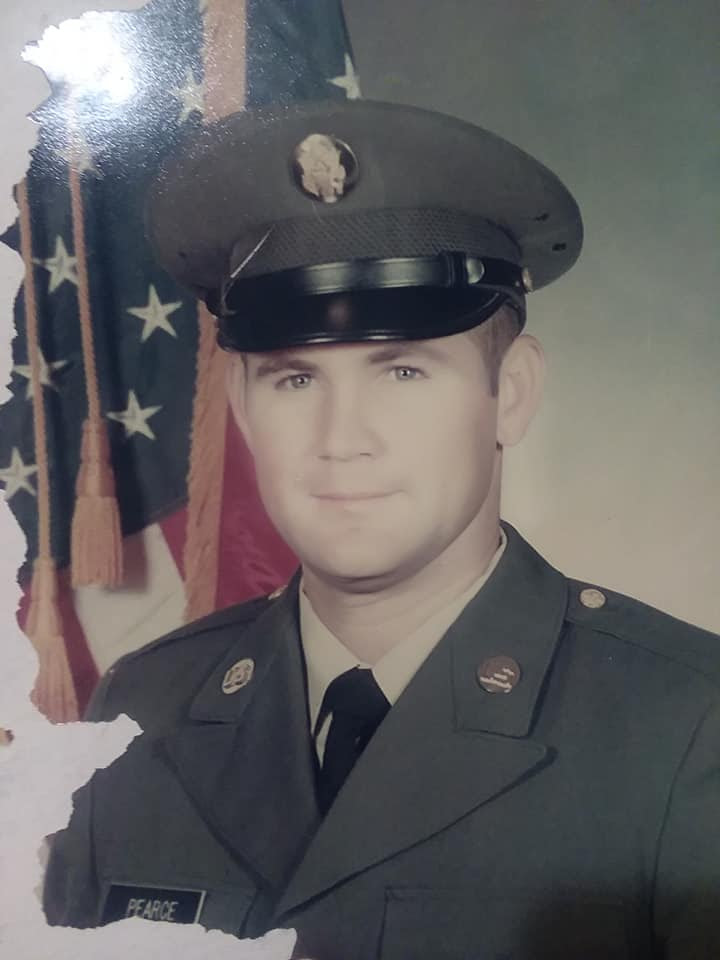
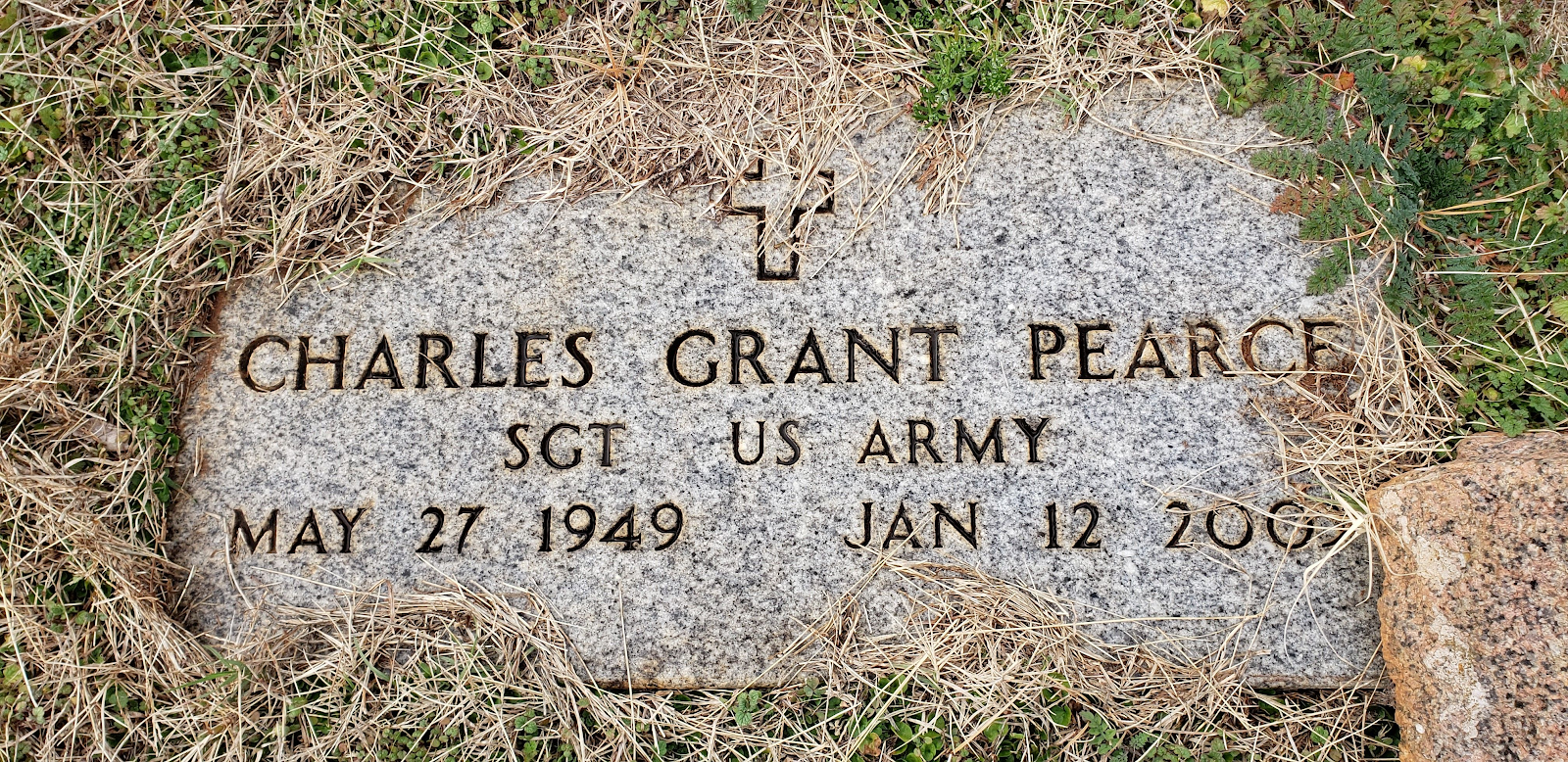
I believe Sunshine is Charles Grant Pearce, born May 27, 1949, in Clarksville, Texas.

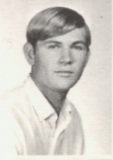
Here's Sunshine at Lee High School in Midland, Texas.


(Pearce was an Army Ranger in Vietnam. He died too early at fifty-three.) 

From Pearce's obit:

Grant was a talented musician and loved to sing and play the guitar, playing in several bands. He loved to fish and spend time with his family and friends. His outgoing, fun-loving personality made him a favorite of many. He will be greatly missed by all those who loved him.

-------------

Three cheers for Sir Buntline. He's unrivaled in this thing right now. Looking ahead, Manson Blog has something from Starviego in the works, and I will be sure to hop in with any breaking, awesome news if anything jumps off. Until then, high five me. 

Friday, July 8, 2022

Charlie Says - Movie Review

    Charlie Says (2019) hit the theater as a limited release in 2019, and pretty much came and went, barely even registering a showing at the box office, only taking in about $37,000. Despite this poor showing, it is actually a pretty good film, well worth checking out. The movie comes at the TLB saga from a different angle- a post-murders, feminist slant. The production values are relatively good, and there are some decent performances. It is currently available on Netflix, Amazon Prime, and Roku. 

    When it comes to movies about the Manson saga, it is probably best to look at the films from two angles- how does it work as a movie, i.e. entertainment, and how does it fit into the whole area of Manson/TLB studies regarding accuracy. This film is not a documentary, so problems with accuracy should not deter you from viewing it. Word of warning: there is abundant nudity and sexual situation in the film.

     The source material for the movie is The Family by Ed Sanders, and The Long Prison Journey of Leslie Van Houten by Karlene Faith (the producers add a disclaimer at the end that the movie was made without the cooperation of Leslie and Katie. Susan had already passed away at this point). The primary focus of the movie is on Lulu, with Katie and Karlene Faith playing prominent supporting roles. Susan does feature as well, but not too as large a degree as the others. Charlie is of course in a large number of scenes, but he is not the focus of the film. 

    The film itself alternates between two time periods- the mid 1970s and the months leading up to the TLB murders. Karlene Faith is a grad student that is invited by the warden of the California Institute for Women to teach courses to Lulu, Sadie, and Katie, who are being kept in isolation after having had their death sentences overturned. Karlene is a feminist scholar and focuses part of the sessions with the girls on the premise that they may also be victims of Manson's abuse. As the story progresses, the girls come to some painful realizations about the lives they led with Manson and the horrors they took part in. 

    All of the actors involved do a good job, with some giving real scene stealing performances. Hannah Murray as Leslie and Sosie Bacon as Katie are very expressive and emotional in their portrayals. Marianne Rendon actually underplays Sadie, making her more pensive than the typical over the top crazy Sadie portrayals we have come to expect. Merritt Wever really nails the socially conscious and empathetic Ms. Faith. 

    Some scenes to look out for: Paul Watkins bringing a young girl to the ranch who doesn't fall for Charlie's act or his jailhouse pimp games, Melcher's visit to Spahn for Charlie's music showcase, Charlie's physical and sexual abuse of Sadie over salad dressing (this really highlights his misogyny and control over the women) and the final key scenes in the movie: the LaBianca's murders and the cut to the 'present' when it really sinks in for Leslie.

    The LaBianca's murder scene is harrowing. We see the casualness of Charlie dispatching them inside, the confusion and mounting terror in Lulu, Rosemary's desperate fight for her life against a knife wielding Katie as she hears her husband being murdered down the hall. It culminates with Tex and Katie prodding Lulu to stab Rosemary. Hannah Murray plays this scene to great effect, punctuating each stab with her own blood curdling screams. The look she has on her blood spattered face afterwards is powerful.   

     Now onto the actual history in the film. A lot of the Manson movies are hampered by the fact that there is an awful lot of information and back story to pack into a running time of around two hours. Out of necessity, things are left out or condensed for storytelling's sake, or put onto composite characters or other characters. Charlie says at times suffers from some of these faults. 

    The set at Spahn is pretty accurate, and it is actually the same set used in Once Upon a Time in Hollywood. We also get to see Squeaky taking care of George (in more ways than one), Charlie orchestrating an orgy, Charlie's head games, the acid trips, Dennis Wilson, the Straight Satans, etc. these scenes come and go pretty quickly. 

     The motive for the murders is presented as being part Helter Skelter and part Manson's frustration at his derailed music career. After Melcher passes on Charlie's music, Charlie starts to spiral, becoming more and more aggressive in pushing Helter Skelter on the Family. Helter Skelter was mentioned in passing at first, but after this rejection, it takes center stage. 

    The filmmakers actually gave most of the women distinct, actual personalities, rather than the cartoonish portrayals they often get in some films. 

    The murders themselves receive little screen time. We are shown Tex and Sadie getting high on speed the night of Cielo. the murders at Cielo are condensed into a short but powerful scene of Sadie holding a terrified and pleading Sharon while Katie tells Tex to 'kill her.' Tex slashes Sharon's face and then the scene ends. The Waverly scene is slightly longer, but the actual murders aren't depicted in a graphic manner where we see Rosemary being stabbed by Leslie- we just see Leslie thrusting a knife over and over.

    Manson here is shown to be more of a con man and wannabe pimp than in some of his other on screen portrayals. He is shown to be manipulative more than he is shown to be some kind of mystical guru with extraordinary powers of persuasion and the ability to stop clocks. He uses a mix of drugs, physical abuse, sex, jailhouse games, and some pseudo philosophy in order to manipulate the Family members. 

      Overall, Charlie Says is one of the better Manson related films. The performances of the leads make it standout, and the portrayal of the relationships between the three women and Manson are fascinating to watch. It also includes a fairly accurate portrayal of life at Spahn.   

Sunday, November 7, 2021

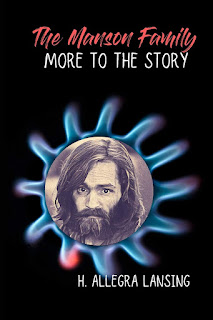
Book Review - H. Allegra Lansing - The Manson Family More To The Story


November 7th, 2021 
Sunday

This post accompanies a discussion I'm co-hosting live tonight at The Paulcast starting at 730 pm CST. 

My topic is: Unique Perspectives, Research Methodologies, and Cognitive Dissonance in the Manson Study. 

A reception with refreshments and a Make-Your-Own-Waffle bar will immediately follow our presentation. I believe the breakfast is located their green room but I'm not positive. You will definitely need your lanyard to get in. I have a small guest list and can possibly rush you past the doormen if you arrive late but keep in mind that hillbillies have lots of hungry cousins. 
-------------

Previously on Manson High...

"The Lunchroom In High Dudgeon!" 

The T-Birds (never Danny) and Stockard Channing placed a girl new on campus upon the dunce stool and forced the triangle hat upon her head while everyone pointed and cackled over her assuming she was the first Manson researcher to unearth the real name of Bill Vance. Oh, the arrogance.

Carrie without the blood for real. I called an actual Methuselah for his thoughts and he said, "The noive of that woman!"

I'd be duplicitous if I didn't cop to writing this not informative article about Bill Vance. Never doubt that my cultural and literary criticism and commentary originates at the contact point of my own thin skin. Same for everyone really no matter what they say. I'm just foolish enough to admit it. 

A smile crosses my dopey face every time I think about giant shoelace nets tbh. Seriously, in my case at least, when I don't know some fact or get it wrong, just tell me, I'll own it and we can move on. Not that my research will ever get close to Sanders or Lansing levels. Dumb cannot be fixed. 

Anytime I think of the word dopey I remember the scene in Statman where Rosie looks up from packing a box wearing a dopey grin. Unsure why. Read her book if you're new and haven't already. Never ignore unique perspectives in this thing. Word to the wise. 
+ggh
-------------
OKAY THE REVIEW
Last week, I grabbed the Kindle of Lansing's book to see what all the hubbub was about.  

510 pages
1.36 pennies per page

After riding in as the worst imaginable white knight a gal could ever dream of, I gotta do the Abraxas thing and say this book probably isn't for any of us unless you're looking to blow away the cobwebs and update yourself on what the normies think. Lansing wrote The Manson Family More To The Story for civilians. Which is actually one of the reasons I do not understand why she has to be Sissy Spacek but whatever. 

I'm sure you've heard of the True Crime genre. A lot of people publish there. None of them will ever know what you know about Manson but they will continue to pass through Sneakyville until we die. 

True Crime and Romance (but mostly Romance) are the main genres keeping the book stores open anymore. Naturally, I use Amazon and etc (websites) because of my multitude of fears like germs and talking in public and then also more generalized inconveniences such as driving to places where mask wars are fought daily. 

That was thoughtless. Please accept my apologies if you are a struggling brick and mortar book shop owner during these dark times. It's me not you but I always try to make things seem otherwise. Constantly trying to make everyone laugh is a failing. They say it comes from growing up in a tumultuous home. Hook me up with your website and I shall become a customer. 

Anyway. Lansing caught me up on the last half century of mainstream Manson for the price of a small latte with an extra espresso shot in a flyover city like my own. What a grifter. I was devastated. But then I remembered that in just about every profession, law, medicine, the police, the military, Washington, academia, insurance, basically everything where people earn nice livings and deeply stack their 401ks, everyone writes up their research exactly like Lansing does in her book because it words. Tried and true. 

All those examples and many others employ a practice (which ranges from completely foreign to mocked in this unbalanced noir drama) commonly referred to in the daytime world as research methodology.

Increasingly, such tasks farmed-out to mole people Curt Gentry losers like me who can usually be found eating day old donuts for dinner at desks in dark, mildewy rooms while getting paid much less by the farmer-outters than they pay themselves. No medical, vision, or dental ever also but hey working that way somehow provides special freedoms politicians always promise in tv commercials while I'm watching wrestling. 

The farmer-outters will tell you it's not their fault I got the wrong framed pieces of paper and they are correct. Same for the politicians. 

No clue how we ended up there. Overshare thy name is Green. The point is we'd do better with some standard of intuitive research methodology. More science basically. Explain why you think what you think and show how you got there. 

Let's get back to one of the writers doing what I just described. Lansing's book is an easy read. All the players are in the front of the book with their relevant info, and she moves on from there. Have I seen that list online before? Of course. Did it make me angry? Nope. Including it was a good idea. 

Reading Lansing was more like reading a magazine piece. Do you get angry at magazines? All those pages that won't turn themselves. Don't even get me started on the cologned rectangles sticking out everywhere. The beautiful faces and haunted eyes. Just a total horror show. 

Candice feels you. Quick swerve but how cringe was the scene where crazy Tex rolled up with two girls and Candice gave them the cold shoulder? That memory would haunt me in my cell at night while I stared at the ceiling. Her dad was a ventriloquist. 
  

I know you knew that already about Edgar but there was zero chance we were name-dropping Candice and not Charlie. Those dudes are waiting to slide out from beneath your bed tonight and watch you sleep btw. Pleasant dreams. 

Conceivably, a new person to all of this could read HS, then Lansing, and be caught up to the point where they'd be ready for Stimson and Schreck and the few others on that level without reading the ten books in the middle if they chose. The better idea is reading them all of course.  

Everyone always says each Manson book has one fact that is found nowhere else. Lansing collected those single facts and put them into an understandable report for her readers. The author has a nice sense of humor and it comes through in her writing. She shows concern for women and children while carefully tiptoeing around the triggers so have no fear. You're safe for a refresh there. 

Do I think Charlie and them were a cult? No. But people less weird than me surely do. In this live from last night, Lansing explains her interests in the case, admits to her lack of expertise in the field as she learns, and explains her research and plans moving forward. The author is also creating additional video content on her YT channel that I enjoyed watching. 

Lansing comes from the punk rock squats of the 80's and so do I. Maybe that's the reason I don't understand the hate directed toward her or maybe it's some other reason I'm missing. My guess is because she is newer and therefore unaware there were rings to kiss and parrots to repeat. 

The plan moving forward is to review every book that comes out and also look back on a few. I always say I'm not on a team but I suppose that's untrue. Without question, I love writers. I especially love you if you're a Curt because I am he as you are he as you are me but I also love you if you're the big shot getting paid while the mole people do the work. 

We inhabit strange days. Let's be kind out there. 

-------------
next week: standing in a shaft of light

Monday, June 24, 2019

The Reverend William R Cole part 2

Part 1

We will continue with a couple more articles on Bill, Claudia and Madaline.  Reporting the contents of the articles really doesn't capture the essence of the situation so they have been transcribed in full.  These articles are from the Kansas City Star, a "big town" newspaper and are without the quaintness of the weekly Gentry County newspaper.  They are down and dirty!

We learn a lot more about life at the McFall farm, about the tape that Bill took with them and a few other little nuggets. We hear from people who worked and stayed at the farm with the trio and from their landlords who seemed to truly care for Bill and "Linda."  A plus is, the photos that accompanied the articles were good enough post.


Kansas City Star
March 12, 1972
Harry Jones, Jr.

Manson ‘Kin’ Flee Missouri

McFall, Mo.- Life us quieter there now, less interesting.  The hippies have fled from McFall.
In their wake they left this little northwest Missouri town with the shudders.

Not because of anything they did here the last year and a half.  They were quite well behaved, in fact.  Didn’t bathe much, but most worked hard at their farming commune.

The shudders spring from the imagination as it contemplates what might have happened- retroactive whim-whams, call them- caused by acquisition of new information here about two weeks ago, right after the commune’s two full-time members hurriedly split for Kansas City 80 miles away in their old yellow pickup truck.

The new information was that three of the hippies, including the two that had been here the full 18 months, were former members of the demonic Charles Manson “family” of California.

The Manson family has not been much in the news lately, but its members are hard to forget- blamed for the mass murder of five persons at the Sharon Tate home one bloody summer night in 1969, of the wealthy La Bianca couple one night later, of Gary Hinman, musician, of “Shorty” Shea, Hollywood stunt man, and of God knows who else; the Satanic cult of zombie-like creatures, some of them, who reveled in wild, drug-fuzzed sex orgies, drank blood and killed on order whenever their egomaniac, racist, wizard-leader, pip-squeak Charlie Manson, said “kill.”

Lord Almighty, the 200 citizens of McFall had reason to exclaim, we might have all been murdered in our beds!

No one was, of course, Sheriff Ben Rainey of Gentry County can’t even think of an unsolved misdemeanor that might be attributed to them now.

One reason for this, apparently, is that the Rev. William (Billy) Cole, Mrs. Linda Cole and “Little Patti,” as they were known here, were a cut above Manson and some of the other family members who have been convicted of various murders.  Or that they have reformed.  Or Both.

Another factor is that they obviously did not wish to attract unnecessary attention.  Cole especially.  Not only are California law enforcement officials eager to find him, so are some of the family members who are still free.

Cole, 37, known as Bill Vance when he was with the weird cult, is believed to have vital information about several of the murders committed by family members, Sgt. Paul Whiteley of the Los Angeles County sheriff’s office, said.

Cole is believed to have in his possession long-sought tape recordings of Manson family members singing folk songs they composed about one or more of their savage killings, according to Sheriff Rainey.

This is the main reason Sergeant Whiteley and Bill Gleason, another Los Angeles officer, came here late last month expecting to take Cole into custody.  Specifically, they wanted him to testify at a murder trial in California, but they wanted to question him about related matters.  Warrants charging check forgery are outstanding against both Cole and Linda, so taking them into custody would have been no problem legally- just tactically.

Sheriff Rainey, who assisted the California lawmen when they were here, said that one of the officers told him he had talked to Manson in jail shortly before leaving for Missouri and that Manson has said: “If you see Vance, tell him I want that tape back.”

But Cole grew suspicious on the night of Feb. 25, that the security he enjoyed here so long might be near the end.  So, he and 22-year-old Linda sped off for Kansas City with a 16-month-old baby named Dawn, believed to be Linda’s, leaving most of their personal belongings behind.

They are known to have visited a hippie pad in the 4000 block of Tracy in Kansas City over the weekend, and according to a young man, who said his name was Joe Buffa, interviewed at the Tracy address, they left by bus for Texas two days later.

Buffa, 21, is one of numerous young men and women, several from Kansas City, who lived for a time at the commune.  Its population changed in number regularly, townspeople report, averaging 8 or 10 at a time in the warm months.  They lived in a 3-room and a 5-room shack (until the smaller one burned last summer) and inside an engineless white school bus when there was an overflow.

Buffa stayed a month.  Some visited for just a weekend, others for longer periods.  They worked the farm raising soybeans, corn, hay, tomatoes, cabbage, watermelon and other crops.  In the winters, when visitors weren’t so frequent, Cole chopped a lot of wood and sold it as far away as Kansas City.  He also hired out to other farmers for odd jobs at times.

Not all the townspeople welcomed them here.  No parades were held to greet them at any rate.  But no one reportedly opposed their presence openly and no untoward incidents between the town folk and commune dwellers could be recalled by those interviewed here last week.

Buffa said the only trouble he could remember was caused by a few “town Drunks” who like to stagger over to the 5-room shack and try to lure the young women outside with such entreaties as, “We got beer.”

Cole rented the 5-room shack for $15 a month from Mr. and Mrs. Clair Clevenger, who live nearby.  Clevenger, 57, is a farmer and rural mail carrier.


The Clevengers said they were under the impression that Cole and Linda were man and wife.  But after the two left the Clevengers received a letter from them with Linda signing her name “Linda Baldwin.”  California authorities report that her real name is Clair Smith and the “Linda Baldwin” is an alias and a girl known here and in the Manson family as “Little Patti” have used.

Little Patti is the third ex-Mansonite who lived here, but she disappeared last fall from McFall.  Clevenger said Cole told him she was in some sort of institution in Tennessee, but a letter found in the shack after Cole left indicated otherwise.

The letter was from another person in or close to the family and the writer referred to Little Patti’s disappearance from McFall.  He warned Cole that she could be dangerous to him if she “talked.”  The nature of the danger was not mentioned.

Dawn, the 16-month-old child now presumably traveling with Cole and Linda, was assumed to be theirs by the Clevengers.  They discovered two maternity ward wrist bands from Trinity Lutheran hospital in Kansas City in the shack after the couple’s departure and the bands bore the names “Linda Baldwin” and “Baby Dawn” on them.  But since Little Patti and Linda (Clair) has used that alias, it is not certain which young woman is actually the mother.

When Mrs. Clevenger asked Linda once, her reply was, “She belongs to all of us.”

While the Clevengers remember Cole and Linda with affection, they describe Little Patti as having seemed surly.  Several times, Clevenger said, he noticed her going to the mailbox in such a dazed condition he thought she might be using drugs.  Buffa describes Little Patti as being “spaced out.”
The Clevengers, a friendly pair, appeared actually to miss Cole and Linda last week, despite their surprise at the Manson tie-in.  They had added a fresh dimension to their lives- especially Linda.

“We liked them,” Clevenger said.  “They were nice people.”

Mrs. Clevenger what a cheerful, outgoing young woman Linda was, always smiling or laughing.
“Yep,“ added her husband with affection, not derision, “she was as happy as a pig in a mud puddle and just as dirty.”

They displayed a letter Cole and Linda has sent them after leaving.  It began: “Dear Clare (sic) and Kathy: We suspected this for quite some time.  I’m sorry we cannot make personal amends…”
It ended: “… we appreciate and love you all for everything you have done for us.”

The letter also gave the Clevengers authority to dispose of their belongings as they saw fit and use them to help pay off their debts in town.  They promised to repay them and three merchants what they owed them.

Such a letter is in no way consistent with the picture that has emerged of the typical Manson family member in California.  Cole, Linda and Little Patty all appear sporadically in the pages of “The Family” (Dutton; 1971), by Ed Sanders, a book detailing the activities of the “Mansonoids,” as he called them, from their beginning to the imprisonment of many of them.

Sanders, an ex-Kansas Citian, described Cole (Vance) as a former jail mate of Manson who joined the family in 1969 as an accomplished thief.  He did not link him or either of the young women to any of the murders.

In fact, he wrote that when Manson asked Cole’s girl friend to kill Gary Hinman, the musician, she refused and Cole interceded on her behalf.  The upshot was that Cole and the girl left for Texas and family members mumbled about killing them if they ever returned, Sanders wrote.

They did return, however, and Sanders wrote that a tape recording of the family’s re-creation of the Hinman’s murder was among those Cole took into hiding with him.

(Note: this is on page 249 of the very first edition of Sanders book)


Sanders also wrote that all three of the Mansonites who wound up in McFall were among those inside a house in California when another member, known as “Zero”, died of a gunshot blast in the head.  Little Patti, in fact, was alone in the bedroom with Zero at the time. He related. While the other two were in the next room.  Zero’s death was ruled a suicide, the result of an especially risky game of Russian roulette. With only one of six chambers of the gun empty.

Cole and Little Patti were among numerous family members arrested in Death Valley in October, 1969, at the time of the major roundup of the group, but they were later released for lack of evidence.  The three went to Kansas City for a time, then appeared here in the summer of 1970.

Sheriff Rainey remembers that Cole visited him in nearby Albany when he first arrived to establish himself as a law-abiding citizen.  He said he told Cole he was welcome “If you don’t throw any pot parties or rock festivals- if you do, I’ll run your … out of the county.’”

Clevenger recalls that Cole was a diligent but that he reminded him of “the fellow who works hard all the time but never seems to get anything done.”  He was particularly amused at the fact that Cole planted his crops in concentric squares instead of rows, making cultivation and harvesting difficult.
The publisher of the Stanberry (Mo.) Headlight visited the commune last summer and talked at length with Linda.  He left impressed with their industry and observed: “They work too hard for hippies.”
Linda apparently lectured the publisher at length on the virtues of organic farming, and with a twinkle in her eye, asked him, “What did you expect to find?   Wild parties and nearly nude women?”

If anyone held pot parties at the commune, neither the sheriff, the Clevengers nor several others interviewed here seemed to know about it.  Marijuana does grow in the area, but Clevenger said he does not think any was grown on the few acres Cole worked.

Cole gained access to the land through its owner, Stephen Hann, 9525 El Monte, Overland Park, who said he had allowed Cole to work the land for part of the crop but that Cole had not done well enough to share the crop with him.

Hann expressed surprise that Cole had been connected with Manson, and he was under the impression that Linda was Cole’s daughter.

Most of their belongings have been removed from the shack by now, either by Clevenger, who is preparing it for a new tenant, or by a group of Kansas Citians who drove here early the morning of Feb. 29 in Cole’s yellow pickup and a car to recover what they said was their property.

That expedition from Kansas City created a few tense moments for the young folks as well as Sheriff Rainey.

Clevenger noticed lights on in the shack about 3 o’clock in the morning.  He telephoned the sheriff, who hustled down from Albany with a deputy.

Not knowing who was inside and seeing Cole’s pickup, the lawmen understandably drew their revolvers before entering the shack.  When they kicked in the door, they discovered five surprised young men and two startled young women preparing belongings to be put in the pickup.

“Put the guns away,” one of the men pleaded earnestly.  “We’re peaceful.  We’re peaceful.”

Indeed, they were.  They explained they bought the pickup from Cole over the weekend.  The belongings they were loading into the truck were their own; they had loaned them to the couple, they said.

Their explanation satisfied Sheriff Rainey and Clevenger, and the youths were allowed to resume loading the truck.

“He’s one of the better sheriff’s we’ve run into,” commented Buffa, one of the seven, back in his pad in Kansas City.

Buffa and two others on that trip said they were disappointed, however, that they had not been able to tow the white school bus back to Kansas City.  They had planned to put an engine in it and use it for travel, they said.  The bus is now in the possession of one of the businessmen in town to whom Cole is indebted.

Buffa and the others said they were surprised to learn that Cole had been connected to Manson.  Asked whether Cole had tape recordings with him, Buffa said yes, he had, that he had shown one to some girls at the commune but had not said what was on the tape.

Why had he joined Cole and the others at the commune last summer, Buffa was asked.

“It was for people who wanted to get back to the land,” he said, “for people who didn’t like the city.”

Some fragmentary evidence of what life was like for Cole and Linda here was still inside the house last week.  No running water, for instance, inside the house.  A well pump was outside the back door, a 3-holer outhouse nearby.  Surplus commodity food was in the pantry.

(A check at the surplus commodity food distribution office in nearby Albany revealed that once a month Cole or Linda or both of them checked in promptly for food for a family of three.  The supervisor they always took all they were entitled to- dry beans, butter, cheese corn meal, egg mix, flour, fruit juice, shortening, macaroni, canned chopped meat, evaporated milk, instant milk, instant potatoes, prunes, rice, corn syrup, rolled oats, peanut butter and assorted vegetables.)

A Monopoly set, well-used, was in evidence.  An old TV set lay on a mattress in the front room.  A sun lamp light bulb was screwed into a ceiling fixture.  A photograph of the 8 young men of “Chicago,” a rock group, hung over a double bed.  Letters and postcards addressed to various persons “c-o Youth-for-Life, McFall, Mo.” Lay on a table.  A notebook lay among them, doodles, figures, and miscellaneous thoughts inside.  One page contained song lyrics:

“There’s a new world coming.  It’s just around the bend.  There’s a new world coming.  This one’s coming to an end.  There’s a new voice calling…,” and that was all.

Dozens of empty Prince Albert tobacco cans were piled together in the kitchen, a cigarette roller nearby.  Sheriff Rainey said he had sniffed the cans for marijuana but they only smelled of tobacco.
A certificate granting Cole, Linda Baldwin and “Patricia Baldwin” a charter for a “Youth-for-Life church” was found torn in eight pieces.  It was signed by “Rev. Dr. Herman Keck, Jr., President of the Calvary Grace Christian Church of Faith, P.O. Box 1674, Fort Lauderdale, Fla.” It was dated Feb. 28, 1970.


Cole and his small transient following apparently did not classify as “Jesus freaks.”  Linda summed up the Youth-for-Life religion for the Stanberry Headlight last year as: “Total acceptance of all churches and beliefs with no prejudice at all.”

Books found in the house did not dispute this impression.  They ranged in subject matter from revolution to religion, but the bulk of them were conventional, not even controversial.

Outside the shack were two sheds, one for a goat and sheep Cole sold before leaving, the other for three chickens that were still inside.  They also kept rabbits.  In the field near the burned out 3-room shack in which they had once lived lay a scarecrow wearing a blue sweatshirt that bore the peace symbol and the word “Love” beneath it.  The sweat shirt had been placed on the scarecrow upside down.

The murder trial at which the state had wanted Cole to testify was a 4-month affair.  The jury deliberated most of last week, and was finally recessed for the weekend without reaching a verdict.  Bruce Davis, a Manson family stalwart, is charged as one of the killers of Hinman and Shea, the stunt man.

Sergeant Whiteley said the state did not learn of Cole’s whereabouts here until very late in the trial, but he would not say how this was learned.  When officers did find out, they had to inform the court- and therefore the defense as well- where Cole was hiding before they could go get him, he said.

Sheriff Rainey said a defense attorney for Davis rushed here immediately, arriving even ahead of the Los Angeles County lawmen.  It is uncertain whether this lawyer alerted Cole or whether one of Sheriff Rainey’s own deputies accidently had aroused Cole’s suspicions the day before when he visited Cole’s shack to double check his appearance to compare it with what California authorities had supplied on the man they were seeking.

Whatever the case, Cole escaped.  “It’s too bad,” Sergeant Whiteley said.  “He could have been a very valuable witness.”  Sheriff Rainey added his regrets.  One television network, he said, had offered a large sum of money for the tape recording.

“I guess I could have put them in jail as soon as they called from Los Angeles,” he said.  “We got a pretty nice jail here.  Feed good.”


Kansas City Star
March 16, 1972
By Harry Jones, Jr.

Commune Falls Fallow

Well, Molly and Ned, you see, had been hitch-hiking all over the country last summer, you know?  Florida, New York, the Dakotas, all over, and they hit Kansas City and run into this friend they’d known in California, a guy they called “Boris”, not because that was his real name but because he was sort of a hairy-chested revolutionary, you know?  And Boris tells them about this farm up in Northwest Missouri.

So Molly, who is 23 and a very talented painter, and Ned, who is 20 and is very big for motorcycles and Molly and other things, decide that since they have nothing much else to do, why not join Boris and whomever else is up there and live in a farmhouse and till the soil and get back to nature and things like that, you know?

They thumb their way 80 miles up to this little town called McFall, Mo., and are walking along a dirt road looking for Boris when they run into this girl named Linda, in her early 20s, who is walking towards them on the same road and they ask her, you know, “Where’s Boris?” and “Where’s this neat farm?” and things like that.

That is how it started for Ned and Molly (although Ned and Molly are not their real names- they ask that their other names be used here).  Earlier this week, a friend called them and told them he had just read in the newspaper that the three persons who more or less ran that farming commune they had lived on for almost two months were (gasp) former members of the blood-letting Charles Manson “family” of California, and what did they think of that?

“That’s really weird,” said Molly yesterday, seated by her easel in an old farmhouse near here dabbling away at a canvas as she talked about life in a commune.  “I mean. It really blew my mind.  Why, I remember when farmers would stand around looking at us, I’d say things like, “Who do they think we are, the Manson family?”

Well, what was life like in the commune, anyway?  Idyllic?  Enrichment of the soul and soil? That sort of scene?

Not quite.

When they first arrived, the 8 or 10 others already there were living in filth.  Said both Molly and Ned, in separate interviews: “We told them, ‘just because you raise pigs doesn’t mean you have to live like them.’”

The group was living in two old farm houses and a motorless school bus.  Present were the three ex-Mansonites, who called themselves the Rev. William Cole, 37, Linda and Patti, both in their 20’s; young men who went by such names as “Bo,” and “Little John”; other young women with names like Nancy; and two infants, one apparently belonging to Linda, the other Nancy.

It did not take the hitch-hikers long to decide to move into the woods and build their own shack, for the sake of privacy, cleanliness and a desire to disengage themselves from the internal bickering and arguing over such matters as who was going to put in a good day’s work and who was going to be able to avoid work as much as possible, they said.

Then came the dysentery.  Seems as though someone was so unfamiliar with rural life that he or she did not realize that after you have drawn water from the well and used it for bathing, you are not supposed to dump the dirty water back into the well.

And as though suffering from dysentery were not bad enough, Ned said, the outhouse was so filthy that most in the group preferred trotting off to the woods when necessary.

Then someone thought he had caught a venereal disease.  As Molly explained it, “Everybody got worried.  I knew everybody’d been playing around with everybody else except Baxter and me.”  (Baxter,” is Ned- Molly continually referred to him in that way, while Ned, interviewed in the back room of a motorcycle shop in which he works as a repairman, kept referring to “me and Molly” in a manner that revealed both respect and adoration.)

Then came the heat- 100-degree weather, day after day, as they remember it- so that instead of working so much in the fields, “we’d drink beer and play the guitar and go swimming.”


Bill Cole, the leader of the commune, was a likable soul, both said.  He seemed to be the only one who knew anything about farming.  He hardly qualified as “Agriculturalist of the Year, however.  The only really outstanding crop on the 200 acres they naively thought they could work were huge tomatoes, Ned said.

“They were really fine tomatoes, “he added, rounding his hands to demonstrate their cantelopian size.  “And we had a whole acre of them.  But we didn’t have a truck and we couldn’t get them into the city to sell.  Linda sold a few around town, but most of them just lay out there, it was terrible.”
Cole, on the other hand, was patient, dealt fairly with the farmers in the area, and worked hard, they said.  When Boris nearly burned out the tractor engine (the tractor had been given to them), Cole did not bawl him out but patiently explained how tractors need oil, Ned recalled.  And Molly remembered how philosophically comforting Cole had been when she had been telling him one day about being terrified of lightning and thunder.

“He’d say it’s okay to be afraid,” she said, “that that was the first step to being aware.”

Molly also remembered how Cole would become angry when Boris started talking about revolution.  He’d tell Boris, “Shut up, I don’t want to hear none of that out here,” she said, and now wonders whether maybe that was because Cole had his fill of such talk when he was with Manson in 1969.
Finally, a friend of Ned and Molly visited the commune one Sunday, saw what it was really like and gave them and old truck, gratis, so that they could leave.  When they stopped by later, in the fall, everyone else had left too, except Cole, Linda and Patti.

Now those three have left, California lawmen on Cole’s tail, wanting him on a check forgery charge and as important, witness against Manson and others accused of murder from that “family.”
Boris is now attending a university.  Some of the others live in a hippie pad where they talk of traveling.  Molly will have an art show in Denver soon.  Ned is busy repairing motorcycles.
In the field nearest the shacks in which they lived lie hundreds upon hundreds of yellow-orange tomato skins, long since dried and wrinkled by the summer sun and winter cold.

Thanks to Gorodish for finding Sanders 2002 version of this story which he put in a comment in part 1.  I tend to believe this contemporaneous version of what happened over Sanders 30 year old recollection.  It's clear that Sanders knew about the Missouri connection of Vance, Smith and Cottage he just might gotten the facts a bit skewed.

It is possible that Sanders was the informant to Vance's whereabouts.  I searched for and  found corroboration that Sanders was in Missouri prior to Whiteley and Gleason going to Missouri with a warrant. The timing is perfect.

Sanders and Ken Kesey participated in "Perspectives on American Culture" Robert F Kennedy Memorial Symposium at the University of Missouri, Kansas City in mid February 1972.

I'm not convinced that there was nothing on the tapes but music. Vance could have destroyed the incriminating tape, if one existed, and only kept the ones that were solely music.  Regardless, it's an interesting story.