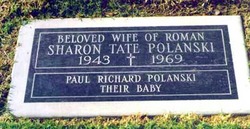
A lot had occurred while Manson was gone. Bobby Beausoleil had been arrested so maybe the timing of the announcement relates to the final decision to ‘get a brother out of jail’ and start copycat murders. Then again, maybe the announcement occurred because of the approaching anniversary of the Watts Riots (August 11-16, 1965) . Or maybe there was some other reason why, suddenly, now was the time.
And maybe it was related to Manson's trip to Esalan.
I scoured the notes I took listening to Manson's interviews. I didn’t find any reference to Esalen in my notes. I admit I didn’t go back and listen to those again. At the time I took the notes I wasn’t looking for Esalen so maybe something is out there. If not, and if we believe Nuel Emmons, here is what Manson said about the trip....
_____
“So, looking for that feeling of escape, I drove there now. I spent the night in my truck, and the next day, I visited the Esalen Institute to enjoy the mineral baths. It was totally relaxing relaxing and I felt refreshed when I left.
After leaving the Institute, I parked my truck by the ocean, smoked a joint, played some music and fell asleep. About two in the morning, I woke up and went looking for a coffee shop. While looking, I pulled into a service station for some gas and to take a leak. On my way out of the john, a young, pretty girl [Stephanie Schram] was going into the ladies’ john and I lingered until she came out. When she did, I asked what a pretty girl like her was doing out so late at night—by now it was well after three.”
(Emmons, Nuel. Manson in His Own Words (p. 192). Grove Atlantic. Kindle Edition.)
_____
There are a few things wrong with this.
The most obvious error, for anyone who has read Helter Skelter, is that Stephanie Schram is not with him when he goes to Esalen but she is picked up after his visit. Her statements contradict this. She says she was there.
The most obvious error, for anyone who has read Helter Skelter, is that Stephanie Schram is not with him when he goes to Esalen but she is picked up after his visit. Her statements contradict this. She says she was there.
 |
| Steve McQueen at Esalen |
Another problem is that by March 1968 no one simply walked into the Esalen Institute to use the hot springs. By then a ‘hippy guard’ (sometimes a Hell’s Angel) patrolled the parking lot and entrance and checked the credentials of anyone trying to get in. ("Games People Play at Big Sur", Los Angeles Times, Sunday, March 17, 1968)
The only way to get in by August of 1969 was by reservation or invitation. It cost $75 for a weekend (about $600 today).
The only way to get in by August of 1969 was by reservation or invitation. It cost $75 for a weekend (about $600 today).
The third problem is the date is wrong. In 'The Family' Ed Sanders calulates Manson’s presence at Esalen as being August 3, 1969. He relies on Emmon’s statements by Manson, above. (Ed Sanders, The Family, pp 190 2002 edition.) That is not the right day.
If Emmons did hear this description of Manson's visit to Esalen from Manson it does at least suggest to me that Manson was trying to trivialize his visit there: (1.) He changes the date (2.) He eliminates the only eyewitness and (3.) He avoids any suggestion that the egg heads at Esalen had disrespected him.
Why?
Why?
Esalen is not much help in answering this question. The ‘official’ position of the institute is that Manson was never there.
______
“Larry Harvey and Michael Murphy are sitting on stage in that same cliff-topping tent near the end of Esalen’s property where we were welcomed to the four-day summit. Stuart Mangrum is up there too, moderating the exchange between one of Burning Man’s founders and the co-founder of Esalen. It’s a little like they are at the adult table, talking as visionaries do, while us kids overhear snippets and try to get the jokes.”
*****
“A lot of people didn’t like, or were threatened by, what was happening, or what they thought was happening, at Esalen. Dick Nixon targeted the place for dirty tricks, like the time his henchmen tried to convince the press that Charles Manson had hatched his murderous plans for Sharon Tate while on retreat there. (For the record, Manson never stayed at Esalen.)”
(John Curley, The Burning Man Journal, November 19, 2015 from https://journal.burningman.org/2015/11/philosophical-center/spirituality/burning-man-takes-a-look-inside/)
_____
If the author took the parenthetical at the end from something Murphy, the co-founder of Esalen, said then Murphy seems to be saying Manson was never there. At the same time look at how the denial is actually phrased: Manson never “stayed” at Esalen. And that may be accurate.
A historical account of Esalen has this to say about Manson’s visit.
_____
“Things could get very dark indeed. Charles Manson was forming his own cult down at Lime Kiln 57. Moreover in an aggressive attempt to discredit Esalen, what Murphy calls “the Dirty Tricks Department” of the Nixon administration went so far as to claim that Charles Manson had been indoctrinated at Esalen and that Esalen was therefore somehow implicated in the murders. The opposite was in fact closer to the truth. Seymour Carter remembers being awakened by a young woman in the middle of the night in the waterfall house, where he was living with his girlfriend. The waking woman wanted to get her friends into Esalen. Sleepily, Carter agreed to meet the group, which turned out to be three women, a baby and a scruffy hippy man in a bread truck van parked up on Highway 1. After offering Seymour some grass to smoke, the man began playing his guitar and singing, both badly. Carter sensed that something was wrong, that they were, in his own words, “bad news”. He thus refused them entry and sent them on their way. Within two weeks, the murders happened, and within another two Esalen was receiving phone calls about rumored links. Carter realized then just who he had sent away that night.
It was true, though that Abigail Folger, the coffee heiress who was among the murdered, had attended an Esalen seminar. It was also true that Sharon Tate happened to be at Esalen the night before the gruesome events. Both were there to work with Perls. But there certainly was no causal link between Esalen and the Manson crimes. The connection was not fact, but rather the work of a misinformation campaign apparently under the direction of White House aides. With events such as this Esalen knew it had to be careful. It had enemies in very high places.”
(Jeffery Kripal, Esalen: America and the Religion of No religion, University of Chicago Press, 2007 pp 133).
_____
Again, there are a few problems with this story too. First, no corroborating source is identified, while the Hell’s Angels bit, just above, has a footnote, the Manson story does not. Not even one saying the author spoke to Seymour Clark.
There are, also, too many people with Manson, although the description does sound a bit like the Family right around April, 1968.
There are, also, too many people with Manson, although the description does sound a bit like the Family right around April, 1968.
 |
| George Harrison and Ravi Shankar at Esalen 1968 |
I also found absolutely nothing to corroborate this tale from anyone including Seymour Carter (Gary Sohns), even after slogging through about a dozen interviews where I learned more about Gestalt Therapy than I ever wanted to know.
And of course, Sharon Tate was not at Esalen the night before the murders (in fact, I found no evidence Sharon Tate was ever at Esalen).
And, of course, no one at Esalen started receiving phone calls about Manson and the murders within 'two weeks' of the murders. The police didn't know who committed the crimes for months.
And of course, Sharon Tate was not at Esalen the night before the murders (in fact, I found no evidence Sharon Tate was ever at Esalen).
And, of course, no one at Esalen started receiving phone calls about Manson and the murders within 'two weeks' of the murders. The police didn't know who committed the crimes for months.
There is another potential problem with this story. At some point (the exact date is not clear) in 1969 or 1970 Carter took a trip to Chile chasing after Oscar Ichazo, the founder of the Arica Institute. Some sources place that trip during the summer of 1969. And that, of course would mean he wasn't there to confront Manson in August.
So I am pretty confident we can write this story off, too, as 'not accurate'.
That leaves the official narrative, which is supported by our one eyewitness: Stephanie Schram.
_____
“On the night of the fifth Manson and Stephanie drove north to a place whose name Stephanie couldn’t recall but which Manson described as a “sensitivity camp.” It was, he told her, a place where rich people went on weekends to play at being enlightened. He was obviously describing Esalen Institute.”
*****
“It is unknown whether he had been there on prior occasions, those involved in the Institute refusing to even acknowledge his visits there.*”
*****
“Manson took his guitar and left Stephanie in the van. After a time she fell asleep. When she awakened the next morning, Manson had already returned. He was in less than a good mood, as, later that day, he unexpectedly struck her. Still later, at Barker Ranch, Manson would tell Paul Watkins—to quote Watkins—that while at Big Sur he had gone “to Esalen and played his guitar for a bunch of people who were supposed to be the top people there, and they rejected his music. Some people pretended that they were asleep, and other people were saying, ‘This is too heavy for me,’ and ‘I’m not ready for that,’ and others were saying, ‘Well, I don’t understand it,’ and some just got up and walked out.”
*****
Footnote:
“At 3:07 P.M., July 30, 1969, someone at the Tate residence called the Esalen Institute, Big Sur, California, telephone number 408-667-2335. It was a brief station-to-station call, total charge 95 cents. It is unknown who placed the call, or—since the number is that of the switchboard—who was called.
Since the call occurred just six days before Charles Manson’s visit to Esalen, it arouses a certain amount of speculation. A few things are known, however: none of the Tate victims was at Big Sur during the period Manson was there; Abigail Folger had attended seminars at Esalen in the past; and several of her San Francisco friends visited there periodically. It is possible that she was simply trying to locate someone, but this is just a guess.
Though both the call and Manson’s visit to Esalen remain mysterious, I should perhaps note that, with a single exception—the Hatami-Tate-Manson confrontation on March 23, 1969—I was unable to find a prior link of any kind between any of the Tate-LaBianca victims and their killers.”
(Bugliosi, Vincent. Helter Skelter: The True Story of the Manson Murders (25th Anniversary Edition) (p. 317-318 and 588). W. W. Norton & Company. Kindle Edition.)
_____
Stephanie Schram more recently said this…..
_____
_____
Stephanie: We spent one night there and then we went by the Esalen Institute where I think Charlie had hopes to get some recording people on his side to record some music.
Cats: Did you go in with him?
Stephanie: No, I didn’t.
Cats: When he came out was there a change in his attitude at all?
Stephanie: No. I had already at one point the night before seen a violent side of him and why I remained with him, I don’t really know.
Brian: Can you tell us about that?
Stephanie: Well we met a couple of people hiking down one of the trails there in Big Sur and I think he was hoping that they would be able to provide us with dinner. I was pretty freaked out at the time and I think when they saw me they were afraid and they left. He came into the van and gave me a pretty good slap and said that I had ruined his chances for dinner that night.
Brian: Wow and that’s when the first red flag goes up.
Stephanie: Yeah I know it should have, shouldn’t it?
*****
Cats: When he came out of Esalen was he even more angry?
Stephanie: Well, yeah he was. He seemed to kind of stick to himself though then. I mean he was obviously angry, was not real communicative with me so I was just along. I was just kind of along at that point.
(Brian Davis and Cats Cradle, Interview with Stephanie Schramm former Manson Family Member, October 9, 2011, Transcribed by Gina Judd April 29, 2014 downloaded from scribd.com)
_____
None of this tells us ‘why’ Manson went to Esalen. According to Bugliosi, he told the Family he went there to get new recruits. (Bugliosi, Vincent. Helter Skelter: The True Story of the Manson Murders (25th Anniversary Edition) (p. 317). W. W. Norton & Company. Kindle Edition.) But I don’t think that is why he went to Esalen in part because the clientele of Esalen don't fit the Family mold.
What is the Esalen Institute?
_____
 |
| Esalen Encounter Group circa 1968 |
“The Esalen Institute is a non-profit organization founded in 1962 by Michael Murphy and Richard Price as an alternative educational center devoted to the exploration of what Aldous Huxley called the "human potential," the world of unrealized human capacities that lies beyond the imagination. Esalen soon became known for its blend of East/West philosophies, its experiential and didactic workshops, the steady influx of philosophers, psychologists, artists, and religious thinkers. Historical luminaries like Abraham Maslow, Joseph Campbell, Allan Watts, Fritz Perls, Allen Ginsberg, Ida Rolf, Joan Baez, and countless others have gathered here to develop revolutionary ideas, transformative practices, and innovative art forms.
*****
The site of the natural hot springs (also known as the baths) is on the rocky ledge perched just 50 feet above the Pacific, is unparalleled in history and in its majestic beauty. These same healing waters have been flowing for centuries providing respite for Esselen Indians and early pioneers.
Today Esalen recognized as a world leader in alternative and experiential education. Now in its fifth decade, Esalen offers more than 500 public workshops and seminars a year, accenting personal growth and social change, in areas traditionally neglected by mainstream institutions. Esalen is also known for its research initiatives, invitational conferences, residential work-study programs, and long-term is a retreat center where people live and work in a communal setting.” (Steve Harper.com)
_____
So why would Charles Manson go to Esalen?
 |
| Fritz Perls at Esalen 1969 |
Some people believe the CIA had some kind of covert operation set up at Esalen and that Manson went there to get his marching orders from his handlers to commence the destruction of the 60’s youth movement and the new left by committing grisly murders. Ah…no…that's not it....get out the aluminum foil (see below).
I think in order to answer that question 'why' Manson went to Esalen the first step is to understand what had happened to Manson’s ‘musical career’. You see, I don’t think Manson went to Esalen to rap with Fritz Perls about Gestalt Therapy (Perls had actually left Esalen in July of 1969) or to soak in the hot springs with Steve McQueen.
Manson’s Musical ‘Career’ August 1969
Manson had all but run out of opportunities to further his musical career by August 1969. It didn't look like he would ever get his message out.
I once believed that Manson recorded at Brian Wilson’s house only once. In a post, I even argued that event was the Steve Desper recordings in July 1969. (http://www.mansonblog.com/2017/05/the-manson-sessions.html).
I still believe he did record with Desper in July of 1969. But I don’t think that was the only or the first time he recorded at Brian Wilson's house.
Many sources, and the generally accepted narrative, place Manson at Wilson’s studio a year prior to Desper's session in 1968.
Dianne Lake describes a recording event at Brian Wilson's house, involving Manson, so radically different from Desper that I suggested here (http://www.mansonblog.com/2017/11/do-facts-matter.html) that she got her facts wrong. Now, I’m not so sure. And I think I may owe her an apology on this one (but not the rest).
I once believed that Manson recorded at Brian Wilson’s house only once. In a post, I even argued that event was the Steve Desper recordings in July 1969. (http://www.mansonblog.com/2017/05/the-manson-sessions.html).
I still believe he did record with Desper in July of 1969. But I don’t think that was the only or the first time he recorded at Brian Wilson's house.
Many sources, and the generally accepted narrative, place Manson at Wilson’s studio a year prior to Desper's session in 1968.
Dianne Lake describes a recording event at Brian Wilson's house, involving Manson, so radically different from Desper that I suggested here (http://www.mansonblog.com/2017/11/do-facts-matter.html) that she got her facts wrong. Now, I’m not so sure. And I think I may owe her an apology on this one (but not the rest).
I think, initially, an effort was made to record Manson the way Dennis Wilson and his kin would record anyone. I think that in the summer of ’68 the Wilsons brought in studio musicians and the whole shebang to help Manson. Dianne Lake describes that event.
_____
“Dennis scheduled a recording session for Charlie at his brother Brian Wilson’s house somewhere in Bel Air. Charlie brought a few of us with him in the car with Dennis. The house was a beautiful two-story place, with a state-of-the-art recording studio inside. While Charlie was jamming, he let us watch. He seemed nervous at first, which I found unnerving. Dennis told him to relax and to show the people what he had. We had been singing some background vocals for him, but fairly soon Charlie signaled for us to leave. He seemed to be having trouble getting into his groove. As we headed for the door I noticed that someone who I believe was Brian along with some of the others were stopping Charlie and making suggestions. Someone suggested he increase the tempo of the song. I saw the slow burn growing in his eyes. Charlie hated anyone messing with his music. We could feel the tension rising as we went outside.”
*****
“When Charlie emerged, he was seething, muttering under his breath things like “Cocksuckers, they should leave it alone.” His pupils were dilated and his energy had completely shifted. The group was dispersing, and Brian and the other musicians who had been in the studio with Charlie seemed shaken. I have heard accounts that Charlie had pulled out a Buck knife when he got fed up with the attempts to “produce” him as they would any other musician.”
(Lake, Dianne. Member of the Family: My Story of Charles Manson, Life Inside His Cult, and the Darkness That Ended the Sixties (Kindle Locations 3822-3844). HarperCollins. Kindle Edition.)
_____
The effort didn’t work.
 I think the next step in the process was Gregg Jakobson taking Manson ‘under his wing’ so to speak. This led to the various Manson recording sessions during the spring of 1969 that Jakobson testified about at the trial.
 I believe Jakobson may have given those tapes to Terry Melcher or played them for him and that Melcher was unimpressed.
Strike two.
Remember Jakobson’s job. He was a talent scout for Melcher. His job, if he believed in an act was to find a way to sell him. Jakobson clearly believed in Manson's talent.
_____
Q (Bugliosi): Were you impressed with Mr. Manson’s musical talents?
A (Jakobson): Yes.
Q: Did Mr. Manson ever tell you what ambitions he had, if any, in the field of music?
A: Yes.
Q: What did he say?
A: He wanted to record. He wanted to get his message heard. He wanted people to hear what he had to say.
Q: And what did you say to that, if anything?
A: I agreed. I thought it was a good idea and I thought it was a fine way to do it, through music, through records.
_____
So, at this point I believe Jakobson convinced Melcher that the way to sell Manson was to capture him in his natural habitat. Enter Mike Deasy, stage left. Jakobson convinces Melcher to go to Spahn and see the beast in the wild. He brings along Deasy to record it.
Afterwards, Melcher is still unimpressed.
Afterwards, Melcher is still unimpressed.
Strike three.
Manson is pretty much out of options at this point. But I believe Jakobson convinced Dennis Wilson to give Manson one more shot. No one shows up to listen to the session except Desper who is there to record it. A call comes down from 'management' to Desper telling him to record this guy, Manson. So late one night when no one is around Desper records Manson. No one listens to the tapes, or maybe they do listen to them and chuck them aside as crap.
So, what was Jakobson’s plan at this point? Fortunately, he told us.
Q (Bugliosi). Did you ever want to make a documentary film, on him?
A (Jakobson). Yes.
Q. Did you discuss your interest in Manson with Terry Melchior [sic]?'
A. Yes.
Q. Did, you want Melchior to somehow be involved in this project?
A. I did.
Q. In what fashion?
A. As a producer, financier.
Lance Fairweather (Jakobson): "I wanted Terry Melcher to meet Charlie and make this film of him. If we could sell the man, his music would emerge, so I wanted some backing for the film.”
This same topic is discussed during one of Jakobson's recorded interviews with Bugliosi. Jakobson says his ultimate goal was to record Manson and a documentary film was going to be the vehicle. (Jakobson Interview by Vincent Bugliosi at Cielodrive.com, Part 3 at 20:00). Jacobsen’s goal was to capture the essence of Manson’s music. That essence has been best described by Neil Young.
_____
 |
| Neil Young 1968 |
“Anyway, I went to visit Dennis there and found him living with three or four girls who were kind of distant. There was a detached quality about them all. They were not like the other girls I had met in Hollywood or Topanga, or anywhere else for that matter. He had picked them up hitchhiking. They had a pretty intense vibe and did not strike me as attractive. After a while, a guy showed up, picked up my guitar, and started playing a lot of songs on it. His name was Charlie. He was a friend of the girls and now of Dennis. His songs were off-the-cuff things he made up as he went along, and they were never the same twice in a row. Kind of like Dylan, but different because it was hard to glimpse a true message
in them, but the songs were fascinating. He was quite good.
I asked him if he had a recording contract. He told me he didn’t yet, but he wanted to make records. I told Mo Ostin at Reprise about him and recommended that Reprise check him out. Terry Melcher was a producer at that time who made some very influential hit records. Apparently Melcher had already been checking out Charlie and decided not to go for it.”
 (Young, Neil. Waging Heavy Peace: A Hippie Dream (p. 104). Penguin Publishing Group. Kindle Edition.)
_____
So how does Jakobson accomplish this feat without paying Manson and without spending Melcher’s (or his own) money? That, I believe, leads us back to the Esalen Institute.
The Esalen Institute-the home of the human potential movement and Gestalt Therapy is hardly the forum for Manson’s musical breakthrough. Further the odds any music industry types would be there on a random weekday (August 5th and 6th were a Tuesday and Wednesday) were pretty slim. But the Big Sur Folk Festival of 1969 fits the bill perfectly.
The Big Sur Folk Festival 1964-1971
 The Big Sur Folk Festival was the brainchild of Nancy Carlen, an Esalen employee, with help from Paula Kates. It came into existence after Joan Baez held a musical workshop at Esalen.
 Here is how the Festival worked. Musicians were invited to participate at the event following the summer touring season as a sort of intimate end of the season celebration. The musicians were paid only the union minimum rate ($50). Local groups, unknowns and relative unknowns were always on the bill. The crowd was small. Many were there by invitation. Others purchased the few tickets available. Profits, if any, went to charity, Joan Baez’ Institute for the Study of Nonviolence.
That is Nancy, there, on the right to the left of Joan Baez.
The line-up for the Festivals in 1968-69 and 1970 is dotted with performers with six degrees of separation from Charles Manson.
September 7-8, 1968 at Esalen
 |
| 1968 Big Sur Folk Festival |
Cass Elliot
Charles River Valley Boys
David Crosby
Joan Baez
John Hartford
Joni Mitchell
Judy Collins
Mimi Farina
Penny Nichols
Stephen Stills
Marl Spoelstra
Van Dyke Parks
 |
| Joan Baez 1969 Big Sur Folk Festival |
September 13-14, 1969 at Esalen
Crosby, Stills, Nash and Young
Dorothy Morrison
Joan Baez
John Sebastian
Joni Mitchell
Mimi Farina
Ruthann Friedman
Sal Valentino
The Frying Burrito Brothers
The Incredible String Band
October 3, 1970 at the Monterey County Fair Grounds
The Beach Boys
 |
| Beach Boys 1970 Big Sur Folk Festival |
John Philips
Joan Baez
Merry Clayton and Love Ltd.
Kris Kristofferson
John Hartford
Linda Ronstadt with Swamp Water
Mimi Farina and Tom Jans
Mark Spoelstra
Country Joe McDonald
Tom Ghent

 By the summer of 1969 it was known that the Festival was going to be the subject of a documentary film: Celebration at Big Sur directed by Baird Bryant and Joanna Demetrakas. The highlight of the film, by the way, is the 'hippie' Stephen Stills leaving the stage to beat the crap out of a heckler who was going on about the fur coat he was wearing.
The 1969 Big Sur Folk Festival is made to order for Jakobson. Unknowns were invited. Manson gets to perform in his natural element in front of a small attentive crowd in an intimate setting and he will be filmed.
 |
| At the Wiskey a Go Go 1967 |
So, if I am right, how did Manson get there? From those festival line-ups a number of possibilities emerge. Neil Young and Dennis Wilson come to mind but neither of them appear to have been Festival ‘insiders’. Young could have gone to Crosby and Stills who were better connected but I think the best avenue is still Terry Melcher. Melcher, of course, produced the Birds, worked with the Mamas and the Papas and helped to promote the Monterey Pop Festival in 1967.
I believe Jakobson would have contacted Melcher and Melcher had the connections to arrange an audition through Cass Elliot if no one else. As an aside, while I was researching this post I came to the conclusion that while Manson may have been at Cass Elliot’s house she did not know him, despite what some sources say. She did, however, know Abigail Folger better than I originally thought she did.
Now Get Out Your Aluminum Foil

I’m not a conspiracy guy but there is another possible connection that adds one more player to the Jakobson to Melcher to Elliot chain: Abigail Folger. There are some connections. Gibbie (not ‘Gibby’ by the way) did attend workshops at Esalen. Her mother did volunteer at the Haight-Ashbury Free medical Clinic and David E. Smith MD of that clinic did speak at ‘sponsored’ engagements with Richard Price co-founder of Esalen. (Seven Lectures at Stanford are Free, San Mateo Times, January 6, 1968, pp. 31.)
 |
| Abigail Folger's father's home. |
Revenge!
If Manson went to Esalen to audition for the Big Sur Folk Festival of 1969 he would have performed in front of ........... women: Nancy Carlen, Paula Kates and maybe Joan Baez or her sister, Mimi Farina.
And if the description just below is what happened, I think that would have had an impact on Manson's fragile ego:
“Some people pretended that they were asleep, and other people were saying, ‘This is too heavy for me,’ and ‘I’m not ready for that,’ and others were saying, ‘Well, I don’t understand it,’ and some just got up and walked out.”
But what if what happened went a step further and those women critiqued him and then told him he didn’t measure up. What if they told him that he sucked?
Career over.
Career over.
Is it that far a stretch to think this could have driven Manson over the edge, given his attitude towards women, his abusive treatment of them and his view that their only purpose was ‘serving’ men?
If it happened he was disrespected and more importantly, humiliated, by......... women. I think at a minimum this may very well explain why he changed the date, eliminated the eyewitness and trivialized the trip even if it didn't trigger the murders.
But that humiliation just might also have driven him to exact revenge- revenge on the man who walked him into that humiliating experience or just 'them', the 'pigs' who humiliated him.
What was it that Krenwinkel said at her 2011 parole hearing: "I did know that that was, the plan was to murder two women inside the house. That was a given, was a given." (Patricia Krenwinkel, 2011 Parole Hearing from Cielodrive.com).
I would personally like to thank Presiding Commissioner Melanson and Deputy Commissioner Hernandez for dropping the ball on what may be one of the most significant comments ever made at a Tate-LaBianca parole hearing. If I had been there I think I could come up with a few follow up questions with very little effort. How about 'Huh?' or 'WTF'? But the panel didn't ask anything. So we will likely never know what that comment meant.
So let's speculate a minute.
A 'given'? She repeats that word. Why was it a given that two women would be killed? This was 'a 'given' which means everyone knew that that was the reason they were going to Cielo Drive and that seems to say the motive centers on killing two women. Why two woman? Under the drug burn motive theory shouldn't she have said 'two men'? Aren't we led to believe under this motive that Jay Sebring and Voytek Frykowski were the targets?
Under the 'for the love of a brother copycat' motive theory shouldn't she have said everyone in the house or at least one man not just two women? The copycat motive says the murders were planned to copy the murder of Gary Hinman to get Bobby Beausoleil out of jail. Then why make sure you kill two women?
If the motive is Helter Skelter, again, why two women? Wasn't the basic concept of Helter Skelter to 'destroy' everyone in the house and hang them from the rafters. Why did Krenwinkel think her marching orders were kill the two women? Where did that come from?
Maybe her comment means nothing. But maybe Manson wanted to exact revenge on 'two women' who symbolized the two women (Carlen and Kates) who had just humiliated him and doing that in Melcher's old home was to send a message.
If it happened he was disrespected and more importantly, humiliated, by......... women. I think at a minimum this may very well explain why he changed the date, eliminated the eyewitness and trivialized the trip even if it didn't trigger the murders.
But that humiliation just might also have driven him to exact revenge- revenge on the man who walked him into that humiliating experience or just 'them', the 'pigs' who humiliated him.
What was it that Krenwinkel said at her 2011 parole hearing: "I did know that that was, the plan was to murder two women inside the house. That was a given, was a given." (Patricia Krenwinkel, 2011 Parole Hearing from Cielodrive.com).
I would personally like to thank Presiding Commissioner Melanson and Deputy Commissioner Hernandez for dropping the ball on what may be one of the most significant comments ever made at a Tate-LaBianca parole hearing. If I had been there I think I could come up with a few follow up questions with very little effort. How about 'Huh?' or 'WTF'? But the panel didn't ask anything. So we will likely never know what that comment meant.
So let's speculate a minute.
A 'given'? She repeats that word. Why was it a given that two women would be killed? This was 'a 'given' which means everyone knew that that was the reason they were going to Cielo Drive and that seems to say the motive centers on killing two women. Why two woman? Under the drug burn motive theory shouldn't she have said 'two men'? Aren't we led to believe under this motive that Jay Sebring and Voytek Frykowski were the targets?
Under the 'for the love of a brother copycat' motive theory shouldn't she have said everyone in the house or at least one man not just two women? The copycat motive says the murders were planned to copy the murder of Gary Hinman to get Bobby Beausoleil out of jail. Then why make sure you kill two women?
If the motive is Helter Skelter, again, why two women? Wasn't the basic concept of Helter Skelter to 'destroy' everyone in the house and hang them from the rafters. Why did Krenwinkel think her marching orders were kill the two women? Where did that come from?
Maybe her comment means nothing. But maybe Manson wanted to exact revenge on 'two women' who symbolized the two women (Carlen and Kates) who had just humiliated him and doing that in Melcher's old home was to send a message.
........And what if one of those present at the audition or somehow connected to it was Abigail Folger? Ok, now I'll go get the aluminum foil.
Pax Vobiscum
 Dreath
 [Total Aside: On December 31, 1969, about the time Van Houten was explaining to Marvin Part why it was ok all the victims died, a band named Steel Mill played at Esalen. The guitarist in that band (right) went on to some moderate fame a couple years later. Some say his guitar style with Steel Mill was a lot like Clapton. My personal listen to his songs back then suggests he was better than his later albums let on. My friend Steve used to laugh at his lyric about making his guitar talk compared to the 'lead' that followed. Clapton-like? ...maybe...not much to compare.]