Showing posts sorted by relevance for query belladonna. Sort by date Show all posts

Wednesday, January 15, 2014

Missing Link Wrap Up

Click here to read parts 1,2,3 and 4 of this series.

Wasn't that last discussion about Grant's Pass interesting? BEL, DeCarlo, Ruby Pearl and maybe even George Spahn livin' all up in there? Another pink dot for Patty's gynormous western road map.

Anywhoo, back to Charles Manson. Charles knew about running shine, he knew about pimping women, and he knew a hell of a lot about human psychology. He was good at selling drugs before he even began. He hoped to become a big player: to be appreciated for the genius that he felt himself to be. In the beginning, this appeared to be a real possibility in both the drug and music worlds, as Charlie made more and more connections. Psychedelics from San Francisco and Boston were trendy, sexy, a great social equalizer from, say, 1965 to 1968. Charlie got to run with the big dogs during this time. He was the candyman, and the more wasted you got, the better his music sounded.

By 1969, folks like Michael Caine started complaining that the hippies were "dirty," as pointed out by JohnnySeattle on Katie's Blog About Nothing. What the elite used to consider participating in the social revolution was once again viewed as "slumming." The Family was going out of fashion, and found themselves being snubbed more and more often as carefree hippiedom gave way to the next big thing. They likely had fewer and fewer opportunities to make big deals, as evidenced by the independent deals gone wrong with Gary and with Lotsapoppa. People did not want to go to a smelly ranch or to a biker bar to get high any more, they wanted to do it in their upper class neighborhoods with their upper class friends. They wanted to go to night clubs, beauty parlors and health food stores to score, instead. This cultural shift cut out the lower class, mid-level managers (bikers and hippies) who had maybe a good three- or four-year run.

Tex Watson claims to have ingested a substantial amount of cooked belladonna root the day before the murders, as well as LSD and some sort of speed. Tex was high as a kite that night as per his testimony of September, 1971 available at Charliemanson.com: "Then he said something about writing on the walls, and we were walking over to the car that the girls were in and I said -- the first words that I had spoken -- and I said, "Now, what did you say?" or something to that effect. I wasn't real clear on what was to be wrote on the walls or clear about the whole thing, really." 

Patty always wonders if Charlie actually told Tex to write on the walls that night, or if Charlie was metaphorically saying that the writing was on the wall? Tex, who purportedly ate the drugs because he wanted to and not because Charlie told him to, must have felt to his very core that it was all "coming down fast." Charlie must have felt this way too, but for a different reason: his scene was coming apart at the seams. It would have been an ideal time for him to make a move to the desert, where the living is anonymous and dirt cheap. In the desert, many of the things you need can easily be taken from someone else. 

The leader of the old BEL regime, a very well intentioned man named John Griggs, died on August 3 from bad synthetic psilocybin that was supposedly making the rounds. Bloggers Cybot and Sherm maniac suggest the poison that killed Griggs and/or made Bobby's biker clients sick may have been a belladonna derivative, or even PCP (aka the PeaCe Pill, aka synthetic mescaline). Patty has also suggested that perhaps the bad trip was PMA. It is probable that drugs were marketed on the street as synthetic mescaline, psilocybin, or THC when in fact they were not. This is what the Hell's Angels had done up north: they sold "acid" that was really STP, and synthetic THC which was actually PCP. The old switcheroo is what street dealers of Molly still do today: they will tell you that Molly is a purer form of MDMA when actually, it's the same old shit.

There was a huge shakedown going on that summer: who would control the manufacture and distribution of the growing psychedelics trade in California and beyond? Whoever won that season of Survivor, Patty supposes. Most sources claim that Johnny Gale and Ronald Stark were the big financial winners in the end. The counterculture was of the general opinion that the "piggies" were trying to profit in one way or another from the drugs that had helped to define the grassroots hippie movement. The piggies were greedily taking it all away: the counterculture's adopted way of life and one of their major means of financial support, aka the distribution of marijuana and LSD. This seemed, to the hippies or slippies or whatever the heck you want to call them, highly immoral because the rich were only getting richer while the poor got poorer. The piggies did not need a bigger piece of the pie, but they were taking it anyway.

Many leftist organizations actually praised the Family's actions: most notably at the December, 1969 meeting of the Weathermen's Students for a Democratic Society in Flint, Michigan. Bernardine Dohrn is quoted as having said "First they killed those pigs, then they ate dinner in the same room with them, then they even shoved a fork into the pig Tate's stomach! Wild!" Yes, some of the details in her description are off. Nevertheless, the stunning result of her words for the rest of the meeting involved attendees flashing each other a finger "fork" as a symbol of solidarity and resolve. Believe it or not, today Bernardine Dohrn is a Professor of Law at Northwestern University. Truth is stranger than fiction, after all.

If Patty was to elucidate her theory in 300 words or less, she thinks that Gary Hinman and John Griggs got caught in the middle of a huge turf war, and perished. Presumably this was due to their trusting and kind dispositions, chemical talents (or, lack thereof), business connections and affinity with the fairly peaceful, pre-1969 scene. Voytek, according to Roman himself, had stayed at Cielo "a bit too long:" the implication being that Voytek was into something dangerous. Indeed, even though Voytek went to film school and came from a wealthy family, he was at the time of his murder quite broke, which must have been psychologically difficult for him. He attempted to get a writing career going to no avail. He was well connected, and he needed money, FAST. He and Gibby had ingested an MDA-like compound within days or hours of their death according to their autopsies, which is telling. Roman immediately suspected John Phillips and apparently ransacked his car looking for the proof. Is it possible that Roman was not completely oblivious to the situation that led up to the murder of his wife and child? Could he have stopped what happened? This has actually been suggested to Patty by a somewhat reliable source.

The staff at Jay's fancy hair salons apparently heard about his death well before the public did, went to his home, and "cleaned" it. Jay's salons and Rosemary's dress shops would have made great dealerships in the new regime, but it was not meant to be. Leno likely funded Rosemary's shady business with shady money he made with his shady banking and gambling friends. Like Steve Parent's death, the deaths of Sharon and Gibby were incidental to the main goal of the evening. But because they were rich and beautiful, a (flawed) argument could be made that they were piggies, too. If it is true that Katie Krenwinkel and Bill Garretson were friendly, then he was not killed, presumably because he was not a piggie. Rather, he was "us," not "them."

Why were we so comfortable with swallowing the Helter Skelter thing, hook line and sinker? Patty has a hypothesis that is instructed by her 25 year old, dual major in political science and religious studies. Both disciplines have to do with understanding how the beliefs, behaviors and resources of a given population are managed by its leaders. In the East and at the Vatican, people know intuitively that religion and politics are the same damned thing.  They do not try to divorce the two, like we do here in the US. So, if what happened with the Mansons was not about "rational" politics or business dealings, then it had to have been about "irrational" religion. Our culture decided to demonize them rather than examine them more closely. This was a cult, we decided, and as such, the Manson Family's actions have been easily discountable as irrelevant and irrational for the last 40-plus years. Many careers were born of this premise, including that of The Bug.

Anywhoo, This is Patty's last post on this subject for now because obviously she has a lot more work to do: documents to find, people to interview, timelines to make. Won't you join her? She needs some damned help, please.


Friday, December 27, 2013

More on the "Missing Link:" Bikers and Meth

Parts 1 and 2 of this series can be found here and here.

We cannot go much further with Patty's current line of inquiry without addressing methamphetamine (aka meth) and biker culture. Admittedly, Patty doesn't know shit about any of it firsthand. However, she once had biker neighbors who were probably cooking meth. She knows this because of the weird foot traffic, the weird hours, the weird smell, and the rather large, glass shattering explosion at 2am several years back. Patty became peripherally friendly with them, and they protected Patty's property from harm on more than one occasion. She felt that they were good people with bad habits and worse friends.

Her attitude is likely influenced by the fact that Patty grew up in a Southern California town known for its abundance of meth: it was freaking EVERYWHERE, she remembers. In the early eighties, a lab down the street from her junior high blew up violently, and became the butt of many a schoolyard joke. A local bar called The Starlight purportedly distributed it via table service ("I'll have a beer and a bump!"), but Patty was too young back then to know if that is actually true. Patty cannot imagine anyone actually liking that messed up, tweeked out, way-too-much-coffee feeling. But, a lot of people apparently do. Or, they get started so they can work harder, thinking that they will kick after they make the big money. Um, BAD IDEA.

There was also a spaceship cult in Patty's town called Unarius (pictured at left) that had property out in Jamul (pronounced "huhMOOL"). Patty recently found out on facebook which of her high school friends' parents were involved: she never had a clue at the time, so it was a real shocker. Jamul is conveniently located on Highway 94, a desolate back road that leads to the US/Mexico border crossing at Tecate (see below). Yes, that is where they make the beer of the same name. Patty remembers going to the dulceria there as a child: it was her treat for waiting patiently while Mom and Dad Patty haggled over the price of terra cotta garden pottery with the locals.

As a teen, Patty was forbidden by Mom Patty from going to Jamul and beyond because of its bad reputation: it is not uncommon for hikers or sportsmen to find dead bodies in the surrounding areas. Sometimes, people die from exposure while trying to cross the border; other times, people have been shot for one reason or another. Supposedly, "Stephanie Schram's sister" (she has two: Susan Jane who was married three times between '69 and '76, and Sally Joanne who seems to have been a bit more stable) lived in Jamul, and this is where she and Charlie were going in early August, 1969. Oh. by the way, you know Charlie speaks pretty good Spanish, right? Si! Esta es la verdad! Whether or not there were also bikers in Jamul back then, Patty knows not. But she is beginning to think that Jamul may have been one of the 40 regional BEL distribution centers written about in Schou. At the very least, it would have been a convenient stop just north of a very sleepy, low-security border crossing well known to dealers on both sides.


Another place that a friend of the blog has suggested is involved in our story is Carbon Canyon, which is just east of Brea in Orange County. He says that "after getting LSD in Laguna, kids would go to Carbon Canyon and drop it." There was a bar there at the time called "La Vida" which was part of an old hot springs and soda pop factory. It became dilapidated by the 1960s: it was a hippie/biker hangout until the late 70's, at which point it became a notorious underground punk club. Patty is not sure if you can still get a beer there or not, but she thinks not. Patty's friend compares Carbon Canyon to Topanga and (like Patty, Mom Patty and Jamul) remembers that he was forbidden to go out there. He would anyway, but it was "wild," and you NEVER went alone. This may be because La Vida was purportedly a bar that served "many patches."

In Northern California, the Hell's Angels made a deal with Nick Sand to distribute his leftover cache of STP by selling it as "acid" on the street. In return, Sand would make methamphetamine for them. As you know, this is what the Angels were messed up on at Altamont. As we discussed last time, meth is very similar to MDA, as are the starting materials. Sand just put some of the batch aside to be processed in a slightly different way to give a slightly different product. In this way one could make a case for the California methamphetamine trade having risen from the earlier trade in psychedelics.

As a result of the deal made with Sand, the Angels got a bad reputation for their bad "biker acid" (Patty wonders aloud if the Woodstock catch phrase "don't eat the brown acid" was some of the same stuff?). As a result, by 1968 the BEL was shopping around for new distributorships or franchises to peddle their wares. This created a large part of the internal chaos within the BEL that culminated with the death of founder John Griggs who ingested a bad (or over-) dose of "synthetic psilocybin" that was making the rounds just days before Cielo.

Bob Ackerley states that an old friend from Anaheim, Elliot Miller (aka The Joker) was "another brother from Anaheim that nobody knows about, and he had a whole network." Whether or not Miller was a Gypsy Joker is unknown to Patty. She has learned however that The Gypsy Jokers were formed in San Francisco in the 1950's, and were forced out of the bay area by the Angels in 1967 (this is, coincidentally, around the same time that the Angels made their business arrangement with the BEL to sell STP). The Jokers later relocated to Oregon and Washington. They are still active up north selling meth, and they are still scary as hell. We will absolutely have to come back to speaking about Oregon at some point.

Anywhoo, in Southern California around the same time, there were Satan's Slaves and the Straight Satans. According to DebS' research here, the Slaves were legitimate 1%-ers. In the US, they eventually patched over to become Angels. They still exist abroad in the UK and elsewhere. While they are not much discussed in Helter Skelter, the Straight Satans are discussed therein quite a bit. Deb believes that they were not nearly as tight and as legitimate of an organization as the Slaves were.
At least one gentleman was murdered in 1971 for the offense of impersonating a Satan according to an article found by DebS. Another that was written by Sue Marshall infers that the impersonators were police informants who used confiscated Satans membership paraphernalia as credentials. It also infers that Satans were not big time dealers: rather they only traded in small quantities. Supposedly, Danny DeCarlo was a Satan. This idea fits with the material contained in the following interview blogger Cybot referenced with Bobby Beausoleil, that was conducted by Oui Magazine, circa 1981:

Q. Why did you go to Gary Hinman's home on July 25th, 1969?
A. I didn't go there with the intention of killing Gary. If I was going to kill him, I wouldn't have taken the girls. (Mary Brunner and Susan Atkins). I was going there for one purpose only, which was to collect $1,000 that I had already turned over to him, that didn't belong to me.
Q. When had you given him the $1,000?
A. The night before.
Q. You paid Hinman $1,000 for 1000 tabs of mescaline and then returned to the Spahn Ranch?
A. Right. The whole transaction with the Straight Satans motorcycle club took place at Spahn's Ranch. There were a few Satan Slavers hanging out there as well. The Straight Satans took the mescaline back to the motorcycle club at Venice where they were intending to party, they were really mad about it.
Q. How did you know that it was strychnine instead of mescaline in such a short time? If you didn't try the drug yourself, how could you be certain that it was bogus or poison?
A. I don't think that those guys would have lied to me. They wouldn't have been that mad.
Q. How long had you and Hinman been doing these transactions?
A. Very rarely. I just happened to know that he had something. I was trying to be a nice guy, trying to be in with the fellows, trying to impress somebody.

Bobby, who knew Gary as far back as at least October of 1967 according to evidence found at the murder scene, has perfected the art of looking the part of the pathetic victim of circumstance. Here, he is talking about a relatively small deal conducted for a small, loose-knit biker club with a tiny little manufacturer of "synthetic mescaline." This was an independent deal, not a "syndicate" deal, as Shreck would call it, which may also explain why Bobby handled the whole situation so ineptly. Why would the bikers think that it was strychnine? It is not a product of the chemical processes in question if the synthetic mescaline was STP or PMA. However, Robert Hendrickson suggests that Gary may have been experimenting with extracting scopolamine from Atropa belladonna.  Strychnine and belladonna have an established historical connection: they used to be packaged together in Victorian times to treat a host of internal ailments, and can still occasionally be found together in over the counter "homeopathic" preparations. Either way, the experience would still have been extremely unpleasant.

It is also interesting to Patty to hear that there were also Satan's Slaves at Spahn, who had known ties to the BEL during a very unstable time in California's drug trade for all of the reasons mentioned above, and more. Were Satan's Slaves the source of the chaos that ensued when someone realized that established territory was being impinged upon? Was Bobby auditioning for a larger role in an already established organization, or maybe just filling in for someone else like one of the two Charleses, since the stakes were pretty low?

As for Gary, what was his motivation? As Leary suggested, was he trying to raise a little money for his trip to Japan: a one-off kind of thing? Was his intention to become more involved at some point, or at least, did someone believe that was his intention? Did his being a buddhist with ties to Santa Barbara have anything to do with the BEL and/or his death?

That's enough to think about for now. Does Patty even need to say that THERE'S MORE?!


Tuesday, August 7, 2012

Anniversary thoughts- Leary7 said it best.

Anniversary Thoughts from Leary7.

"Do you love Charlie Manson?"

My 14-year old niece was looking over my shoulder as I was reading one of the TLB blogs.
How in hell does one come to love Charlie Manson? A couple of dozen did so in an almost fanatical way oh so many years ago. And that love was punctuated by a lot of blood.

Today, there remain a dozen or so still proclaiming their devotion to the aged evil gnome.
Personally, I can't speak to the love aspect, but I can offer a thought or two to the question of why someone is fascinated by the hairy half-assed sociopath.

First, Charlie proves that a person can be both repulsive and captivating at the same time.
That dichotomy alone makes him interesting. He is evil, and he has charm. It is a beguiling combination. He can be almost incoherantly crazy one minute and astoundingly lucid and provocative the next. You never know which one is the act. And you seriously wonder if he does.

Maybe that is the secret to his charm - the old vauldville line of 'always leaving em wanting more'. You can listen to him for hours on Youtube, always waiting for him to round the bend and bring it home. He never does.

But Charlie himself is not the TLB story, and somewhat to his credit he is the first to proclaim that truth. The Col has the best Manson quote on his site on the right under the heading 'Charlie Said It Best'. It begins, "I was a half-assed nothing...". As they say, truer words were never spoken.

So why does TLB remain such a passionate interest for many of us. I have never felt the need to apologize when friends challenge me for being a 'Manson blogger'. Look, I say, curiousity is the foundation of intelligence. I have no interest WHATSOEVER in people who are not curious, and I really don't care what one is curious about - baseball or the cosmos or cattle breeding...whatever. As long as someone has passion and curiousity I will talk with them.

But why be curious about murders that happened nearly a half century ago? Well, let's state the obvious - that damn book Helter Skelter is the best selling true crime book of all time, so we TLB bloggers are not alone in our interest. And the second obvious thing is that the TLB story has, as the say in Hollywood, everything one could ask for. It has sex and murder and drugs and hippies and bikers and the Mafia and celebrities and Black Panthers and rock and roll and social revolution and orgies and cowboys and dune buggies and death row conversions and would-be presidential assassins and eco-terrorists and just about everything under the sun.

Again, it is a cliche, but you really couldn't make this stuff up. I mean on these blogs we actually have discussions about the possible reality of Charlie boinking Doris Day! The story has layer upon layer of intrigue, from Leno's gambling debts to the missing porn tapes to the effects of belladonna to the music scene in Topanga Canyon and so on. At it's most basic level, it is a story that encapsulates the 1960's.

But what the TLB story really has, what makes it unique and probably timeless, is the characters. Many dismiss the Family as a bunch of idiot losers. I've done it myself. But from a purely literary perspective, there are countless provocative people in this tale from the Evil One to his loyal sidekick Squeaky to the dispicable crazed Tex to Cupid and Gypsy and Ouish and Cappy and on to the boys, Donkey Dan and Shorty and Clem. There are the Cielo Drive killers, the depraved Sadie who sneered "no mercy, bitch", crapped in the hallway and blew her baby, and the painfully plain Pat who somehow channelled Jack the Ripper, and the homecoming queen Lulu who discovered the orgasmic pleasure of plunging a knife into a dead lady, and Yana the Witch who somehow skated her way back to New Hampshire despite being there for not one but two nights of murder.

Who were these maniacs, we are still asking ourselves forty years later.

And then there is the motive. Ah, the motive. I picture the Col pissing on the Bug's grave, screaming 'you sold the world bullshit'.

Manson will be dead soon. One of my favorite daydreams is to picture him demanding a big funeral at an old gothic church. I'd have to attend just to see who would show. Who would be the pallbearers? Who would do the eulogy? Who would cry?

Will Charlie be bigger in death than in life? I would say so. Some murderers fade with time. Nobody I know talks about Bundy or Dahmer or Gacy. They were just depraved monsters. I love Charlie's quote on Bundy, "he was just a poopbutt, Bundy's was his momma's boy"  Charlie was insulted at being lumped in with 'poopbutts'.

Charlie will most likely be more like Lizzie Borden and Jack the Ripper, notorious characters who retain a devoted following a century later.

What will the TLB bloggers be discussing in 2069? .They'll be talking about evil, about charisma, about devotion, about savagery. about drug use and drug burns, about orgies and revolution. And whether Doris took it from behind.

We all get our kicks differently, I told my niece. Thank the heavens.


Monday, January 22, 2018

Fuel to the Fire: The Family's Use of Amphetamines in the Summer of '69

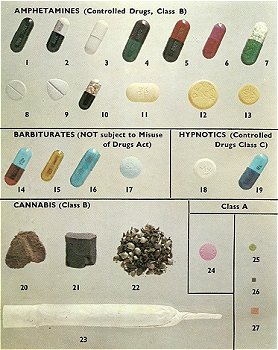
The accepted wisdom says that Charlie did not tolerate hard drugs within the Family.  They smoked marijuana and hash, used LSD with some regularity, and ingested a smattering of other psychedelics like psylocybin(mushrooms), mescaline(Peyote buttons), even Belladonna.  One known exception is the admission by Atkins and Watson that they snorted from a jar filled with meth just before they left to go to Cielo Dr.  But that was it.

But there is good evidence that many others in the Family were using Speed.


Bruce Davis

http://www.aboundinglove.org/main/images/bookPDFs/Will_You_Die_For_Mesmall.pdf
pg63of120
Tex: "Charlie, for all his use of acid, was absolutely against speed. He believed it was bad for your body. But when a young guy from one of the neighboring ranches began sneaking it over,  Susan-Sadie, Bruce Davis and I started carrying it around in the bottom of a cigarette package."

pg76of120 
"I slept very late Saturday(Aug 9, 1969), then spent part of  the afternoon working on dune buggies and  snorting speed with Bruce Davis."


Kasabian

http://www.mansonblog.com/2015/03/goodbye-helter-skelter-chapters-fifteen.html  comment
"Another point: in the History channel special Kasabian ...also mentions taking a white speed tablet before embarking on the journey(to Cielo)."


Watkins

Testimony of  at the Watson murder trial(8-26-71):
http://www.cielodrive.com/charles-tex-watson-trial-08-26-71-am.php#bp
Q(Bugliosi):  Did you take speed on several occasions(while at the Ranch)?
A(Paul Watkins): Yes.


Krenwinkle

http://www.mansonblog.com/2015/06/the-mansonfamilytodayinfo-files.html
During Her time with the family, Patricia Krenwinkel used drugs heavily. ... She... at times would take various forms of speed such as Methedrine, Benzedrine and on occasion would smoke opium.


Grogan

My Life with Charles Manson by Paul Watkins  Chapter 20
Clem... was totally blitzed, and sat slouched over the steering wheel of the dune buggy, his eyes glassy, his hair matted and snarled... He appeared stiff, almost cadaverous. (Sept '69)
[Clem is obviously coming down off a lengthy Speed trip.]


Manson

Susan Atkins  The Shattered Myth of 'Helter Skelter'   pg26of63
"...Charles Manson was at his wit's end.  He was staying up for days at a time on drugs watching for Panthers." (July of '69)

Member of the Family  by Dianne Lake
(At Barker in late '68)
 "Charlie was too hyped up to make love to any of us, so we all just went to sleep.
"I been thinking about this," Charlie announced in the morning. He appeared like he had not gotten much sleep. "We should go back to town and get our things together."

The Shadow Over Santa Susana by Adam Gorightly
(At Barker in Sept/Oct '69)
"Manson, it has been said, became "feral beyond description" during this period.  According to Kitty Lutesinger:  "He got wild when he was out there.. he was just beating on Snake all the time-or everybody." "
[Sounds like an amphetamine-induced psychosis.]

http://www.cnn.com/2012/04/11/justice/california-charles-manson/


Manson Parole hearing from April 2002
"Manson also had a history of using drugs such as LSD, amphetamines and barbiturates... (Commissioner Gilbert)Robles said."

https://www.huffingtonpost.com/steve-heilig/charlie-manson-the-life-a_b_4074267.html
He gathered unknowing young women from Berkeley and the Haight-Ashbury, where the clinicians at the landmark free clinic diagnosed him as an “ambulatory schizophrenic” with all manner of manipulative behaviors, not to mention a fondness for LSD, speed ... and marathon orgiastic sex directed by Charlie ...

https://nypost.com/2017/10/25/reliving-the-murderous-manson-familys-dark-pull-on-an-innocent-14-year-old-girl/   Dianne Lake interview:
When I got back from the Spiral Staircase House, I told Richard and Allegra about the possibility of going with Charlie and the girls. “I don’t know about that, Chicken Little,” Richard said. For some reason, he had changed his mind about Charlie. “It may not be such a cool scene. Maybe you should stick around here for a little while.”
That was the one warning I got about Charles Manson. It was not from my parents or from people at the Hog Farm. It was from my speed-addict friend who somehow understood something that the rest of us did not.
[Did he recognize that Charlie was into Speed?  Did it take one to know one?]


Everybody else

http://www.lsb3.com/search?q=speed&updated-max=2015-10-16T01:14:00-04:00&max-results=20&start=4&by-date=false
7/8/71- Psych examination of Tex Watson
Q. Meantime…did you go places?
A.  No, Charlie never wanted us to leave the ranch. Then it was drugs, drugs, drugs…  bags of acid and speed… we took a lot of speed.

http://www.cielodrive.com/charles-tex-watson-trial-08-26-71-am.php#bp
Q(Bugliosi): Was there quite a bit of speed out at the ranch?
A(Watkins): Not until late spring of '69.
Q: And from that point on there was quite a bit of speed out at the ranch?
A: Yes

http://murdersofaugust69.freeforums.net/thread/369/fountain-world?page=1&scrollTo=16281
Virginia(FOTW witness) said that most of the time the Family's conversations were confused and she felt that they "were usually up on something, sometimes they would just talk non-stop for hours and not sleep for three or four days."

https://www.belfasttelegraph.co.uk/life/features/denis-tuohy-the-day-i-came-face-to-face-with-charles-mansons-killer-cult-in-a-remote-mountain-ranch-36365134.html
Manson had linked some of the Beatles' songs with an apocalyptic vision of the future, a vision he preached to followers who were constantly high on LSD and amphetamines.

Susan Atkins  The Shattered Myth of 'Helter Skelter'  pg26of63
"The women began to fear for their lives as paranoid, speed-frazzled gunmen combed the ranch..." (July of '69)


So are we supposed to believe that all these followers were doing heavy doses of Speed and that Charlie was somehow unaware of it?  No way in hell.  I believe that Charlie was controlling the Family's amphetamine use--in the same way he exercised tight control over the Family's use of LSD-- by giving them the drug at certain times for certain reasons.

The use of the stimulant might also explain some other aspects of life at Spahn.  Like how they were able to be up all night fixing their dune buggies and doing their creepy crawls.  Like how they were able to make repeated bone-jarring rides back and forth from Spahn to Barker.


But when you play, you pay (as they say in Brooklyn).  There was an old anti-drug slogan from the '60s:  SPEED KILLS.  They should have listened, because there is a definite link between the heavy use of amphetamines and violent acts, according to numerous sources.


http://www.atdc.org.au/wp-content/uploads/2014/0/2015_06_03_EVENT_ARTICLE_McKetin-2014-Does-methamphetamine-use-increase-violence.pdf
Methamphetamine .. is notorious for its association with violent behavior. Epidemics of use have been marked by rises in assaults and violent crime and case reports have implicated the drug in homicides. Violence associated with methamphetamine use is characterized by its capricious and often bizarre nature, this seeming to be fueled by methamphetamine-induced paranoia... In conclusion, violent behavior is a key harm associated with the use of methamphetamine.
 
Charles Manson Now by Marlin Marynick   pg129of155
Vicki(apparently an associate of the Family) assured me that, during her initial visit to the ranch, the family was living a peaceful, happy existence. The only drug on the property was marijuana. "Then they did LSD and, when speed came along, that was when it all went bad."

Then it becomes a legitimate question to asked to what extant did amphetamine use contribute to the murders?

I think that the use of amphetamines might be one of the missing links in this case.  So important that without the Speed, there would probably not have been the slaughter.  But why didn't Bugliosi mention it in his book?   In the penalty phase of the trial, he made extensive preparations to counter the defense witnesses who would claim the defendants were too drug-addled by LSD to be responsible, but he didn't do this for the Speed usage.  Even more curiously, the defense lawyers didn't introduce this evidence as a possible exculpatory factor.  Why not?  Was there some kind of agreement by everybody not to touch this subject?

http://www.goodbyehelterskelter.com/Reviews.html
Bugliosi discounts the importance of speed in the murders. He ignores most of the drug use at Spahn except for the use of LSD which he says Charlie used to brainwash his followers...


Monday, December 28, 2015

Tex Watson's Beard

"At the same time I interviewed Linda's husband, Robert Kasabian, I also talked to Charles Melton, the hippie philanthropist from whom Linda had stolen the $5,000. Melton said that in early April 1969 (before Linda ever met the Family) he had gone to Spahn Ranch to see Paul Watkins. While there, Melton had met Tex, who, admiring Melton's beard, commented, "Maybe Charlie will let me grow a beard someday."

"It would be difficult to find a better example of Manson's domination of Watson."

 --  Vincent Bugliosi in Helter Skelter,  page 392

That this is the best example Bugliosi could find of Charles Manson's domination of Charles Watson shows how negligible that supposed domination really was, for the only two photographs taken of Watson during the period he lived at Spahn's Ranch with Manson show him to be bearded.

Charles Watson after his arrest for being under the influence of 
Belladonna (Jimson Weed?) on April 23, 1969

Charles "Tex" Watson at the Spahn Movie Ranch in 1969

Oh, Charlie did tell him to shave, but there was really a more mundane reason for Manson's "demand" that Watson (and, indeed, all the males at Spahn Ranch) remain clean shaven beyond his alleged desire to take control over every aspect of their lives. While it might be hard to believe in a day and age where Grandma is tattooed and pierced and the guy checking your groceries has dinner plates in his ear lobes, in the late 1960s men wearing beards (not to mention long hair!) could actually be considered radical. George Spahn (the owner of Spahn Ranch) was running a business -- horse riding rentals -- that depended to some degree on drop-in customer traffic. Therefore, he wanted his ranch to be as welcoming and friendly -- and normal -- as possible to prospective riders. On top of this, Spahn was also somewhat "old school," and he equated "beards" with "bums." For these two reasons he didn't want a bunch of bearded bums lounging around when Mrs. San Fernando Valley came in to investigate the ranch as a possible place for Sally and her friends to go horseback riding. 

It was George Spahn who instituted the "no beards" rule at Spahn's Ranch, not Charles Manson. Manson's directive to Watson regarding his whiskers was merely a pass down of the orders of George Spahn; it was not part of any mind/ body/soul-control agenda of his own.

Based on my forty-plus years of beard wearing I would categorize Watson's efforts as pretty scraggly. Nevertheless, he looks more bearded than he does clean-shaven, and it's apparent that at some point Manson noticed Watson's facial hair and mentioned it to him. But Watson  was no more "dominated" by having to shave than are the hundreds of thousands of other males who have toned down their preferred appearances for the sake of dress code policies relative to employment opportunities. I did the same thing in 1980 when I cut my hair and shaved off my beard as a condition for working with the Fred Harvey concessionaire at Furnace Creek in Death Valley. (And as much as I enjoyed working there I would not have considered committing mass  murder on the company's behalf.)


Thus, Vincent Bugliosi's "no better example" of Charles Manson's supposed domination of Charles Watson turns out to be just like so much more of the District Attorney's case against the former: It turns out to be nothing. 


Wednesday, August 14, 2013

Brenda's gonna get married


It sure seems like just another normal day at Spahn's Ranch, but then what's considered normal at the Manson Family's commune in Chatsworth, California? Again, I'm driving up old Santa Susana Pass Road to do some more filming at the "commune"! But where does the word "commune" fit into the more proper label of gang-hangout? The young gangsters, that inhabit the old run-down western movie set, don't grow any vegetables there. They don't even grow their marijuana there. And the mind-blowing Belladonna-used to get someone to NOW - grows wild all around their Death Valley home commonly know as the Barker Ranch. No, these media labeled Hippies, shop at the supermarket just like all civilized beings-except they use the pick-up dock at the back of the store where the food is actually FREE. And "run-down old western movie set," just what is a Western town movie set supposed to look like? A Universal City amusement park with buildings two or more stories tall?

The point being, maybe all these little media misconceptions add up to a totally distorted "big picture" of the notorious Manson Family. Instead of listening to so many third-party stories, come along with me to a place where the real under-world meets "middle class" society and where "no sense makes sense."

"Good morning, my favorite actors, what's up for today" my greeting would sing out. "We've got to get Brenda to the LA free-clinic, right away" was their urgent response. Oh shit, "this doesn't sound like fun" was my immediate thought. "She's got to get her blood tested" Gypsy explained. I'm sure my responsive expression was a clear "Is it contagious"?

Gypsy quickly reversed a negative to a positive - "Brenda's gonna get married and she has to have a blood test, to get a marriage license. "But what's the hurry" I said. The girls all began to chatter, but I did recognize, "the wedding is this weekend."

Of course, now the big question is: "Who's the lucky guy and why this weekend"?

"Ron, the lawyer" - and with her trademark sheepish grin - Gypsy continued: "Mr. Hughes is going to marry Brenda and that way she will be emancipated and won't have to go back to her parents." I don't know why (there's already been massacres, missing bodies, etc) but Leslie Van Houten's attorney marrying one of the Manson Family's junior gangsters struck me kinda funny.

"Hey, do I get to film the wedding"? drooled from my wicked lips? Stares like I don't know what suddenly made the rounds. Oops, say what? Did I miss something? Then the girls all chimed in. "Sure, but you'll need lots of cameras" said one. "And there'll be a feast too," quipped another. Then, I noticed Squeaky's priceless expression of "What's going on"? But before I knew it, Brenda's rather simple legal remedy for not being ordered by the court (she was under aged) to be returned home, was turning into the wedding event of the season.

"Gee," I thought, "Will they invite ALL the lawyers and what about the Judge"? And what about Ronald Hughes, does he understand what he's got himself into? Wait till Brenda's mother hears about this, it'll be all over the high society page of the LA Times. "Pitman daughter to marry prominent attorney."

After a short while the whole Ranch was on fire with gossiping excitement and even the simple "blood-test" had become part of a grand ritual. Many piled into the bed of my pick-up and we headed off to the LA Free Clinic. All the while, the chatter of the girls continued and drowned-out the hum of my truck's engine. Typical female excitement associated with a thousand years of sacred traditional values was now actually upstaging the infamous MANSON trial.

As might be expected, upon realizing the entire scope of his "commitment" to a Manson Family darling, Ronald Hughes committed the unforgivable sin - he called off the wedding. Soon thereafter, mother nature drowned the life out of him.

As a consolation to me (for missing the wedding film event) I was invited to film Clem's infamous ritual where he puts on a black hood and hangs the judge.

Copyright 2013 Robert Hendrickson
used with permission for posting on eviliz.com


Order The Collection and take advantage of the EVILIZ SPECIAL

$89.95 for the MANSON Media Collection (the MANSON Book and both DVDs - including Priority Mail shipping. The DVDs come in smaller thin plastic cases so everything fits in flat rate package, but includes larger personalized DVD inserts. Must be purchased via PayPal or M.O. Just email rarefilms@yahoo.com for his PayPal account to send payment.


Sunday, May 10, 2015

Debunking the Bunk Part 3: Nikolas Schreck's Story of The Cielo Drive Murders

Introduction | Part 1 | Part 2 | Part 3


As long as we're recently on the subject of the timeline for the Cielo murders, we thought we'd present you with what we think is the most improbable theory of the August 8/9th murders: Mr. Schreck's version of events from his now defunct book, "The Manson File".

In a nutshell, Schreck tells his reader that, Watson, Atkins, Krenwinkel and Kasabian arrive at Cielo around midnight for a $20K drug deal. In his version, the killers do not cut the phone wires and climb the fence; instead, they drive their car through the welcoming gate and right on to the driveway apron. Even though this is a Watson/Kasabian partnership drug burn, Watson enters only with Atkins and leaves Krenwinkel and Kasabian by the car to be lookouts.

Equally welcoming on their escapade is Sebring, who opens the front door to invite Watson and Atkins in. And, being the generous host that Sebring was known to be, he offers and then makes them drinks.

In the meantime, Abigail (in her bedroom) and Voytek (on the living room couch) are blitzed out of their minds on MDA and in a comatose-like state. Sharon is in her bedroom, already in bed.

When Sebring tells Watson that he doesn't have all the drugs, a heated argument begins, drawing both (the incapacitated) Abigail and (the underwear clad) Sharon into the living room. The fight escalates and Watson hits Sebring.

At about this time, Schreck places Steven Parent at the living room window of the main house to witness the violent attack. Frightened, he runs to the driveway. But, instead of getting in his car, he stops to look in the garage (at what, we don't know). It is here that Krenwinkel and Kasabian attack Steven, slashing at him with the knife and yelling for Watson's help.

Watson, hearing their calls for help, leaves Atkins alone in the house to guard four people and runs out to help kill Steve. By the time of Watson's arrival, Steve has jumped into his car, rammed the shift into reverse and downs 30 feet of guardrail before Watson catches him and shoots him four times.

Back inside, Sebring tries to calm Watson by telling him that he has more drugs at his Easton Drive home. Watson agrees to take Sebring and Sharon (as hostage) to Easton Drive. But, once outside, Sebring lunges at Watson and Watson shoots Sebring. As Sharon is trying to get away, they stab her.

With Tate and Sebring murdered, Watson decides they should go to Sebring's house to get the drugs that are there. They then leave Cielo (and the drugged, but very much alive Folger & Frykowski) to go to Sebring's house. But the Easton Drive drug caper is snafued by Rudy Weber when he busts them using his garden hose.

Watson then decides to forego Sebring's house and high-tails it back to Spahn to tell Manson what had transpired. Then, along with Manson, they decide to return to Cielo to wipe down fingerprints. When they return, they do indeed wipe down the house and then (oh yeah, forgot about them) kill Frykowski and Folger.

Wow. Where to begin?

Book Page 599: Schreck uses Watson's trial testimony, as proof that Watson didn't cut the phone wires, climb the gate fence or cut the screen, but entered the Cielo house as an invited guest through the front door—including, in his scenario that they entered the property by driving the car through the open and welcoming gate:
What happened as you approached the front of the house?

I walked in the front door.

You just opened the door--?

Just opened it up.

Just turned the knob and go right on in?

Right

Was any of the group—that is, any of the three girls with you at this time?

No, I didn't see any girls at that time.

Did you slit the screen in that house?

No. I did not.

Response: What Schreck doesn't tell his reader is that this is Watson on the witness stand during cross-examination by Bugliosi. The prosecutor's questioning is to counter the multitude of lies that Watson gave during direct examination by his attorney. Remember, Watson was gunning for a diminished capacity defense.

During direct examination Watson claimed that he had no malice aforethought before the crimes and that after he did not attempt to "hide" the evidence, therefore he had no sense of right and wrong. Watson denied driving to the house, he denied cutting the phone wires, he denied having rope with him, he denied entering through a window (really, he denied any thought at all) and said that he was taking orders from the girls. All he heard was Charlie in his mind over and over; he didn't see his victims as anything but blobs; he didn't think to wash the blood off; he didn't order anyone to throw away the clothes or the weapons. Finally, Watson testified (at various times) that during the commission of the crimes, he was high on Belladonna, Coke, and Meth.

If Schreck takes one portion of Watson's testimony (an invited guest through the front door) as truth, then he must also consider the rest of his testimony—that he was following the orders of the girls and in a state of complete diminished capacity under Manson's spell—as truth. And this then would defy Schreck's motive that this was a calculated drug burn by Watson and Kasabian—especially since he left co-burner-Kasabian outside.


Book Page 25, 600, 610: "From the empty glasses on the table, detectives later deduced that cocktails were offered to the visitors while the business at hand was discussed... After Tex and Sadie were welcomed in, Sebring offered them drinks ... they wiped the fingerprints from the glasses Sebring had offered them when they first arrived."

Response: There is no evidence of any empty drinking glasses found in the living room, dining room, or kitchen. Are we to assume that the killers washed their glasses and returned them to the cabinets?


Book Page 601: "An argument between the speed-tweaking Tex and the Coked-up Sebring."

Response: Sebring's toxicology reports from the autopsy show absolutely no drugs in his system. Now, even though the ethanol test came out negative as well, and we think Jay at least had some wine and or beer that night, let's remember that alcohol continues to break down in the blood stream after death. So, by the time of his autopsy, after 2PM the following day, it's likely that there was zero detection of ethanol left in his system.


Pages 598, 605, & 606 Schreck writes of Voytek and Abigail: "Both were wiped out from the amount of MDA in their system... Frykowski and Folger were not able to put up any resistance... So high on massive doses of MDA, that they could barely move... .Just how high Voytek and Gibby were is indicated by the fact that when Tex returned to finish them off several hours later, they still hadn't been able to free themselves... They lay there for at least three hours going through what must have been two of the worst MDA trips of all time."

Response: The M.E. report noted Voytek had 0.06mg of MDA in his system. Abigail had 2.4mg of MDA in her system, a little higher than a typical recreational dose, but hardly incapacitating. Abigail also had a small amount of alcohol in her system, 0.06.

The notion of Abigail and Voytek being so utterly incapacitated that they sat/lay comatose-like while Watson is beating and then killing Sebring and Sharon, is just plain unrealistic. And then, with their friends' dead bodies lying around them, just hang out and enjoyed their MDA stupor for a couple of hours while Watson et al go back to Spahn to get Manson?

Also of note, MDA and MDMA (Ecstasy) are similar, but not the same drug. Schreck points to these two drugs as being interchangeable in Abigail and Voytek's system, sometimes even referring to the MDA as Fairy Dust, which is also inaccurate.

Even if we went out on a limb to say that Abigail and Voytek's tox screens in the M.E. report are inaccurate and that they had a lot more MDA in their system than noted, there's a thing called the "sobering effect" that occurs during a traumatic situation. The traumatic situation causes mass amounts of adrenaline to be released into the system, "sobering" the individual, which then, if the situation calls for it, causes the fight or flight instinct to kick in. Since Voytek had 50 odd wounds with a blood trail from the living room to the front lawn, it would seem almost certain that the sobering effect from a mild MDA high would have kicked in.

The most ridiculous notion to the whole Abigail and Voytek MDA stupor is that Watson and the women would (as Schreck surmises) leave them unattended and alive, with Sharon & Sebring already murdered, and with the phone lines still functioning, to go to Sebring's house and get more drugs. But, we'll get to that soon.


Book Page 601: "Sharon was roused by the yelling and walked into her living room to see what was happening."

Response: So, Sharon, hearing strange voices, nonetheless volatile yelling voices, walks out of the bedroom in her underwear to see what's up? Didn't grab a robe, just walked into this volatile situation in her underwear? I think you'd be hard pressed, even in 1969, to find anyone who would leave themselves that vulnerable in that situation.


Book Page 602: Schreck places Parent outside looking in the window watching Watson beat Sebring while Sharon tries to intervene. Frightened, Steve Parent then "... ran for his car and roared off at full speed. In his panic to flee... Parent drove in reverse, screeching backward across the parking lot, knocking over nearly thirty feet of fence."

Response: Thirty feet? The police photographs clearly show one split rail of the fence knocked down, about six feet. Schreck turns this small accident into a scene from the French Connection. The poor kid, probably a little buzzed (as Garretson stated in his polygraph) or just because it's damn dark, accidentally backed into the fence, knocked down a rail and scraped the undercarriage of his car on the driveway parapet.


Book Page 602-603: Watson, after hearing the women scream about Steve on the driveway, runs outside and leaves Atkins, with a single buck knife, to guard four people.

Response: Ummm. One 5'6" woman with a 4" blade to cover four people? Even if they're tied up, I find it hard to believe that Frykowski and Sebring wouldn't have taken that opportunity to lunge at Atkins.


Book Page 604: Schreck places Watson and Sebring struggling on the front porch. "Tex hit Sebring hard on the head with the gun. So hard that the grip shattered."

Response: The M.E. noted in Sebring's autopsy report that he was hit in the face with a blunt instrument, but since there was no breaking of the skin, he surmised that it was something "soft like a fist". The M.E. then notes of Sebring's head: "Inspection and palpitation of the scalp reveals no evidence of injury."


Book pages 40-41, 604: While we can agree with Schreck's assessment that the media "planted the seeds of Charlie's legend with mystic cult and black magic headlines", we differ when it comes to Schreck's statement: "There was nothing particularly "hippie" about the crimes, which were actually fairly ordinary mob-related narcotics trade murders... At around 1:00, Tex led Sebring towards the door, taking Sharon with him as a hostage... Atkins and Krenwinkel scooped up all the mescaline, MDA, and cocaine they could find."

Response: The most glaring evidence against these murders being a drug burn/robbery is the lack of ransacking. As noted in the police report: The killers left the location without ransacking the house. Paper money was in plain view throughout the house and Sebring had a wristwatch on his wrist in plain view valued at $1,500.

It's hard to fathom that this supposed drug burn was all about money and yet at Cielo, there's not a single open drawer, nothing disturbed in the closets, nothing disturbed on the desk in the living room, nothing disturbed in the bedrooms, nothing disturbed in the loft above, nothing disturbed in the dining room or kitchen and nothing disturbed in the (Schreck version) supposed drug "safe house" of the nursery.

These drug burn/murderers were either very tidy searchers or very lazy ones when they scooped up all they could find.

A more "fairly ordinary mob-related narcotics trade murders", would be the Wonderland Murders in which, after being robbed by the four residents from Wonderland Drive, mafia dude, Eddy Nash, orders his peeps to go to the robbers' Wonderland address, retrieve the stolen items and kill everyone in the house.
Do a YouTube search for "Wonderland Murders" to see the crime scene video that shows that the house was completely ransacked. Drawers emptied, ripped from the dressers and strewn about, closets emptied, the floors literally covered in clothing and other items emptied out while searching for drugs, jewels, and cash; even the refrigerator was opened. Yet, the Cielo house, except for the living room area of attack, is completely untouched.

We could say, well, the killers believed that the victims had told them where everything was so they didn't need to ransack—except that Schreck states that Watson didn't believe they had it all, and in fact (as we'll see next), is the reason why the killers left Voytek and Abigail alive to drive to Sebring's house to retrieve more drugs.


Book Page 606: "... Tex pressed the button to open the gate. He left his bloody fingerprint behind for the police to find."

Response: A bloody smudge, not a fingerprint was found on the gate mechanism button. Watson's fingerprint was found on the front door to the house.


Book Page 606-607: "Atkins and Watson... later described a wild and senseless ride through Benedict Canyon that never happened. What is true is that Watson was looking for somewhere to wash his hands so that he wouldn't drip blood all over Sebring's house... They stopped at the next nearest house with a visible garden hose. It was Portola Drive. Their intention was to park there, then go stealthily by foot to rob Sebring's... "

Response: How very considerate of him. First, why not wash his hands in the sink at Cielo before leaving—under Schreck's version they weren't in a huge hurry to get away?
Second, in Schreck's unlikely scenario, we have the killers driving north on Benedict Canyon, traveling past Sebring's street, Easton Drive, to the next available street (on the right or east side of Benedict Canyon), Portola Drive, looking for a hose/parking place to wash off the blood, with the plan to then hike the almost mile back to Easton, and then make the half-mile hike up Easton Drive to Sebring's house.

Schreck portrays Watson as being a little daft at planning these drug burns, but this plan seems to fall under the category of down-right-ridiculously-mentally-challenged.


Book Page 609: After the bungled Easton Drive caper, the killers drive to Spahn (remember, Folger & Frykowski are still alive at Cielo) where they, along with Manson, decide to return to Cielo to clean up. "Linda drove to Cielo Drive this time. Tex curled up on the back seat. He needed to hide because Mr. Weber... could have easily recognized him and for all he knew could have already reported his description to the police."

Response: First, it's a ridiculous notion that the whole reason for returning to Cielo is not to kill the living witnesses, Folger & Frykowski, but to clean fingerprints?

Second: Tex is worried about being seen in a dark moving vehicle in the middle of the night on a winding road, but not worried that the vehicle itself, a yellow and white rusted out Ford (to which Weber wrote down the license number) could be spotted and identified by police?


Book Page 612-613: "The idea of the hanging at Cielo was to make it look like there was a connection to the Sebring hanging party (as noted earlier in Schreck's book). Billy Doyle and Tommy Harrigan... were known to have been present at that party. Watson knew that Doyle was Frykowski's MDA connection, and thus the original source of the burn that set all this in motion... This attempted frame-up based on intimate knowledge of Sebring and his dope dealing clientele, succeeded in setting the cops off of Watson's scent and onto the group of rival drug dealers. Mama Cass, Voytek Frykowski's "neighbor", and close friend and client of Billy Doyle, immediately believed that he and his friends were the killers and informed the cops about her suspicions."

Response: Elliot did not make the connection due to the "hanging". In fact, she didn't make any connection at all. On the other hand, John Phillips did make an inaccurate connection by translating the bloody word PIG left on the front door to PIC, i.e., Pic Dawson. Phillips then told Elliott that Dawson was responsible for the murders and therefore, she too was responsible because she had introduced Dawson to their circle. Phillips then told her that she was in danger because Dawson would next kill Elliot and her daughter. For this reason, and this reason only, Cass Elliot told the police that she believed Pic Dawson was the killer.


The other events and details that Schreck depicts on the night of the Cielo murders cannot be disputed because we weren't there.

We do not discount Schreck's claim that drugs were a motive for the Cielo drive murders. We do not discount that Rostau was a dealer with mafia ties. We certainly don't discount that, like many Angelenos in 1969, Abigail, Voytek, and Jay were using drugs on a regular basis. Nor do we discount the claim that Manson family members went back to the house later that night to do... whatever it is that they did.

What we do dispute is that Rostau made a drug delivery on August 8th. We do dispute the events that Schreck depicts of the murders that we can otherwise prove false. And, we dispute that the victims, in essence, were responsible for their own demise because they chose to do a drug burn against Watson and Kasabian.


Monday, June 8, 2026

The Insanity Plea of Tex Watson

 While doing some research trying to locate any and all evaluations on Tex Watson that may have been released through the APA to see if he ever received any diagnosis of a mental illness or disorder. I came across this. 


Bugliosi said at Watson's trial that " the heart of this whole trial is the psychiatric testimony" 
He was right. 

And it referred me to this book: 


I was kind of excited to come across this book because I am familiar with both authors. William J. Winslade is a expert in law when it comes to psychiatric and the psychological use of the " Insanity Plea" and Judith wrote many of the books that are used in hospital ethics.


In the California legal system, pursuing the "Insanity defense" is a high - stakes game. It is an "affirmative defense" which means the defendant must first admit to committing the criminal acts before arguing they should not be held responsible for it. Because of this, if the plea fails, the prior admission almost guarantees a conviction. Furthermore a successful peal of "not guilty by the reason of insanity" often leads to immediate, involuntary commitment to a secure medical hospital with no certainty of release, potentially exceeding the length of a standard prison sentence. 

In order to use "The Insanity Plea" in the California legal system, the defense must prove, by clear and convincing evidence, that a mental illness or defect rendered the defendant unable to understand the nature of their act and recognize the act as morally wrong. to determine the defendant's state of mind, psychiatric experts are tasked with addressing three legal questions regarding capacity. The court does not require the expert to state whether the defendant did  in fact harbor these states, but rather they possessed the mental capacity to do so.  

These questions are;

1. Malice Aforethought: Did the defendant have the mental capacity to harbor the specific intent to kill?

2. Mature Reflection: Did the defendant have the capacity to maturely and meaningfully reflect upon the gravity of the contemplated intent to kill?

3. Premeditation and Deliberation: Did the defendant have the capacity to carefully weigh and plan the killings. 


The high "Burden of Proof" makes this defense notoriously hard to win. Juries often view this plea as a "loophole" and remain deeply skeptical of psychiatric testimony, which they frequently perceive as confusing or inconsistent. Because the legal standards for insanity are so rigorous and specific, the courtroom becomes a stage where the specialized knowledge of psychiatric experts is essential to interpreting the capacities of the defendants mind. 


BUT let us take a small look at the demeanor of Watson when on drugs.

This letter is from the Ed Sanders files written by Paul Fitzgerald to Sam Bubrick. It is worth noting that Patricia and Leslie expressed fear of Watson when he was on drugs and "with Tex you just didn't know what was inside, it was very scary ( Fitzgerald or the person who typed the letter misspelled "scary")  and Fitzgerald said he "wouldn't like to be alone with Tex."  This alludes that yes, Watson indeed had the capacity to kill. It's important because Watson is portrayed as dangerous because others could not predict what he might do. It also shows how the "family" discussed drug use. 


Now we come to a professional divide. While Psychology and Psychiatrists are integral to the forensic process, their training and fundamental perspectives differ. The distinction is clear, Psychology is the actual science of researching mental illness or disorder, and psychiatry is the clinical practice of treating them. 
I put this little chart together to help explain the difference between the two. 

In a courtroom setting, this distinction is where "science" meets the "the law." The Law demands binary, moral answers -- sane or insane, guilty or innocent. Science, however, deals in the shades of gray, research data, and clinical observation. This mismatch often transforms expert testimony into a "battle of the experts" where the jury must decide which professionals subjective methodology carries the most weight. 
From the general professional definitions, we can now examine the specific individuals whose conflicting assessments the Watson trial into a "psychiatric circus." 


I'm going to be looking at four of the "key experts" in this piece because they highlight the deep divisions within the field regarding Watson's sanity and brain function. 


Dr James Bailey (The moral analyst) 
Dr. Bailey devoted over 300 hours ( that's including reading all the testimony from the main trial of Atkins, Van Houten, Krenwinkel and their psychiatric reports) to the case, though his actual face-to-face examination of Watson totaled approximately eight hours over two weeks. He was the only expert to conduct a full physical exam. 
Oddly enough, Bailey commented about his testimony almost as an a-side, that he had great reservations about his own testimony, a statement of doubt so unexpected from an expert witness that the defense lawyer responded "Surely you're amusing us with that statement." 
Key Findings: 
* Interpreted the Draw-a-person test. Because Watson drew the figure in the upper left, Bailey concluded he felt "cornered" rather than brain damage.
* Used Rorschach Cards and noted the inconsistent responses. he ruled out organic brain damage. 
* Diagnosed Watson with Folie-a-deux (a madness of two) arguing Watson entered a "voluntary contract" to surrender his will to Charles Manson in exchange for a life without sexual or moral inhibitions. 
* Conclusion: Watson was psychotic but not brain damaged. Bailey enigmatically claimed that while Watson didn't know why he committed the murders, Bailey himself did. He viewed Watson's actions as a succcumbence to human weakness: Therefore he was legally responsible. 


Dr. Joel Fort: (The drug authority) 
Dr. Fort was a prominent expert on drug abuse. Dr. Fort founded the nations first city drug program. He testified with rhetorical "crispiness and certainty" that suggested he had no reservations about his findings. 
Key Findings: 
* Conducted a brief evaluation (a single meeting) and performed no psychological tests basing his assessment on conversations and transcripts. 
* Argued that the average user of LSD does not lose touch with reality or suffer permanent brain damage. 
*Demonstrated significant bias. He found Watson responsible for his acts, but had previously testified that Leslie Van Houten was not  responsible, because, as a woman in "the family" she was more subservient and dominated.
*Conclusion: Watson was neither psychotic nor brain damaged; he was simply a "weak" person who remained legally responsible. 

Dr. Keith Ditman: (The Defense Researcher) 
A UCLA researcher, Dr. Dittman's expertise was more drug-oriented than clinical, having seen hundreds-rather than thousands of drug users. 
Key Findings: 
* Cited animal studies showing brain autopsies with organic changes after drug ingestion
* Believed Watson's massive consumption of LSD, Belladonna, and amphetamines made organic damage an absolute certainty regardless of current testing limitations. 
* Agreed on the folie-a-deux but viewed it as a condition that stripped Watson of his capacity. 
*Conclusion: Watson was both psychotic and brain damaged: he did not possess the capacity for criminal responsibility.

Dr. Richard Walter: (The objective Neurologist) 
A professor of Neurology, Dr. Walter treated Watson as a "Human organism" focusing strictly on tangible biological data rather than motives or personality. 
Key Findings: 
* Utilized the EEG (Electroencephalogram) the resulting "machine made" graph provided a tangible relief to the jury. It showed "consistently abnormal" activity, which Walter called "Classical evidence of brain damage."
* Exhibited "Scientific humility": When asked a hypothetical about whether Watson could have climbed a telephone pole carrying 15 pound wire cutters, he repeatedly stated "I don't know" refusing to speculate on tasks he had not tested.
*Conclusion: Clear evidence of brain damage existed (likely through drug use) and therefore Watson lacked criminal responsibility.

These four distinct profiles set the stage for a "battle of the experts" where the very definition of "truth" was up for debate.


I created another graph so we can remember what the four experts testified to.

Now we enter the "So What?" phase or insight.
The true dividing line for responsibility was the assessment of brain damage, not psychosis. Notably, Dr. Bailey later admitted that Dr. Walter's assessment of brain damage was "probably correct," but explained the discrepancy by noting that he simply hadn't observed it during his own specific tests conducted at a different time. In Medical terms, this highlights how the timing of an exam and the selection of specific tests can fundamentally alter a "scientific" conclusion.


The "Psychiatric Circus" of Watson's trial was not merely a result of incompetence but a product of systemic factors.
1. Methodological Differences: The investment of time varied from Bailey's 300 case hours to Fort's single visit, furthermore relied on "tangible" machine data (EEG) while others used "rule of thumb" verbal tests.
2. Subjective Interpretation:  Projective tests like "Draw-A-Person" are entirely interpretive. Where one expert sees a psychological state (feeling "cornered" ), another sees a biological one, (organic damage)
3. Psychological Bias: Experts brought personal worldviews. Dr, Walter's humility and "I don't know" contrasted sharply with Dr. Fort's "crisp" certainty and his biased views on the subservience of "Family" women.
4. Adversarial Shaping: Lawyers manipulate testimony through framing. The prosecution asked Dr. Fort if "Most people (the average) could function on drugs, while the defense asked Dr, Ditman if it was "possible" (the range of users) for drugs to cause brain damage.
both experts might agree on the middle ground, but the lawyers forced them into opposing corner.


We as researchers must understand and remember that from a medical standpoint, that while brain damage CAN trigger psychiatric symptoms like or such as psychosis, hallucinations, and personality changes that mock what is considered "Insanity" but in the medical field, such as psychiatry, brain damage - which of course is trauma to the brain, it is organic, they are diagnosed as mental disorders, psychotic disorders, or mood disorders.
"Insanity is just a legal term and its a very broad term. "Insanity" covers many mental disorders such as Bi-polar disorder, Schizophrenia, Schizoaffective, delusional disorder, etc. None of which Watson received a diagnosis of or any mental illness/disorder at all in any evaluation, Nor was he ever diagnosed with any mental or mood disorder in any point in his life. A diagnosis may have actually benefited him since two of the experts said he was indeed psychotic.

Conclusion: Ultimately in the Watson trial the jury was forced to navigate through a sea of conflicting labels. They were told Watson was psychotic, brain damaged, both, or neither.
However, the jury's verdict bypassed clinical confusion. The jury reached the verdict on perceived danger. They saw a man who possessed an uncritical acceptance of dangerous leadership - a trait that manifested in prison when Watson became a "Born Again Christian," once again seeking a powerful structure to follow. The jury was unwilling to gamble on such a person returning to society.