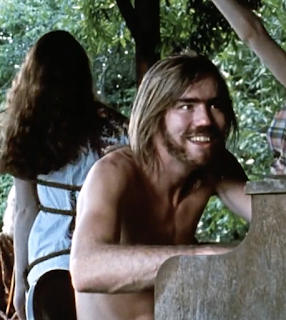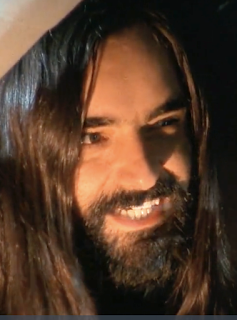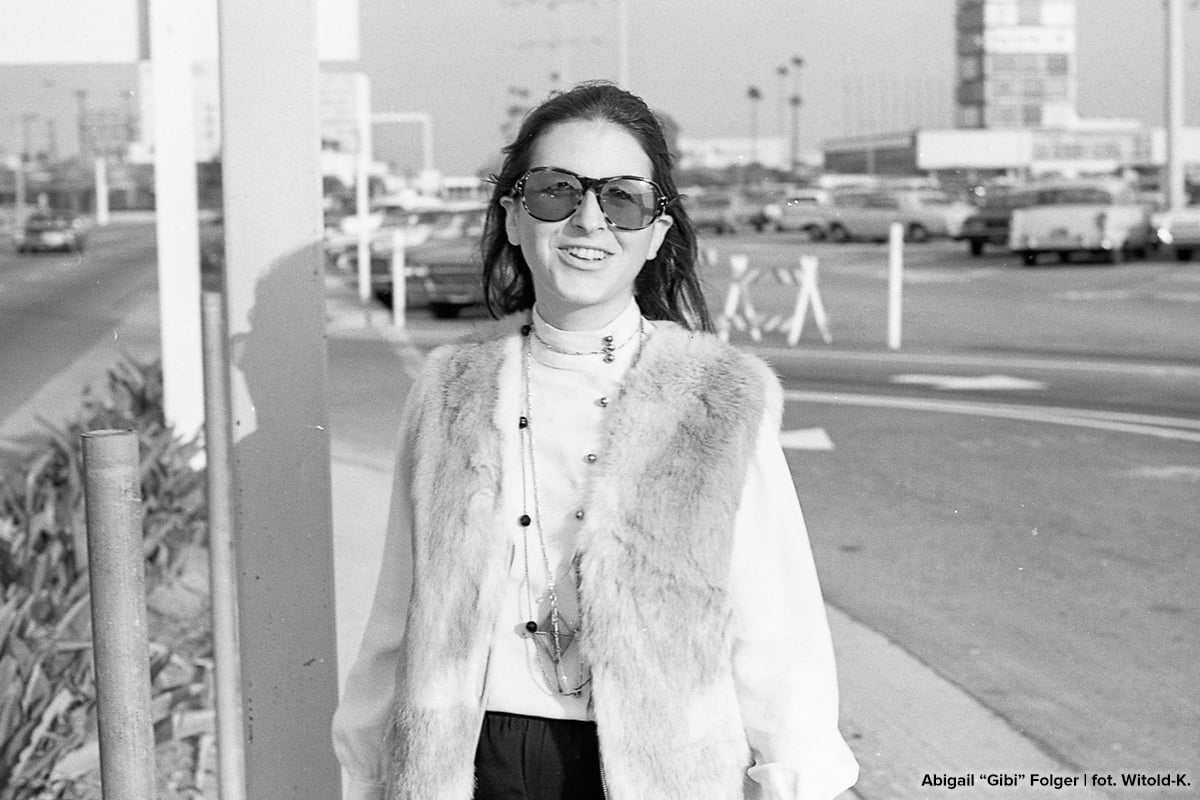
Abigail at Los Angeles Airport. Photo by Witold-K, Facebook

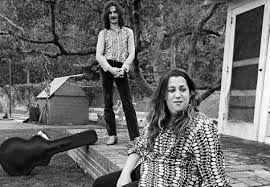
Abigail on the patio at Cass Elliot's house, Laurel Canyon Los Angeles. Photo by Witold-K, Facebook
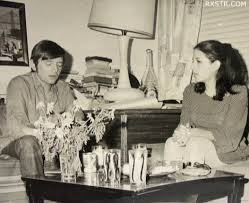
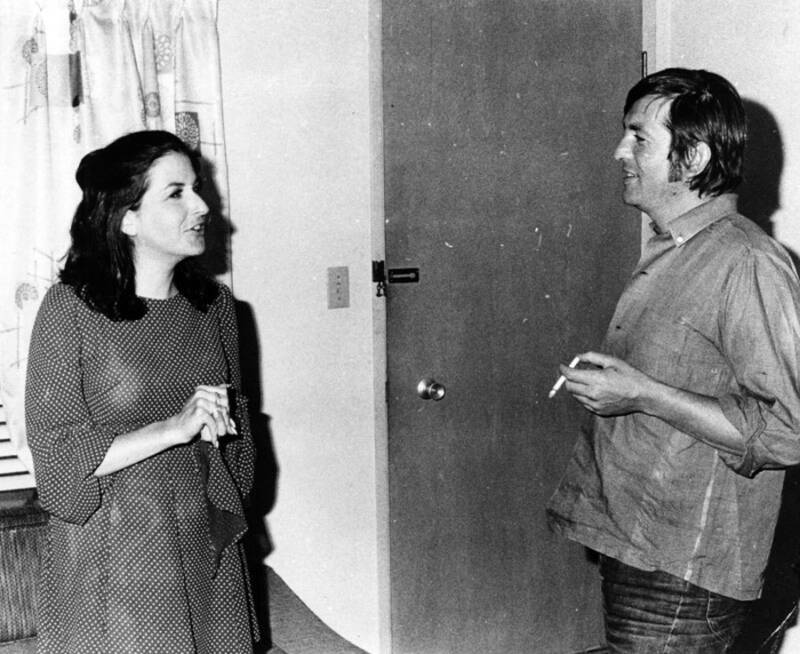
Abigail and Voytek in happier times
THE WORLD AROUND HER
As was her custom during her New York period(August 1967-August 1968), Abigail developed a network of friends within her sphere of influence in L.A. Although she would have socialized with friends of Sharon and Roman Polanski, like Roger Vadim, Mia Farrow, and many others, she arguably moved within a sub- network of people more or less exclusive to both she and Voytek. Many of these people were within the orbit of Cass Elliot, meaning that at some point Abigail and Voytek met Cass, and developed a friendship. Where and when that meeting took place is unknown, but this could have happened thru a mutual association with Sharon and Roman, and may have been at a party given by them. To that end, I was able to contact Cass’ daughter, Owen, and asked her if she had additional information on either Abigail and Voytek. She said she did not, so certain finer details will for now remain a mystery.

Cass Elliot

Roman and Sharon Polanski

Roger Vadim
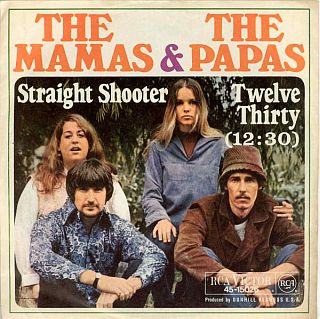
It is known, of course, that Abigail and Voytek spent much time in the company of Witold-K, Michael Sarne, Thomas Harrigan, Ben Carruthers, Mark Fine, Pic Dawson, Charles Tacot, Billy Doyle, and, to some extent, John and Michelle Phillips of the Mamas and the Papas. However, Michelle Phillips would later admit that she and John would distance themselves and their own inner circle of friends from Voytek. Because of her relationship with Voytek, this distancing evidently included Abigail.

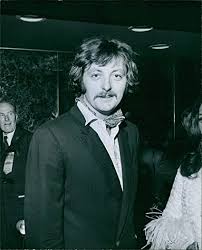
Witold-K

Michael Sarne

Thomas Harrigan all smiles with Paul Caruso

Ben Carruthers

Pic Dawson

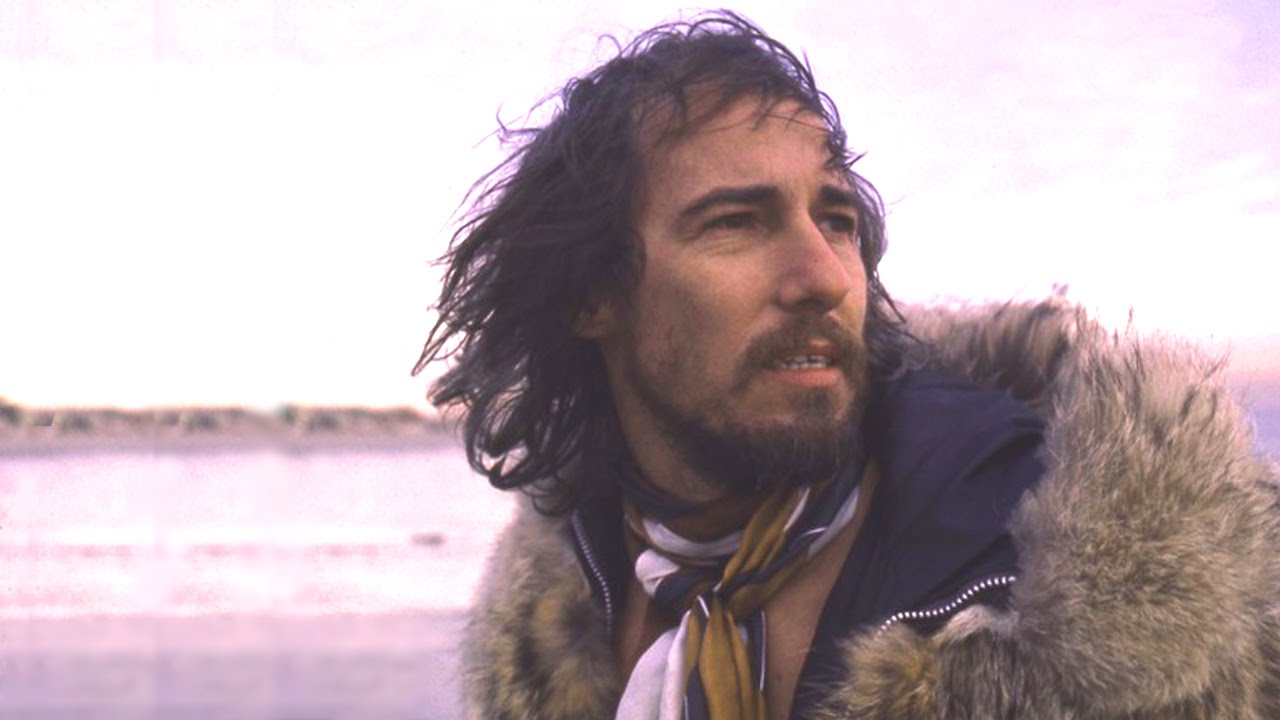
John Phillips at his home
John Phillips

Michelle Phillips
“Voytek,” recalls Michelle Phillips, “had a kind of weird vibe about him, a hustler-like feeling. No one really wanted to be around him that much. I never really got to know Abigail very well. She was considered a sort of ‘little rich girl,’ and at least among our circle, there was a great snobbery which kept them both at arm’s length.”(Michelle Phillips quoted in Greg King, Sharon Tate and the Manson Murders, Barricade Books, Inc. 2000. p. 172). I have subsequently contacted Michelle’s publicist, requesting an interview with Michelle prior to this post, hoping she might be able to offer clarity to her previous comments, and possibly additional thoughts on this time in L.A. At the time of this writing I have not received a response.
Yet in the taped interview with LAPD, conducted in Toronto on August 30, 1969, see https://www.Cielo drive.com/updates/William-Billy-Doyle-interviewed-by-LAPD-lt-earl-deeper-83069-part-one/. Billy Doyle offered up a counterpoint to Michelle Phillips’ above statement. To Doyle, anyone who attempted to paint Voytek as a bad guy, probably had something to gain from it. In fact, palpable tension existed between Doyle and John and Michelle. That Abigail and Voytek were friends with Doyle, therefore, probably did not factor well in their favor.
So how did Abigail fit into this social scene in Los Angeles? Writer Greg King contends that, like Voytek, Abigail “was just lost in this milieu...” Some of the individuals in both she and Voytek’s closer circle were strange bedfellows indeed. Yet Abigail, as an educated, wealthy civil rights and social worker, would have stood out remarkably from this bunch. I am reminded of a quote by Abigail’s former boss at the Berkeley Art Museum, Peter Selz, who said, “[s]he may not have lived the most traditional type of existence, but she wasn’t a hippie type at all. She didn’t look, dress, or act like a hippie.” Looking at the two photos of Abigail at the beginning of this post, and how she was dressed in them, her look may be perceived as stylish, or perhaps even conservative. I would not be surprised if it were ever learned that Abigail did not have a pair of blue jeans in her wardrobe.

Abigail was employed by L.A. County as a volunteer social worker

Abigail's place of employment during her L.A. period

A yellow 1968 Pontiac Firebird like this on was Abigail's cruising vessel during her L.A. period
Abigail Folger came to Los Angeles with Voytek Frykowski(and possibly also Witold-K)in August 1968, driving a rental car from New York. She chose to work, and offered her passion to aid others thru employment with the county welfare department. Additionally she would volunteer in the campaign of Tom Bradley for mayor of Los Angeles, who was running against incumbent Sam Yorty in May 1969. The move to Los Angeles, and the reason(s) for it were undoubtedly well thought out, as Andreas Brown, her former boss at the Gotham Book Mart in New York said, “she finally hit on something” that would truly satisfy her ambitions.

Tom Bradley

Sam Yorty

Bradley and Yorty at election debate
Roman Polanski has indicated in at least one interview, that Abigail took a speed reading course in the evening, following a long day working to better the lives of underprivileged people in Los Angeles, and campaigning hard for Tom Bradley. Added to this workload was the fact that Abigail attended Monday thru Friday psychoanalysis sessions in Beverly Hills with Dr Marvin Flicker, M.D. (Dr Flicker recently passed away on July 16, 2021. He was 86. His brother, Ted, co-created the TV sitcom, Barney Miller). What strikes me as unique about Abigail is that she had the presence of mind to seek professional help in dealing with her issues. What precipitated her seeking help from Dr Flicker is not known exactly. But Bugliosi’s book does hint at depression over her perceived view of her personal life, use of narcotics, and her failing relationship with Voytek. Unlike many in her generation, she approached the medical establishment for help, and according to Dr Flicker, evidenced the emotional wherewithal to leave the situation she found herself in while living in L.A.

Abigail's therapist, Dr Flicker in a recent photo

Abigail attended therapy sessions with Dr Flicker in the three-story building in the middle
Abigail and Voytek rented a house in Laurel Canyon at 2774 Woodstock Road. As David points out in his excellent post on this blog, this house was not directly across the street from Cass Elliot’s house, but was rather about two blocks away. Witold-K also lived with the couple, and transformed one part of the house into his painting studio. Pic Dawson would later be invited by Voytek to live in the Woodstock house, but at some point got into a fight with roommate Witold-K, going so far as pulling a gun on the artist. Voytek thereupon threw Dawson out of the house, which would forever color the relationship between the two men. Interestingly, according to Zillow.com, 2774 Woodstock recently sold for $1,350,000.

2774 Woodstock. All photos: Zillow.com



While Abigail and Voytek moved into Woodstock, Sharon and Roman Polanski were renting the house of actress Patty Duke at 1600 Summit Ridge Drive. Abigail and Voytek would certainly have spent time here, likely in the company of Sharon and Roman’s friends, lingering over dinner, and according to Roman’s autobiography, whiling away the evenings in the backyard, discussing the important events of the times.

Home of Patty Duke 1600 Summit Ridge Drive

Although it is sometimes contested, this has mainly been accepted as a photo of Sharon Tate with Voytek and Abigail
In addition to socializing with the Polanski’s friends, Abigail and Voytek enjoyed the company of several Polish expatriates, then living in L.A. Foremost among these, again, would be Witold-K, but also in this group would be writer Marek Hlasko, musician and composer Krzysztof Komeda, who wrote the music for Polanski’s film, Rosemary’s Baby, and many others. If this group of polish writers, composers, and artists had one thing in common it was this: to see Poland again—an economically strong, culturally vibrant, and communist-free Poland. Some of these people would find great success in America, such as Roman Polanski, writer Jerzy Kosinski, and ultimately Witold-K, whose new gallery in Beverly Hills paved the way for him to branch out and settle in Denver, CO for many years. He recently moved back to Poland to live after residing and working in America for a half century. It is this success that Voytek Frykowski craved, but of course could never realize. During a night of drinking in L.A. in December 1968, Hlasko engaged in some rough horseplay with Komeda, causing Komeda to tumble down a hill and sustain a brain injury, from which he died about four months later. Shortly thereafter, Hlasko returned to Europe and died himself in Wiesbaden on June 14, 1969. He was 35.

Marek Hlasko and Krzysztof Komeda
This Polish group of Abigail and Voytek’s friends enjoyed heavy drinking, and some of them liked fighting. Like Hlasko, they were romantic and tough, and like Hlasko’s writing, they were invested with a sense of distrust and cynicism. The America of the late 1960s must have been a strange place for them.
Meanwhile, Abigail socialized within a circle of people in Cass Elliot’s orbit. This would have no doubt included several musicians, as Abigail and Voytek were often at Cass’ house. Ben Carruthers and his wife also lived in that house, and many people came to visit them. Also, as previously stated, this group included the likes of Billy Doyle, Pic Dawson, and the very interesting Charles Tacot, who was described in detail by musician Billy Rinehart, in his September 30, 1969 interview with LAPD, at https://Vimeo.com/46262144. A transcript of this tape is viewable at scribd.com/document/3830. Rinehart said, “...I have never even met Roman Polanski or Sharon Tate, or Voytek, or Jay Sebring. Ive Never even met them. I’ve never talked to those people in my whole life. The only one that I know is Billy Doyle and Charles. This one time there was a phone call, and it was Voytek supposedly and he said he had a gun on Billy and that if somebody didn’t come over and pick up Billy right then and there he was going to do him in. When Charles came back with Billy he was lying in the backseat and his face was all cut up and everything and Charles then chained him to the tree in the backyard at Cass’ house.” Rinehart would go on to say that Pic and Billy Doyle were close, not Pic and Voytek.
TESTIMONY OF THE THREE BILLIES
What Bill Rinehart describes here is the much-discussed story of Billy Doyle being drugged by Voytek, who allegedly put mescaline in Doyle’s champagne. But when one hears the entire tape or reads the entire transcript of the interview, it becomes apparent that Rinehart had much more to say about the various “scenes” surrounding Abigail during that time in L.A. To obtain a balanced understanding of the world around Abigail, and best follow along with this post, I recommend the reader read or listen to what I call, “the testimony of the three Billies”: Billy Doyle, and Bill Rinehart, and Bill Garretson. Links to Doyle and Rinehart are provided above. The Garretson transcript may be found at https://qdoc.tips/william-Garretson-polygraph-pdf-free.html. Reading the Garretson interview, it becomes apparent that he had more exposure to Abigail than, say, Sharon or Voytek, and is able to provide at least a modicum of detail of the atmosphere at Cielo. Whereas Pic Dawson would simply later describe Cielo to police as a constant party scene.

Billy Rinehart

Bill Garretson poolside at Cielo
Indeed, to Rinehart, it was the house of John and Michelle Phillips that played host to the drug craziness of that time—not Cielo, not Woodstock, and not the home of Cass Elliot. In many ways, the Rinehart and Doyle interviews, like Bill Garretson’s, are important to establishing at least part of the environment surrounding Abigail in L.A.: one at Cielo Drive, the other two in the wider social milieu outside of Cielo. Concerning drug use within this culture, Rinehart adds, “...everybody knows everybody else. I don’t care what anybody says, these people everybody knows everybody else. Everybody at one time or another has sold a little dope that they’ve got to a friend. Which make all of them a drug dealer in actual reality. The way the law stands it makes us all dealers.” This summation is probably the best way to understand the drug actions of Jay Sebring and Voytek Frykowski. If they obtained drugs, it was most likely to be given or sold to trusted friends. When asked if Voytek was a dealer, actor Jim Mitchum remarked, “Nah, man, he was the Robin Hood of dope.” The reference here meaning Voytek would distribute to his circle, but to no one else. Billy Doyle balked at the idea of Voytek being a dealer in the wider use of the word—he simply could not imagine it. To Doyle, Voytek lived a “purely social lifestyle,” and this meant sharing drugs with friends.

Voytek Frykowski
Jim Mitchum
There exist small snippets of recollection of Abigail by established figures in the “scene,” during this L.A. period. Dave Mason is one of them. Mason said, “one of the freakiest parts was that at Cass’s I saw a lot of Abbie Folger and Wojciech Frykowski until the Manson crew slaughtered them.” Celebrity hairstylist Carrie White was another who crossed the path of Abigail in L.A. Carrie styled both Sharon Tate and Abigail. I was able to contact Carrie, asking if she could add another dimension to this time period. She told me she remembered Abigail well, but basically did not think to chronicle her association with Abigail with anything written. Carrie told me that since there were no smart phone cameras at the time, the idea of taking serial photos would be a thing reserved for the future, hence no photos of Abigail there. However, she did submit that Abigail was an avid reader of books during her appointments, basically confirming the theme of the ambulatory bookworm that has always attached itself to her. Another recollection is to be found in The Ed Sanders book, The Family, who recounted stories told by Layne Wooten of Topanga Canyon. Wooten told Sanders that Abigail had hung out in Topanga with actor Brandon DeWilde and the “English crowd”(Ed Sanders, The Family. Da Capo Press, 2002. p. 389).

Dave Mason

Carrie White at her salon

Pickwick Bookstore, a favorite haunt of Abigail in Los Angeles

Site of the I Magnin Department Store, Los Angeles. This and the Beverly Hills location were another shopping destination of Abigail
It is Witold-K, in his Facebook page, who illuminates more of the “scene” during the L.A. period. The artist recalls this time as a member of that tight-knit Polish group, who so badly wanted to succeed in America. This group was not comprised of hippies, but of Eastern Europeans, many in their mid to late thirties, whose main drug of choice was alcohol. Here the artist shares some stories that I had not heard previously. He also confirms that Debra Tate was a visitor to Cielo. Debra’s visiting there was no doubt in the summer of 1969, during which time she would have been on summer break, and Sharon and Roman would have been out of the country. Debra has also subsequently indicated in an interview that Abigail drove her around L.A., looking for schools for her to attend for the 1969-1970 school year. It should be remembered that Sharon’s family was in the process of settling into their new home in the L.A. suburb of Palos Verdes in the summer of ‘69.

10050 Cielo Drive at night

Debra Tate

Debra Tate at Cielo


Witold-K displaying his art at Cielo. Photo: Witold-K, Facebook

Witold-K and Abigail's Dalmatian puppy, the illusive and mysterious Tom Folger. Photo: Witold-K, Facebook

Painting by Witold-K over the piano in the living room of 10050 Cielo Drive. Photo: Witold-K, Facebook
One interesting member of the group surrounding Abigail, as here indicated by Witold-K, is a member of the Hormel family. This is the same Hormel family of the packaged meat and other food products fame of Austin, MN. There were three Hormel brothers, but the one the artist is referring to here is no doubt George “Geordie” Hormel, who was a musician and recording studio owner. He founded the indie Village Recording Studio in Los Angeles in 1968. He also sang on Frank Zappa’s album Joe’s Garage in 1979. As a side note, in addition to hanging out with an heir to the Spam fortune in L.A., Abigail, as heiress to the Folger Coffee fortune, was also in the circle surrounding Mary Hayward-Weir, wealthy steel heiress and wife of writer Jerzy Kosinski during her New York period.

George "Geordie" Hormel
I painted in both houses: Gibi's and Romek's, in the meantime looking for studio and gallery rentals...In the evenings, on the other hand, I used to come to Romek on Cielo Drive, where Wojtek, dying of boredom, was constantly looking for company. On that memorable evening when as usual, I reached for the bottle, Wojtek, who drank every day in Poland for years, simply screamed: You won't be cold anymore! And tried to take my bottle I tried to push him back to reach for the chalice. Romek and Sharon had beautiful thick blue Mexican goblets. Wojtek was faster, he pulled out the bottle from me and hit me with his fist. Hit the back of my head against a wall and slide all the way to the ground...Blood is already on two shirts...Wojtek put in a lot of effort to convince me to take marijuana and when I lit it up after a few glasses, I kept repeating the same thing: it doesn't do anything to me. Of course it didn't work, because you need to smoke it...to sober up. With a swollen nose, a plum-colored eye, and sober, I lit for the first time as my professor's instructions, breathing directly together with air into my lungs. Without holding smoke in your mouth--Wojtek warned and continued holding my hand in his hands. This was the first step that allowed me to cross a line I didn't know existed for 37 years of my life. Marijuana didn't cause addiction and need to experience further hallucinations...
Following Wojtek's prompt, the next step was a mescaline pastyl. This was a revelation and a revolution for my visual imagination. Green was greener, black was more black, and red burned so that it would burn--it seemed to me. Those who know my red period in painting should know that if it weren't for this crayon, perhaps this revolution would never have happened, especially since I hated the flag red color for known reasons.
Experiences under the eye of Wojtek, then John Phillips(from Mamas and Papas), and then on Malibu with Roger Vadim and his young friend Hormel the son of the potent American ham and sausage, at a point enriched me and I think my attitude to life was widened as if and deepened my admiration for existence itself...Alcohol won't provoke anything like this in the long run.
And now for the tragic accident that didn't happen. One evening I come to Roman's house,(sometimes I didn't have to come, because on the so-called bunker was a pile of pillows and I lefty it for the night). Wojtek offers me mescaline, and when I learned that you have to wait for about an hour for the effect, I started a conversation after French with Gibi Folger, who constantly urged me to do it. After a while he appeared at my place mild headache and to rest this French lesson, I started complaining. Like this one she served a glass of Perrier water and crayon. Unfortunately it was not an aspirin. This was the second mescaline pill given to me before the first one took on. Well? An hour and a half later I had a panic attack more severe than I've ever experienced even with the Gestapo holding my hair. It was simply "OD". I swam from one room to another, my body felt no weight. I was a cloud, a foot above the floor above the big ones, with beautiful Mexican or Italian tiles. Gibi's bedroom was opposite Sharon's bedroom and further away was the door leading to the pool. I went through the house twice, from the pool to the kitchen, completely "sober", aware of what's happening and why its happening...
legs touching the air, the space between me and real, physical existence. The panic attack was intensifying and was caused by the fear that I would never walk on earth again or return to "ME". In the kitchen there was a door that went out to some cell phone and further to the yard, to the wall of a high mountain. I found a string there, lured the stool that Winnie the cleaning lady used to reach the dishes on the top shelf. Above the cell phone door, outside, there were three hooks. I put a noose on my hook and head and when I stepped on a stool. Suddenly Wojtek came in and grabbed me half above my knees, calling Gibi. To top it all off, Gibi just had a swim in the pool. Wojtek has ordered: take out that lip....y string. Panic subsided as he took his hand away.--What am I doing? Am I crazy? Dear God....And what did Wojtek do? He poured a glass of Vodka and told me to drink."(Witold-K, translation from Polish, on his Facebook page).

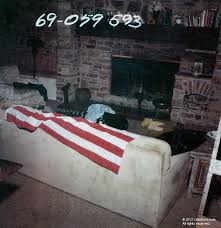
"Sharon Tate was murdered in Bel-Air, California. Wojtek Frykowski was also there, with whom in Warsaw, when I was young I played a lot and raced in swimming at the Legia pool. There was Gibi Folger who let me turn her New York apartment and her home in Los Angeles into a studio. I drove between Gibi's house and Romek Polanski's house on Cielo Drive. At Romek and Sharon's, I had the best time painting in the garden, where the panorama of the city stretched. Slept mostly on a mellow mezzanine overlooking the city. There was room for plenty of people. Sister Sharon came from San Francisco once and the third person to spend the night with us was her mascot, a large iguana, the size of a small alligator, who for some reason liked to climb on my back. May 15, 1969, for my birthday I received a bottle of Dom Perignon champagne and an American flag rom Gibi. The flag was so big that Wojtek Frykowski covered the entire large sofa standing in front of the fireplace in the living room with it. He fell asleep on this couch afterwards and received the first of 51 stab wounds..." (Witold-K, translation from Polish, on his Facebook page).





Perhaps most significantly, for students of TLB, is Witold-K’s story of the origin of the American flag, draped famously over the couch at Cielo: it was a birthday gift, along with a bottle of Dom Perignon, for the artist’s birthday in May 1969. It is at this time that Abigail worked together with the other campaign volunteers so passionately for Tom Bradley. The opposing side of Mayor Yorty mounted a bitter campaign against Bradley, and, despite the Bradley team’ s best efforts, lost the election. This no doubt had a lasting impact on Abigail, and was arguably one of the topics of her therapy sessions with Dr Flicker. Had Abigail lived, she would have been proud to see Bradley elected in July 1973, serving as mayor until 1993. A trip to Abigail Folger’s Facebook page reveals a few nuggets about the election, and at least one inclusion from Dr Flicker himself. Apparently, one of the women who worked alongside Abigail in the Bradley election recalled those times. She said she remembered Abigail saying, essentially, “you either like me or you don’t like me. There is no in- between.” Dr Flicker submitted that Abigail had “no skeletons in her closet,” and that she was preparing herself for an eventual run at the Senate.

American flag over sofa in living room at Cielo

American flag over sofa at Cielo. Photo courtesy of Cielodrive.com
Abigail graduated from Radcliffe in 1965, and returned to San Francisco, where she worked at Berkeley. In August of 1967 she and Andreas Brown drove to New York, where she lived until she left for Los Angeles in August of 1968. Of course it is while in New York that she was introduced to Voytek, and by extension Witold-K. However, before this meeting she had already been a part of a literary circle of friends in Manhattan. According to Brown, Abigail fell “madly in love” with Voytek, and he moved in with Abigail into her apartment. Witold-K would share the space as well, using it as his painting studio. The thinking here is that Abigail was attracted to an intelligent group of people, wherever she happened to be. Yet there emerged a bohemian spirit in her, which would embrace Voytek, but also his entire group of Polish friends now living in America. Some of these had already made the move to Los Angeles when Abigail and Voytek were living in New York. Abigail found in Voytek the kind of man she could not find in an American man, and she says as much in the personal letter I included in my last post on her. Voytek helped Abigail to become adventuresome, and probably more open minded. This attitude would become solidified in L.A. as she encountered the zeitgeist of the late 1960s on the West coast.
This brings us back to the remarks of Greg King, who said both Voytek and Abigail were just “lost” in this environment. Indeed, if New York was literary and “old money,” Los Angeles was the center of a very youthful and vibrant music and acting scene, and was very much creating a culture of “new money”. It was here that Abigail found herself in a world, the likes of which she had not experienced before. Thru all of Abigail’s years after college, she maintained a sense of noblesse oblige, which she certainly carried with her to L.A. Here she cultivated a social life with popular musicians and actors, while maintaining closer ties with Voytek’s group of Polish expatriates. The third part of this social life included people like Dawson and Doyle, the latter of which she was probably helping to clean up.


Eric Clapton, Joni Mitchell, David Crosby, and Cass Elliot at her home in L.A.

Lunch on the patio of Cass Elliot. Pic Dawson seated next to Eric Clapton

Eric Clapton and Cass

Home of Cass Elliot
In my last post, Abigail declared in her letter that, “my head has been very messed up for a long time, and although I have known it all along, I have never done much about it. It is the time - worn case of feeling that I let everything happen to me instead of making it happen...” By the summer of 1969 Abigail appeared ready to “make it happen,” by entering therapy and finally making a choice to combine her education and interests and embrace the future. If that future did not include Voytek, then unfortunately that would have be the way it was. Abigail and Sharon Tate were close, and Abigail saw in Sharon her love for Roman, but also Sharon’s own resolve and strength as a woman to move forward professionally, even if it meant possibly leaving Roman. But even though Abigail loved Voytek, he would not marry her, on account of her being wealthy. Try as he might, Voytek had not found his place among his successful friends in America, and no doubt felt bad about it. The idea of marrying a woman with wealth, while he was basically broke, was probably a difficult position for him to be in. By August of 1969 Abigail was 26, and the new year of 1970 was only four months away, and with it a brand new decade of possibility. I have always thought that Sharon Tate’s best work was still ahead of her, and I feel the same about Abigail, especially if it meant her making a run for the Senate.

The Los Angeles period of Abigail was a year of hard work for her, but arguably also a coming of age, so to speak. As I have said elsewhere, due to her financial status, Abigail had before her the dizzying anxiety of possibilities, but found it difficult to focus on one, and go with it. Thru all of this period, I cannot help but think that she kept journals of her experiences after college, and especially in L.A. It is well known that Voytek kept highly detailed notebooks of his life in America. That being said, I find Abigail similar in some ways to Joan Didion, who’s 1968 book of exquisite prose, Slouching Towards Bethlehem, chronicles Didion’s experiences in California. I am not saying that Abigail was preparing a book of her own experiences, as there is no evidence of this. But what I am saying can be summed up when one looks at the photo of Didion with the hippies in San Francisco. Didion, like Abigail, was to be sure, not a hippie. But looking at the photo of Didion, I see her as being aloof from that very interesting group of people, yet drawn to study them, to write about them, among other experiences. To that end, I see Abigail in much the same way in her own social circumstances among the hippie world: in it but not of it.

Joan Didion chronicling the scenes
Abigail was to depart Los Angeles on the morning of Saturday August 9, 1969 for San Francisco. Her recorded purpose in doing so was to unite with her family for her birthday. I would add that it was a precursor trip to her ultimate withdrawal from the circumstances around her in L.A.: the psychic letdowns of the losing Bradley campaign, the immense challenges of providing social services for the poor in a massive city, the drug craziness surrounding the music scene, her strained relationship with Voytek, and on and on. The sad irony of all this, is that she was literally hours away from realizing it thru that flight. This thought has been with me since I first learned about this case. The funeral of Abigail took place in Portola Valley on August 13, 1969. TV coverage of her funeral has been preserved at the Bay Area Television Archive at https://diva.sfsu.edu. In interviewing Witold-K for his book, Chaos, Tom O’Neill asked the artist what one question he would ask Voytek Frykowski if he could. If I could ask Abigail Folger one question, it would be: was there any particular reason why you decided not to book your flight to San Francisco for the morning of Friday August 8th?