Saturday, September 3, 2022

Hotel California Lyrics Saga


Welcome to the ‘Hotel California’ saga: Missing lyric sheets, rare book dealers and a relentless Don Henley


BY NATE ROGERS

AUG. 25, 2022 6 AM PT

Los Angeles Times


In the late 1970s, Ed Sanders had a choice to make.


The writer and musician had earned a central place at the counterculture table in the 1960s, releasing influential work as a poet and publisher, as well as through his underground rock band the Fugs, but his book about the Manson murders, 1971’s “The Family,” brought him out of the underground and into the grisly mainstream. The increased attention led to offers for more deep-dive nonfiction work, and Sanders had narrowed the search for his next major project to be either an investigation of the 1978 Jonestown massacre or a band-commissioned biography of future Rock & Roll Hall of Famers the Eagles. He picked the latter. “I didn’t want to go down and smell those rotting bodies in the jungle,” he explained in a 1994 interview. “I did my spell in mass murders.”


Ed Sanders           npr.org

The Eagles’ co-leader Glenn Frey had befriended Sanders when the writer was reporting “The Family,” so Sanders was given unprecedented access to the group just as the seams of it were beginning to tear. He spent years working on the book, which was to have been titled “This American Band — The Story of the Eagles.” By the time the four-volume text was finished, however, the band had broken up. In 1982, People magazine reported that Sanders’ “official saga” of the Eagles was still forthcoming, but eventually the decision was made to shelve it. “It’s a good book,” reflected Sanders in ’94. “It’s an exhaustive account.”


A decade later, in the mid-2000s, a rare book dealer, Glenn Horowitz, was presented with the opportunity to buy an item of great interest to music fans: Eagles co-founder Don Henley’s handwritten lyrics for much of the band’s landmark 1976 album “Hotel California” — including for “Life in the Fast Lane,” “New Kid in Town” and the album’s era-defining, Grammy-winning title song. Some of the lyrics were in draft form, offering a window into alternative versions of the songs, and some had notes and lyrics written by Frey as well. The pages served as one of the more significant finds in recent rock ‘n’ roll history, culturally and financially valuable in equal measure.


“Hotel California” holds the title of being the second best-selling studio album of all time, behind only Michael Jackson’s “Thriller.” But even with that statistic, its impact can still be underplayed. The fifth album of the Eagles’ storied, debauchery-filled run, “Hotel California” was the culmination of years of momentum they had been building, and served as the celebratory banquet for the entire Southern California soft-rock sound that they had adopted and perfected. (Henley and Frey were from Texas and Michigan, respectively.)


“I’ve learned over the years that one word, ‘California,’ carries with it all kinds of connotations, powerful imagery, mystique, etc., that fires the imaginations of people in all corners of the globe,” Henley explained in a 2016 interview with Rolling Stone. He told of a time when he was in “a remote village in a mountaintop jungle in Honduras,” without plumbing or electricity, and a local approached to show his “Hotel California” tape. “The song got around,” Henley said.


Today, 45 years later, Henley and the Eagles are hopscotching the country, playing the album in its entirety to sold-out arenas, in a multi-year tour that could likely continue indefinitely, if they wanted it to. When he sat down to write the words for the album on yellow notebook pages (based on concepts developed between him and Frey), it was a moment that changed the course of popular music.


What happened to those pages between 1976 and 2019 is the focus of an indictment handed down last month by Manhattan Dist. Atty. Alvin Bragg, in which three prominent figures in the entertainment artifact world — Horowitz, Edward Kosinski and Craig Inciardi — were charged with crimes related to their efforts to sell the “Hotel California” lyric sheets.


“The manuscripts were originally stolen in the late 1970s by an author who had been hired to write a biography of the band,” reads the D.A. office’s press release summarizing the indictment. “Despite knowing that the materials were stolen, the defendants attempted to sell the manuscripts, manufactured false provenance, and lied to auction houses, potential buyers, and law enforcement about the origin of the material.”
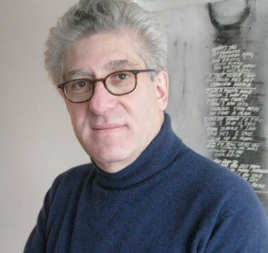

Glenn Horowitz glennhorowitz.com

Horowitz, who, according to the D.A.’s office, purchased the documents from said author in 2005, has been charged with conspiracy, attempted criminal possession of stolen property and hindering prosecution. Kosinski and Inciardi, who both subsequently purchased the manuscripts from Horowitz, are charged with possessing stolen property and conspiracy. All three pleaded not guilty, and their lawyers released a statement saying that “the D.A.’s office alleges criminality where none exists.” (The attorneys had no further comment.)


It’s a high-profile case that surprised people within the rare book and memorabilia world, partially because it’s typical for disputes centered on provenance — the history of an item’s ownership — to remain in civil litigation, rather than criminal. But it was also a surprise because of the caliber of the people involved — particularly Horowitz.


“I’m like, is that the Glenn Horowitz?” said Travis McDade, a professor at the University of Illinois College of Law specializing in rare manuscript theft, describing his first impression of the case. “Because he’s a big deal, especially when it comes to archive stuff. He sells high-profile archives to big institutions. He’s at the top of the game when it comes to that sort of thing.”


Horowitz, 66, has been a big shot in the rare book world for many decades, but really separated himself through his work arranging and placing, at various institutions for vast amounts of money, the literary archives of household names: Kurt Vonnegut, Joseph Heller, Gabriel García Márquez. His brokerage of Vladimir Nabokov’s estate in 1992 is said to have been the first of its kind to surpass $1 million, and, in 2016, he placed Bob Dylan’s archive for approximately $20 million. More recently, Horowitz was the dealer behind Eve Babitz’s archives landing at the Huntington Library, Art Museum and Botanical Gardens in San Marino. His fee reportedly ranges from 10% to 20%.


Inciardi, 58, is not famous like Horowitz, but his presence in this case is, to some, even more peculiar, due to his role as director of acquisitions at the Rock & Roll Hall of Fame, where he’s worked for nearly three decades.


“It’s unprecedented, in my experience, that someone who works for an institution is also dealing in this kind of material privately,” said a person with knowledge of the rare memorabilia industry, who spoke on the condition of anonymity due to the sensitive nature of the subject matter. “He’s been doing this for a long time. And no one could understand how somebody whose job it was to acquire things for an institution could be buying and selling stuff independently.” (When reached for comment, the Rock Hall provided a statement explaining that Inciardi had been suspended from his position and would remain so until the conclusion of an internal investigation.)


According to the indictment, Horowitz and Inciardi, along with Kosinski, 59, spent years working to sell the documents, splitting the 100 pages or so of the whole set — cited in the indictment to be worth over $1 million — into separate auctions at different institutions. The first instance was in 2012, when four pages of working lyrics for “Hotel California” were listed by Kosinski’s Gotta Have Rock and Roll auction house, which led to a communication with Don Henley’s attorney. Before long, a deal was arranged for Henley to purchase those pages for $8,500 — but a few years later, more pages were listed for sale by Sotheby’s, and another offer was sent to Henley to purchase some of them. That’s when things became far more antagonistic.


“[Longtime Eagles manager] Irving Azoff and Don Henley are the last people on Earth you would want to get into a fight with,” said the person with knowledge of the rare memorabilia industry. “Part of Irving’s reputation — and I think it’s something he takes great pride in — is being combative to the maximum. And Henley as well.” (Azoff and Henley declined to comment for this story.)


The list of previous legal disputes involving Henley, 75, is long and varied. Henley has battled with his former Eagles bandmate Don Felder, his record company Geffen Records and various other entities: In 2015, he used a lawsuit to remove an advertisement for a clothing company that jokingly used his name, and, in 2017, the Eagles filed a lawsuit against a Mexican resort calling itself the “Hotel California” in order to cease any implied association with the band. In 2011, when Frank Ocean included a reimagining of “Hotel California” on his mixtape “Nostalgia, Ultra,” Warner Music Group, the owner of the master track of “Hotel California,” threatened to sue if Ocean so much as performed the song in public. Henley later called Ocean “a talentless little prick.”


Given Henley’s track record, getting him to purchase back any of his own material was a surprising initial victory for the three dealers. But when an opportunity was subsequently offered to buy more pages piece by piece, Henley’s representatives instead “lodged complaints” with the Manhattan D.A., as a spokesperson for the D.A. explained via email. Because it was within the D.A.’s jurisdiction, the complaints led to an investigation.

Don Henley usatoday.com


“One of the problems we see in the fine art world a lot,” said Katherine Wilson-Milne, an attorney specializing in art law and the co-host of “The Art Law Podcast,” “is that there’s no one in the current chain of the market that’s interested or benefits from finding out that there’s a problem. … [Henley is] a rare person who’s interested in kind of exploding the chain.”


As for the biographer referenced in the D.A.'s press release, they are not currently being charged for any role in the saga, and are referred to in the indictment only as “Individual 1.” But several people with knowledge of the case, speaking under the condition of anonymity, cited Sanders, now 83, as having been the author at hand — and interviews and research suggest that Sanders was the band’s only documented, authorized biographer in the late ’70s. Sanders did not return requests for comment, but there’s one bit of online evidence that further establishes his role. Using the Internet Archive to see how it appeared in 2016, Sotheby’s original online listing for an additional 14 pages of “Hotel California” lyrics describes the item’s provenance as follows: “Don Henley and Glenn Frey — Ed Sanders — Present Owner.”


Who, exactly, the rightful owner is of the “Hotel California” papers is at the center of the case. In the indictment, the earliest description of how “Individual 1” ended up with the documents comes in the form of an email that person sent to Horowitz in 2005: “I was staying at Henley’s place in Malibu,” Individual 1 wrote in the email, “and had total access to his boxes of stuff, and there was a lot, and I compiled a box of files I wanted and his assistant mailed them to me.” Then, noting Henley’s propensity to be “aggressive,” Individual 1 suggested that “maybe we don’t want to sell them at all?”


In the years that followed, the details of this provenance appeared to shift with relative ease, often following overt suggestions and guidance by Horowitz and Inciardi, as documented in a chain of emails cited in the indictment. In 2012, for example, Inciardi sent an email to Horowitz in which he wrote out a script of sorts for Individual 1 to use, in order to claim provenance for the documents. “It was about 35 years ago and my memory is getting foggy!” Inciardi wrote in the voice of Individual 1. Then: “I remember finding the material discarded in a dressing room backstage at an Eagles concert.” Horowitz replied, “[Individual 1] won’t go for that. Let’s talk later.”


At one point, Horowitz noted in an email to Inciardi that Individual 1 was “almost ready to have his ‘explanation’ shaped in to [sic] a communication.” In 2017, after Frey’s death in 2016 at the age of 67, and as the D.A. was beginning to inquire about the documents, Horowitz wrote to Individual 1, “In an earlier communication you once suggested Frey was the person from whom you got the document. If Frey, he, alas, is dead and identifying him as the [sic] source would make this go away once and for all. Your thoughts, please?” According to the indictment, after some back and forth, Individual 1 later sent an email that appeared to be a new declaration of provenance, pointing to Frey as being the provider of the lyric sheets.


“There’s a lot of good faith misunderstandings when it comes to collections sold by one person to another,” McDade, the specialist in rare manuscript theft, noted, speaking specifically about the detail of Frey being seemingly roped into this after his death. “I mean, that stuff happens. But this seemed to be a deliberate effort to obfuscate who the rightful owner was.”


This is not the first controversy involving Kosinski. In 2015, an arbitrator ruled against him for having cut out a client from the sale of high-value Michael Jackson memorabilia; the lawsuit filed to affirm the ruling states that Kosinski was ordered to pay over $600,000. He was also embroiled in a court battle with Madonna, who attempted to stop Gotta Have Rock and Roll’s sale of her personal belongings — including a letter written to her by Tupac Shakur — which had been provided to the auction house by Madonna’s former friend. A judge dismissed the case in 2018 partially because the statute of limitations to claim the items had passed.


As for Horowitz, a colleague of his said, in a 2007 profile in the New York Times, that Horowitz describes himself as a “terrific combination of a scholar and a grifter.” In a recent podcast appearance, Horowitz proudly confirmed his status as “notorious” in the industry.


“There is a bit of a black box involved in auction items that are in part valuable because they’re mysterious and elusive and exciting,” said Nick Rosenberg, one of the attorneys who won the Michael Jackson claim against Kosinski. “But that also provides a lot of opportunities for either genuine mistake or outright fraud. … It is a tough industry.”


Various factors — including the rise of both baby boomer-era nostalgia and a boomer class of high-end investors — have driven an exponential growth in the value of rock ‘n’ roll memorabilia. In April 2020, Paul McCartney’s “Hey Jude” lyric sheet was sold by Julien’s Auctions to an anonymous buyer for $910,000; a few months later, Julien’s sold Kurt Cobain’s guitar from the “Unplugged” concert for $6 million to Peter Freedman of Rode Microphones. “The biggest reason that this market has exploded,” Darren Julien, the CEO of Julien’s, recently told the Journal of Antiques and Collectibles, “is due to the hedge funds and financial institutions who are looking at rock and roll historical artifacts as blue chip investments and a way to diversify their portfolios.”


“Rock ‘n’ roll memorabilia is exciting, it’s fascinating, it’s desirable,” said Rosenberg, the attorney. “I think that we end up placing a lot of false comfort at times in the purported provenance of the item or in our general desire to trust established entities.”


If the Eagles case reaches trial, the D.A. will presumably have to demonstrate beyond a reasonable doubt that the items were stolen in the first place, which may be tricky. “You gotta have proof — you have to have a real police report,” said Pete Siegel, Kosinski’s former partner for over 15 years. (Siegel is not named or implicated at any point in the indictment.) “And as far as Henley, I think he [filed a report] much after the fact.”


The D.A.’s press release seems to confirm this timeline, saying that, after Henley learned that Inciardi and Kosinski were attempting to sell portions of the documents, the Eagles’ drummer “filed police reports, told the defendants that the materials were stolen, and demanded the return of his property.” A source with knowledge of the filings said that Henley filed police reports with the Los Angeles County Sheriff’s Department in April 2012 and June 2014.


If Horowitz is convicted, he does not face mandatory prison time, but his sentence could range from five to 15 years in prison, according to the D.A. spokesperson. If Kosinski and Inciardi are convicted, they face a minimum of one to three years in prison and a maximum of 8.3 to 25 years. In the event of a conviction, the “Hotel California” papers would be returned to Henley, and, if he wanted to, he could still theoretically pursue a civil case as well.


One consideration several people highlighted is that money probably wasn’t the main motivating factor for any of the dealers implicated in the “Hotel California” scandal. All three had established successful careers, and Kosinski is married to a New York real-estate heiress, Jacqueline LeFrak. “[Kosinski] doesn’t need the money,” Siegel said, defending his former partner. “If he sold it at auction, you’d make, let’s say, 50 grand maybe? … If he believed Henley was telling the truth and had documentation, Ed would be the first one to give it back.”


If it wasn’t the money, what pushed Horowitz, Inciardi and Kosinski to go to such lengths to sell the “Hotel California” papers, despite hurdles facing them at every turn?


Margaret Barrett, a freelance consultant specializing in pop-culture memorabilia, thinks it could be the mystique of the item — the allure of playing a role in a new chapter about one of the most fabled entries in the American songbook. “[‘Hotel California’ is] huge,” Barrett said. “Everyone knows that song, and this is why it’s gotten to this level.”


Barrett brought up the example of the handful of surviving pairs of Judy Garland’s ruby slippers from “The Wizard of Oz,” which have been a ceaseless source of fascination in the collecting world — and at one point were the focus of an FBI investigation to track down a stolen pair.


“It’s just these shoes,” Barrett said, “that have captured the public’s imagination — mainly the American public. And people get consumed, and will do things about, through, for, [and] with them that they wouldn’t ever do otherwise, because they have some kind of magic — magic that we prescribe to it. But it’s still magic.”


original article

Thanks to one of our readers, Jennifer, for tipping us to this story!

Monday, August 29, 2022

Charles Allen Beard


There are a few Manson Family members or associates that little or next to nothing is known about. Charles Beard is one of those people. In this post we will tell you all about Charles and what happened to him.

Lynette Fromme wrote in her book Reflexion a little about Charles Beard in the name she used for him, Chuck Grey with an asterisk. She writes at the beginning of her book, "The persons and events described in this book are real and true. In some instances, pseudonyms have been used to protect the privacy of individuals. In such cases the altered names are indicated by an asterisk (*) the first time they appear."

Lyn writes on pages 278 and 279. "Chuck Grey* wasn't a bad kid- at over six feet tall, hardly a kid at all- but in the eyes of the law he was underage. He had lived with the law all his life. Both his parents were police officers. He didn't say so until he realized we wouldn't hold it against him. Charlie told him the cops had been running us all over the county, and he wondered if his dad could help to keep them off our back. Chuck rolled his eyes.

"He's been on my back for seventeen years," he said. 

"A bully?"

"You could say that. We hardly know each other. All he knows how to do is give orders. They're never at home much anyway, and when they're not at work, they're sleeping."

"Are they looking for you?"

"Not really, they don't care, but they put on a show 'cause they don't want people to think they're bad parents."

Chuck was man-some, with green eyes that looked hungry for acceptance. He shaded that look beneath a low brow and a "fuck it" attitude, spending most of his time at the farmhouse."

Lyn continues on page 318. "One sunny day I heard a commotion outside, and Pearl came into George's house looking traumatized. From the doorway I saw two sheriff's squad cars in the yard, and seventeen-year-old Chuck Grey in the back of one of them. A scatter of people who had stopped in their tracks of their daily routines looked stunned. Finally, someone explained to me that Chuck, the son of two police officers, had just been arrested for rape. A woman in the first squad car had identified him as the man who hijacked her at knifepoint on Santa Susana Pass not a mile from The Ranch, and raped her on the backseat of her car. As shocking as the charge, the woman was almost sixty years old.

Murmurs of disbelief and denial failed to pick up momentum. The complacency on Chuck's face announced that he had done the deed. Those of us wondered why, based upon his good looks and access to girls, didn't understand rape. Chuck went away and didn't come back."

 I offer Lyn's recollections because it's about as close we are going to get to any background on Chuck other than what is on Deemer's List.


Chuck was born in Sacramento with the name and DOB as is on Deemer's list. His mother remarried a man with the last name of Green in 1962 when Chuck was 10-years-old. Chuck used his step-father's last name as his own.

Chuck was arrested for kidnapping and rape on July 21 1969. The rape occurred on July 17 1969 at 2:30 am, it was reported to law enforcement at 9:50 am that same day. The location of the kidnapping and rape according to the report was the N/E area of the Chatsworth hills.

The victim, Marilyn Marshall, passed away in 2004. She was 32 years old at the time of the kidnap/rape, not 60 as Lyn thought.

In the early morning hours of July 17 1969 Marilyn and a companion, Ronald Black went up in the Chatsworth hills for a little alone time in his vehicle, a white van.

The suspect, Chuck, was said to be driving a '57 Ford, White, two-door, license plate HET 365.

What follows is the narrative on the police report. It is difficult to read because it is handwritten and not a great copy. I've transcribed it as well as I can, there are a few words I could not make out or deduce from what had been written. It's full of abbreviations which I explain the first time they appear in the report.

The vict [victim] stated that on the abv [above] date and time she was in the Chatsworth hills with wit 1 [Witness 1] Black, Ronald (arrest GTA RPT booking [there's a number here but I can't make the whole thing out] Vict and wit 1 were outside of wit 1 veh [vehicle]

Susp [suspect] came from behind vict and stated "Don't move". Vict felt a poss [possible] 22 rifle next to her back and shoulder and stated "You've got to be kidding"

Susp stated "No I'm not, get in the car I'll tell you where to drive" Vict complied and wit 1 drove in front of the vict in a white van ???

Vict lost sight of wit 1 at which time the susp stated "turn here" (indicating RT) vict complied and after completing turn slowed down and jumped out of the veh. Vict began to run and suspect followed

Susp caught vict and held a 10" hunting knife up to vict and stated "I won't hurt you" and threw knife to side, susp then removed vict clothes and his own and forced vict to lie down ??? west at which time susp had sexual intercourse with vict, penetrating vaginal orfice.

After completing sexual intercourse with vict susp stated "My name is Iverson. What's your name?" vict gave name and susp stated "If you tell the cops I'll kill you and your kids"

Susp then left in an unk [unknown] direction. Vict ran to a paved public highway and called for assistance.

Injury: MT at Northridge receiving by Dr. Collins who stated, laceration, contusion, abrasion ?? ???? shoulder

Pelvic exam- some dirt (earth) and pieces of leaves in and about the vaginal area Vaginal and cervical smears taken slides to LAPD Sutured ?? laceration on back of head.

The report written after Chuck's arrest says that he was booked under the name Charles Alan Manson with a birth date 12-31-46. Once in court for the arraignment he told the court he was 17 years old. His mother provided a birth certificate and his true name to the court. Chuck then had his case transferred to juvenile court.

The evidence against him was slides that contained sperm and a finger print that was Chuck's found on the victim's vehicle.

Since the case was bound over to juvenile court there are no more documents relating to this case. Juvenile records are sealed and I'm kind of surprised that these two documents still exist. I can only assume Chuck was convicted and served some time.

Documents relating to this case.

Chuck's story doesn't end there and what follows is a mind bender.

December 13 1972 Charles Alan Green, 21, of Sacramento was arrested along with two other men, Edwin Lee Earle, 21, and Patrick Leo Mlenek, 19, for the murders of two Mexican nationals who were found in a shallow grave near the town of Folsom. Earle was armed with the revolver thought to be used in the killing. Subsequent articles say a total of five people were picked up and questioned but released without charges. Earle was the sole person tried and convicted of the murders. This gives you an idea who Chuck was running with after being released from juvenile hall.


 Many thanks to Starviego who started a thread on Chuck Green at MoA'69 and Taborfresca who posted a link to an appeal which sealed the deal in identifying Charles Green in the appeal as the same Chuck Green who was with the Family.

August 24 1977 a 25-year-old Chuck Green married 16-year-old Karen Fredrickson in Carson City Nevada. They had a rocky relationship. By October 1977 the two were on the verge of splitting up. On October 11 1977, along with a friend of Chuck's, he and Karen went for a drive to a neighboring county. Ultimately Chuck shot Karen in the face with a shot gun and killed her. He was quickly apprehended and charged with murder, robbery and kidnapping, The cruel and callous manner of her death is described in the appeal.

Taborfresca noticed a footnote in the appeal (FN 31) that read "On several occasions the report indicated that defendant was marginally involved with the Hell's Angels motorcycle gang and had used the alias "Charles Manson." "


Chuck received the death penalty for murdering his young wife. He was the first person to receive the death penalty after it was reinstated in California. 


The appeal was beneficial to Chuck. The appeals court threw out the kidnapping and robbery charges. Following the 1977 Furman-Gregg death penalty cases the California legislature, like many states, decided that there should be one of six special circumstances to be met for the death penalty to be imposed by the jury. The DA trying the case used the special circumstance of the murder having been committed during the act of a felony crime. He named two, in fact, robbery and kidnapping. The appeals court threw out robbery because it occurred after the murder. The murder did not occur during the commission of the robbery.

The kidnapping special circumstance was thrown out as well because the DA, at trial, argued three separate kidnapping events, 1. Picking Karen up 2. Driving her to the river and 3. Walking her to the killing spot (90 feet). The appeals court didn’t consider #1 because she went willingly as a result of a lie for kidnapping to be actionable the victim must act in response to force or a threat of force. It didn’t consider #3 because the distance she was forced to travel was too short. That left #2 which they agreed was permissible but because the appeals court didn’t know which of the three the jurors based their decision on (or perhaps all three) the kidnapping special circumstance was thrown out. Chuck’s sentence was converted to life in prison with the possibility of parole. (Thank you, David, for explaining to me what the appeal meant)

Chuck is still in prison, under the name Charles Alan Green. He is at Mule Creek Prison where Tex Watson was housed for many years until his transfer to a San Diego prison. I have no idea if the two had a reunion or if they were there at the same time. Chuck has had more than 10 parole hearings and has been denied or he has stipulated unsuitability on the parole hearing date. On February 5 2020 Chuck was granted parole, on May 29 2020 the governor reversed the parole board’s decision. Since I haven’t read the transcripts, I don’t know if the Manson taint had anything to do with the reversal.

Karen’s parents went to Chuck’s parole hearings to give victim’s impact statements any time he has come up for parole. Her father died in 2015.

It was Doris Tate, Sharon Tate’s mom, who was instrumental in getting Proposition 8, the Victim’s Rights Bill passed in 1982 so that Karen’s parents had a right to have a say in what happened to their daughter’s killer.


Los Angeles Times

Thanks to Buntline who wouldn't let go of Charles Allen Beard until he knew the whole story.

UPDATE! This just in from Cielodrive who was able to get a copy of Green's parole reversal. All I can say is WOW, this guy was bad news.
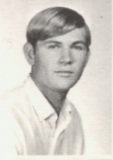


Cielodrive was also able to get some mug shots of Green.


Friday, August 26, 2022

Mid-century Modern Gladiators?

Somebody was having fun with a "source" for the Los Angeles Sheriff's Department and I bet it wasn't a seasoned source from one of the alphabet agencies.


courtesy of realmofhistory.com 


July 31, 1969

Office Correspondence

From: Sergeant William Gleason

Motorcycle File

To: Captain James C. White

Records and Data Bureau


Subject: Weapons and Explosives in Possession of Outlaw Motorcycle Club, Malibu Station Patrol Area

Earlier this date, this writer received the following information from Los Angeles Police Department Devonshire Division Officers Marshall and Patten.

The officers advised that they had received information from a confidential source the members of the Satans Slaves, Hells Angels, and Galloping Gooses were presently living at Spahn Movie Ranch, Santa Susana Road, Chatsworth. These persons are reportedly in possession of a .50 caliber machine gun, along with a number of cases of dynamite. The source also stated that the dynamite is wired to a large amount of marijuana that is buried on the Ranch property. The exact location of the machine gun, dynamite, and marijuana is unknown. The Spahn Movie Ranch encompasses several hundred acres of land.

The source told the officers that the various clubs are gathering at the Spahn Ranch in preparation for a gang war. It is unknown what other clubs the above-mentioned clubs are planning to fight with, or where this gang war is to take place. Apparently, the above-mentioned clubs are going to fight smaller outlaw clubs in the Southern California area. The source stated that when the above-mentioned clubs feel like they are up to full strength, they will have a party for approximately one week and that after this party, they will fight the other clubs.

The Los Angeles Police Department Division verified that there were several members of the various clubs living at Spahn Ranch, also that two clips of .30 caliber ammunition have been found in the Spahn Movie Ranch area.

This writer has had reports of members of various clubs staying at the ranch, also Malibu Station has made some arrests at the ranch including an Assault With Deadly Weapon arrest reported under file 469-00721-1071-055.

The Devonshire Division officers will forward any further information, as it is received.

Sergeant Stern, Intelligence Bureau, was contacted and notified of the above. Sergeant Stern has previously received the same information from another source.

For Your Information.

(signed) William C. Gleason


Monday, August 22, 2022

Robert Rinehard


It probably wouldn't surprise you to learn that Robert Rinehard wasn't really Robert Rinehard. Other than the picture of him standing with a sad Charles Manson as both were arrested in the Spahn Ranch Raid of August 16 1969 next to nothing is known about him.

Rinehard was the Straight Satan that was sent to the ranch to fetch Danny DeCarlo and take him back to the Satan's clubhouse.

The blog has been able to obtain Rinehard's rap sheet and it reveals his true name as well as another alias he used. I think the reason Rinehard looked he looked like he did in that picture with Manson is because he knew his goose was cooked.


Rinehard was Robert Stanley Wotisky and an escapee from California's Chino State Prison. He had escaped on February 3 1969. He was there on a second-degree burglary charge out of Los Angeles County and given a sentence of 6 months to 15 years. 

Robert Wotisky was born in Illinois July 21 1939 but grew up in McKees Rocks, Pennsylvania. He had two older sisters and two older brothers according to the 1940 and 1950 censuses. His parents' names were George and Caroline Wotisky.

Robert's criminal history began in Pennsylvania back in 1956 with an auto theft charge. He had a number of arrests and convictions under the name of Wotisky. A lot of those charges were for burglary. In 1965 he was sentenced 6 months to 23 1/2 months in a Pennsylvania prison. After his release he came to California and started using the name Robert Dovell.

Wotisky aka Dovell came to the attention of California authorities in 1967. He was shot and wounded by a Monrovia police officer while making a hasty retreat from the scene of a robbery. Since his rap sheet shows that this was simply an inquiry and not an arrest. It's possible that law enforcement did not want the burden of his medical bills and let him off any charges.


He was arrested once in 1968 under the Dovell name for drugs and once in his Wotisky name for burglary, the charge that landed him in Chino.

Wotisky was married and had two children at the time of the raid. His wife was pregnant with their third child. I'm not sure what happened to him immediately after the Raid but since he had escaped from prison his fingerprints were no doubt in the system. He was likely sent back to prison to serve out the rest of his sentence. His wife had their third child in January 1970 back in Pennsylvania. She had returned to California by 1974.

In 1974 Wotisky was at home with his family, in the early hours of June 24th when an explosion rocked his neighborhood. His next-door-neighbor's home had a natural gas leak and the house exploded. Wotisky and his wife went to the window to see what had happened when a second explosion went off. That explosion injured both of them and Wotisky lost sight in one eye.


Apparently Wotisky could not live with losing his sight and other injuries. A little more than six months after the explosion he committed suicide January 17 1975 in Ventura County by an overdose of barbiturates, according to his death certificate. He was 35 years old. He is buried in Ivy Lawn Cemetery in Ventura California.

His wife, on behalf of the children, filed a wrongful death lawsuit asking for $4 million.


Friday, August 19, 2022

There's a new contender for Manson's estate!

 Just when you and Jason Freeman thought this estate stuff was going to be wrapped up, along came a new contender. GW filled me in about this story last weekend but he's not available to write it up. So, here goes...

courtesy of meaww.com

The new contender is Daniel Arguelles a real estate agent who deals in high end properties in the Los Angeles area.  

The Daily Mail announced a few of days ago that Daniel Arguelles' attorneys had crafted a document that lays out a convincing case for Charles Manson to have been Daniel's father. 

The documents claim Daniel's mother had had a one-night stand with Manson around January 25 1959. On November 1 1959 Daniel was born.

A post on Manson's activities during the time in question.

But that's not all. Daniel took an Ancestry DNA test, that came back showing he had a close relationship to Michael Brunner. Michael contacted Daniel through the Ancestry messaging option and they agreed to take a further DNA test. That test showed that there was a 99.9998% probability that they had the same father. Okay, now we are getting somewhere! The judge put a pin in the August 12th hearing and set a date of October 20th to hear the details of the new claim.

Follow the Daily Mail link above to read the six-page document. There is quite a bit more detail. 


This is Daniel's profile from his Zillow page-

Daniel Arguelles

About me

Luxury Home Sales Agent (16 years experience)

Specialties- Buyer's agent   Listing agent   Foreclosure   Short-Sale

Dan Arguelles' unique qualities are what make him stand out in the real estate business. His extensive knowledge of communities and the people living in them are a major asset when it comes to selling big-time houses or small condos. Dan was a former 12-year Malibu resident, but in the 80s, he appeared in print ads, catalogs, Sunset Boulevard billboards, coffee table books, (Avedon Fashion, Men without Ties), as well as numerous television commercials and feature films, even making his own feature film. Working with renowned figures such as photographers Richard Avedon and Herb Ritz, designers Armani and Versace, filmmakers/ directors Ridley Scott, Michael Bay, and models like Christie Brinkley, Gia, Jerry Hall, and Beverly Johnson gave him the best experience needed in real estate: communication, people skills, and negotiation.


Dan has lived in many cities all over the world including Paris, London, Milan, Tokyo, Durbin, South Africa and New York City. Because of his travels and exposure to different living situations, he knows houses inside and out. Using this knowledge of the world's real estate, in 2006, Dan decided to answer an ad to work at Shorewood Realtors in Manhattan Beach as an agent. A year after joining Shorewood Realtors, Dan was recognized with the Rising Star Award in 2007 and he never looked back. While selling Manhattan Beach real estate Dan has represented a host of celebrities in many different fields of entertainment, sport, and business. Some include corporate relocation, Northrop Grumman, and Space X. Dan has been featured in the press by The Los Angeles Times, Dig's Magazine, The Beach Reporter, and was lucky to make a brief appearance on the show, "Million Dollar Listing." In Manhattan Beach, Dan specialized in beachfront properties. Dan looks forward to helping you fulfill your dreams here in Malibu.


Wow! That's quite a resume. Naturally, I had to scour the social media sites to see all about the modeling gigs. No disappointment there, here are a few of the photos I found.


Danny with Kelly LeBrock and Jason Salvas


Danny had an inkling that his father was someone famous


We will definitely be keeping an eye on this latest development.  Stay tuned!


Saturday, August 13, 2022

The Gleason Report August 11 1969

William Gleason

The same day that Chief John Knox filed his report on the Manson Family Sergeant William Gleason filed his own report. While there is much the same information in the Gleason report as the Knox report there are also some little nuggets that bear discussion.

Taking both reports into consideration I have a hard time believing that there were one or more government placed informants.  It seems to me that there were enough young female runaways who were more than willing to speak to the police after their stay at Spahn Ranch. These girls stayed just a few days or sometimes a few weeks but were savvy enough to get the hell out of there and back to their parents. I'm sure their moms and dads never looked so good after getting a taste of communal living.

The girls apparently told their parents all about Spahn Ranch and Charlie Manson and in turn the parents went to the authorities to report the situation. Contrary to Manson's edict that the kids at the ranch were throw-aways whose parents didn't care about them, these parents had filed missing persons reports and actively looked for their kids. One mother went so far, in the Knox report, to personally confront Charles Manson at Spahn.

If you consider the information given by the girls, and confirmed by police after their own investigations, and the number of times that law enforcement was called to Spahn in the spring and summer of 1969 it's no wonder that they were well aware of the activities taking place. You can tell by the dialogue in the report that the teenaged girls were considered informants. There was no reason to embed an informant at Spahn Ranch.

During the spring and summer of 1969 authorities had arrested 16 people from the Family in the Bread Truck Bust, arrested Manson for the assault on Danny DeCarlo's wife, arrested Manson for the rape of a 17-year-old girl, arrested Steve Grogan for the indecent exposure charge, questioned the ranch residents about the murder of Mark Walts and periodically looked for runaways at the ranch. 

That's not counting the investigation of the car theft ring that had information coming into them from numerous businesses in the area. The neighbors around Spahn Ranch also contributed to the intel gathered by law enforcement.

There is more than enough documentation about all of these events that casts doubt that there were any covert operations by the CIA or any other government agency. The Family members, by their actions and deeds, essentially informed on themselves. 

Also, in this report you will read about the large sums of cash that Manson used to buy dune buggies and parts. A report that Sadie was cashing $3,000.00 checks at a local bank. If true, this was likely checks that Juanita Wildebush would have received from back east. As a point of reference, $3,000.00 in 1969 translates to $24,218.75 in today's dollars. Great! The Family members were eating out of dumpsters and dressing from a communal pile of clothes but, by golly, Manson had the cash to buy dune buggies.

This report again mentions a Venice Riot where a Negro had his ear bitten by a Caucasian male. Funny that when I went to look this up, the newspapers referred to the riot as a Love-In. There is really no indication that any Family members or Black Panthers attended this Love-In/Riot but since there were 7,000 in attendance it can't be ruled out. Lots of arrests though.


Before I forget, a small thing. If you look on page four of the report, third paragraph from the bottom, Gleason writes, "The subject was told by Manson that once she joined the "Family" at the ranch she couldn't leave the ranch." Huh? I thought Manson insisted that they never referred to themselves as the Family, that was a label laid on them by the press or something.

Monday, August 8, 2022

Hinman Progress Report 12-4-69

This is a progress report compiled by Deputy's William Gleason and George Palmer of the Los Angeles Sheriff's Department. There are summations of interviews done with Nancy Pitman and Stephanie Schram. Also, the recounting of an interview of Susan Rogers, an inmate at the county jail housed with Susan Atkins. The interview with Rogers did not yield any information except to convey that Susan was blabbing about her exploits to anyone who would listen. Apparently, Ronnie Howard and Virginia Graham were not the only inmates Susan spoke with about her crimes.


The interview of Nancy Pitman has a little more information than Nancy has parted with in other interviews or court testimony. She's quite chatty.  Whether or not it is all true is anyone's guess. Nancy does say that it was Juanita Wildebush that gave George Spahn the $5000.00 not Manson. I suppose that's splitting hairs a bit because I'm sure that Manson would point out that if it wasn't for him Juanita would have never known about Spahn Ranch to give George the money.


Then there's the recap of Stephanie Schram interview with Gleason and Palmer. Cielodrive has the Q and A version of this interview posted at his site

It is interesting to compare the two. It's akin to a "this is what I said and this is what you heard exercise." One noticeable difference that I saw is that the summation claims that Manson threatened to cut off the women's breast if they dared to disobey him. Stephanie never said that in the interview.

In both the summation and the actual interview Stephanie says that she and Manson visited Dennis Wilson at his home on Sunset. I thought that Dennis let the lease run out at the end of August 1968.    

This is supposed to be a progress report on the Hinman murder but there is very little in the document related to his murder.

Wednesday, August 3, 2022

Deb Silva Uncovers the First Spahn Raid

"Don't try to play The Man...Because the next time you try it, you'll find yourself hanging from a tree upside down, dead." 

If you're Charlie, you say that to firemen. And then the firemen inform the police. The police, natch, send the threat up the ladder to this guy who (to me at least) does not look like he fears hippies, slippies, or any other dang dirty commie. 

Stick me up in a tree. I double dog dare ya!

That's John P. Knox, Chief at LASO Patrol Division West in 1969. Manson Blog researcher and author Deb Silva recently unearthed reports Knox received regarding the scene at Spahn's Movie Ranch, known in the following reports as Spahn Ranch, during the Summer of 1969. The first three pages are missing, but you can read from the fourth page forward by following this link: pdf.

I'll leave the reading to you, it's worth your time, and instead touch on a couple of things that jumped out at me. I'd love to hear what you think below. 

- We wondered about this previously but the reason Mr. X, Jack Gordon, Ruth Gordon, and Carol Loveless have mugshot photos included with others arrested in the more famous August 16th raid might be because they were swooped up in the caves near Spahn's prior to the main raid.  

You will see in the pdf that the LAPD contacts the LASO the second week of July and is all, "Dudes we're looking for juvie arsonists and robbers. Might they be out there somewhere laying low?" 

And the LASO said, "Maybe. They're never super smart about where they hide. I'll get back to you." 

TWO HOURS LATER....The LASO people find the bad children. Seriously, how bad do you suck as a criminal if the cops find you in two freakin hours? Get a new career before it's too late oh you juveniles of 1969! 

The police at some point also possibly stumble upon Jack, Ruth, Carol, and X while out spelunking. I'd always heard the runaways hid in the caves but maybe an entire alternative society was up there who knows. I've also always believed successful drug dealers live in caves. I bet life was awesome. 

In what many would call snitching, Jack spills the beans on some Ranch facts. And also admits to knowing one of the bikers. Those games are dangerous, my dear Jackie Boy. 

Moving on: 

- Several neighbors admit to being terrorized
- Other neighbors offer to help law enforcement remove the group at Spahn's 
- Spahn's son says George Spahn is afraid to leave the Ranch over fear of retaliation
- Law enforcement appears to be playing it straight and by the book in their efforts


- Laura Ann Sheppard returns to the blog today. Her mother, pictured below with Laura, went to the Ranch searching for her daughter and watched her scamper away. Panicked, she talked to Charlie and got nowhere. 


I've seen Laura Ann Sheppard shamed in the comments section of this blog in the past. If any of you rotten assholes are still alive, post up a photo of yourself from back in the day and let's compare. I will wait. 

Not all of these kids were throwaways. Some of them met the wrong people at the wrong time. 

- The police are told Charlie makes juvenile girls bathe grown men in a big wooden tub. I've never heard that before. Have you? 

- The police think Charlie's group is growing booby-trapped weed.

- A group of men at the Ranch are observed having knife throwing practice August 8th, 1969. 

- Mrs. Greene & her father confirm groups of "negroes" are in the area.

- A Straight Satans biker bites the nose off a black man in a Venice Beach riot and retribution is feared.

- Dumb Danny uses his wife's maiden surname as an alias. Super Derrrrrr. 

-Someone tells the cops Charlie is coming back from SF August 8th with a load of narcotics. The police leave the news at rumor status. Seven people will read what I just wrote, verify it in the report, and decide once and for all the motive is drugs. Who can blame them? The possible becomes the probable in a flash here in Mansonland and it'll always be that way. 

Charlie and the Family were likely done before Cielo and Waverley happened. Law enforcement was closing in and the community was sick of their shenanigans. I hate to think it, but Sharon Tate and the others probably would've lived if another week was allowed to pass. It's such a shame. The cops were so close. 

Don't do anything illegal. Beware of the Eagle. 

Monday, August 1, 2022

(You Are My) Sunshine Pearce

Howdy. I hope everything is groovy with you. At the time of this missive, we await the dropping of potentially big news in Mansonland. When you find out, you're gonna be like no freakin way but I'll just nod and smile like a sage. I might even shoot you a quick wink if no one is watching. 

We're also waiting to hear back from other people on other funny and not so funny things. But you know how that one goes. Everybody and their brother has secrets waiting on the other side of Gmail until they disappear back into the ether that spawned them. 

Never once do you receive the photos you craved when you first received this bag of curses btw. Ever.

Anyway, several posts are half done and I was struggling for a post over the weekend. In desperation, I turned to Didion.

Thankfully, Sir Buntline Heskey of Airportshire swooped in and saved everyone from a Greenwhite lecture about old people in prison with young people. Please thank him below. 

This post can also be considered part of the Trafficking series brought to you by a shadowy group known as The Scholars. If you're (like me) a fan of seeing the background puzzle pieces filled in, this quick workup is for you. 

Without further ado...

-------------

(via Buntline. My comments will be in parenthesis when necessary.) 

Sorry but Sanders has led me down another rabbit hole. This time with Charles "Sunshine" Pierce.

"In the middle of April of 1969, a young Texan named Charles Pierce, aka Sunshine, was hanging out on the Sunset Strip when he met Ella Sinder, aka Yeller, and Sadie. Charles Pierce was a young man from Midland, Texas who had come to California in order to surf and hang out in the sun and just enjoy himself. Sadie and Ella persuaded Charles "Sunshine" Pierce to visit the Spahn Ranch, where Sunshine gave up everything — his money, his I.D. and his silver 1968 Plymouth Roadrunner, which Manson gladly received and used for a while, and then gave it away to Randy Starr."

Here is every time Sunshine is mentioned in Ed Sanders' The Family. (You can also read the book free of charge there if you wish.)

Long story short, Sunshine Pierce scampered back to Texas on June 4th, 1969, after Manson asked him to kill someone, most likely Terry Melcher.

Considering I have heard of Sunshine quite a bit, and have him on my list of family members, little about him exists online. And he often called Edward "Sunshine" Pierce. Thankfully, our pal Earl mentions a friend of Ella Jo Bailey...


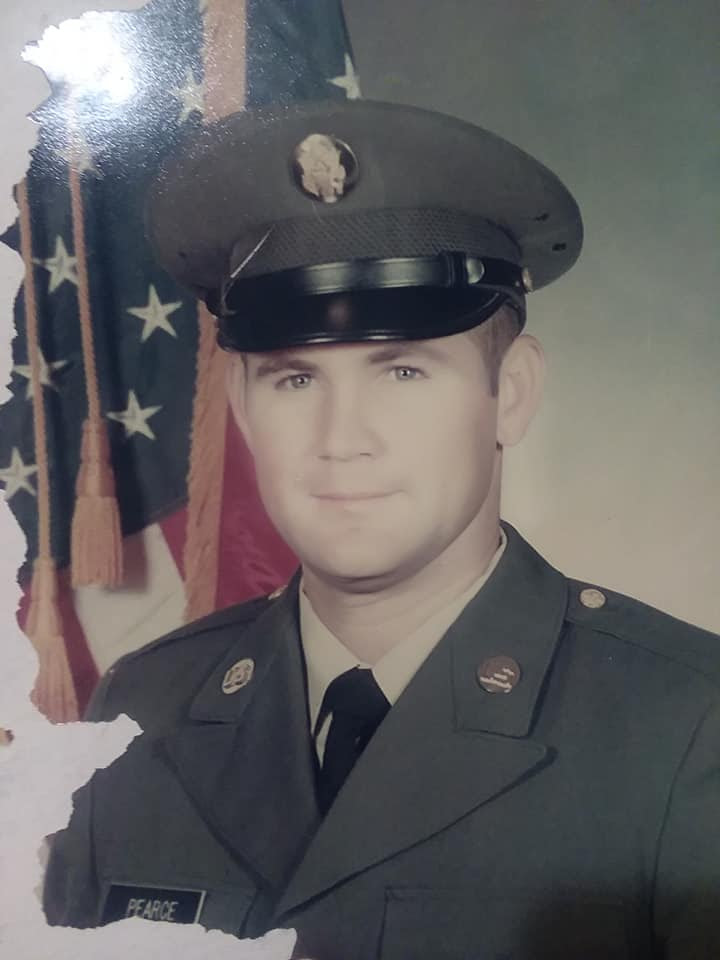
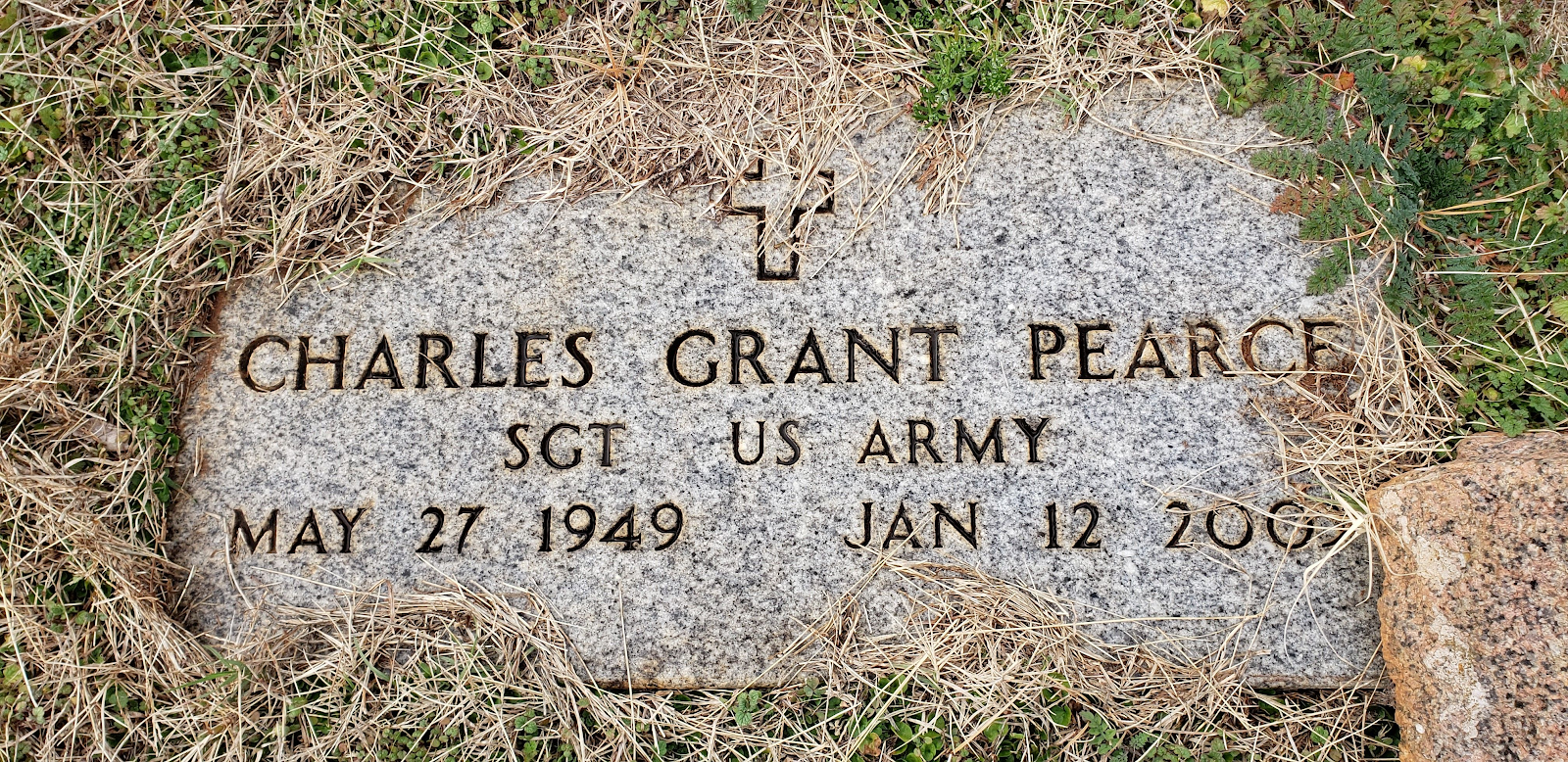
I believe Sunshine is Charles Grant Pearce, born May 27, 1949, in Clarksville, Texas.

Here's Sunshine at Lee High School in Midland, Texas.


(Pearce was an Army Ranger in Vietnam. He died too early at fifty-three.) 

From Pearce's obit:

Grant was a talented musician and loved to sing and play the guitar, playing in several bands. He loved to fish and spend time with his family and friends. His outgoing, fun-loving personality made him a favorite of many. He will be greatly missed by all those who loved him.

-------------

Three cheers for Sir Buntline. He's unrivaled in this thing right now. Looking ahead, Manson Blog has something from Starviego in the works, and I will be sure to hop in with any breaking, awesome news if anything jumps off. Until then, high five me. 

Monday, July 25, 2022

Guest Post - Grim Traveller


Having recently done jury service here in London, I thought it might be a novel time to say a few things about a book that made absolutely no splashes or fanfare that I could see, when it came out back in 2019, a time when many things Manson were flying out of the woodwork, when 50 year anniversary {an odd concept in my mind} talk was all over the place. That book is “Inside the Manson Jury” and it was mainly written by the jury foreman, Herman Tubick. It passed well under the radar, which is interesting, considering in the four years leading up to it, there had been the deaths of Charles Manson, Vincent Bugliosi and Family documentary maker, Robert Hendrickson, as well as books by Dianne Lake, Lynette Fromme, Ed Sanders and the long awaited “Chaos” by Tom O’Neill, not to mention increased parole activity, including several recommendations for parole by the parole boards. One would have thought that a tome written by one of the actual jurors would have at least rated something of a mention, but no.

Jury foreman Herman Tubick, was the undertaker that served on the original trial and I think that he missed a trick in not having his book published at the time he wrote it, back in 1973. His nephew who writes the foreword, says that he never wanted to profit from it, which is quite commendable. In retrospect however, having gone to the trouble of writing a memoir about it, he clearly wasn’t just writing for himself.

With involvement with the co-author of Dianne Lake’s “Member of the Family,” in truth, it’s not a great book. It’s even arguable that many people interested in TLB would actually want to read it. It’s not sexy like “Chaos” and “Goodbye Helter Skelter.” It’s not controversial or definitive like “Helter Skelter” or its predecessing poor relation “The Family.” It may be an insider’s account, but it’s not exciting like “Reflexion” or “Member of the Family”  or gossippy like “Trial by your peers.” It’s not a debunker like “Crucified ~ the railroading of Charles Manson” or “False profit ~ Garbage dump to guru.”  

But in saying all that, it’s certainly not a bad book. It’s what I’d call a “point of view” account and for anyone interested in the workings of a jury, how they relate to matters and sift through the information they are given, it’s a gold mine. Had it come out in ‘73 along with William Zamora’s, it would have provided some much needed balance to his. And not only that, certain questions that only a juror could answer are answered. For example, we find out how much of an impact the 9 months of Atkins, Krenwinkel, Manson and Van Houten’s shenanigans had. We discover what the jury really thought of Linda Kasabian. We learn what they thought of the various delays, what it was like being sequestered, how they felt about being on such a famous case, how they got on {or didn’t, as the case may be}. Were the jury the “ding-a-lings” that Paul Fitzgerald hoped they would be ? Were they swayed by pre-trial publicity ? How great was their respect of and admiration for Irving Kanarek ? Did they cut Ronald Hughes any slack ? Was Judge Older viewed as weak and lacking in control ? What did they think of the Family witnesses on both sides ? Was there any bias ? Did William McBride really have the hots for Leslie ? Did they see through Bugliosi and think of him as a slick operator or hold him in high esteem ? How aware were they of the women on the corner ? Were they afraid of the Family ? Were Stephen Kay and Don Musich knights in shining armour ?

We get a sizeable and significant input from Herman’s wife, Helen, and we learn that the two spent much time in the ensuing years after the trial talking about the trial and the whole experience and she is the one that encouraged him to write his memories down in book form. As with juror John Baer’s wife Rosemary, with her book, “Reflections on the Manson Trial,” {which pre-dates even Zamora’s book}, Helen {who looked a bit like the Queen of the UK} demonstrates that at some point, the Manson episode touched people in profound ways and so perhaps we shouldn’t be surprised at the lingering interest, even 50+ years later. Both Herman and Helen appear as relics of a bygone age, yet through having to be on her own for 9 months, albeit reluctantly, Helen developed an independence and drive that she’d never had to contend with before so the book carries an interesting social dimension that William Zamora’s never had.

Speaking of Zamora, I thought it would be interesting to read his book again. “Trial by your peers”  {later rebranded as “Blood Family”} remains an excellent book and like Herman’s, takes us through each of the witnesses and what the juror remembered of each. But one thing that comes across very starkly in both books are the two specific juror’s disdain for each other. Zamora used aliases in his one and the person he cast as Herman Tubick is presented as a small minded old man that was out of touch. Herman on the other hand, names names and suffice it to say, William Zamora wouldn’t’ve been heading his Christmas card list in the early to mid 70s, if ever ! As diplomatic as he tries to be, the friction is clearly in his writing. Still, it wouldn’t be in keeping with all things Manson if there weren’t contradictions and differences relating to the same events !

I don’t want to say too much because despite it not being the greatest story ever told, I would recommend it. Heartily. And I have to give an affectionate shout out to Beauders who tipped me onto the book in the first place.

Thanks sister !

How much it actually adds to the overall story is really down to the individual. I personally enjoyed most of it and think it is valuable. I tend to think that most, if not all, of the perspectives that various participants in this saga bring to the table are really quite important, if only for balance and appreciation of nuance. And up until now, the only juror perspectives we’ve had have been that of William Zamora and a kind of second hand one in Rosemary Baer, wife of John Baer ~ and interestingly, she disagreed with her husband on matters like the death penalty and seemed to be more willing to listen to where the defendants were coming from. In Herbert’s book, we get not only his observations, taken from his notes and recorded in real time, we also have input from William McBride III who was also on the jury. He was one of the youngsters and his contribution to the book is worth a whole lotta something valuable. He actually went on to become a court reporter, inspired by his time on the jury. I rather wish he’d write his own book ! Or at least do a very long and definitive interview.

In spite of all that has been said and written about the Manson case, the defence and prosecution, dodgy activity on any side of the equation, the Family or the families etc, the simple reality is that it was those 12 people sitting on the jury that convicted the defendants. Not motives or theories or lies or lack of defence. That alone makes the book worth a read. The illustrations are top notch, even if the artist, Anna Latchmann, had a 50 year advantage that other artists didn’t in the 70s.

A number of people suffered personal losses during the trial period, Pat Krenwinkel among them, losing her half-sister. The jury members weren’t spared the clutches of the Grim Reaper , with Tubick being among those to lose close ones and/or family members. Ironically, life had to go on.

There are some nicely human moments such as when Charlie mouthed “Happy birthday” to Herman on his birthday and the female defendants sang the song “Happy birthday to you” outside the jury room. But all in all, it could hardly be described as a happy affair and it’s worth a read to understand exactly why as Herman has much to say about the wheels of justice. The book is available and the prices online range from more than reasonable to taking the mickey.

As an appetite wetter, I’ll conclude by quoting Herman from the book;

“There was sorrow in my heart for all four defendants, especially for the women. There were moments in the courtroom, as I reflected on the wasted lives of these young girls, the thought crossed my mind; by the grace of God, they could be my daughters. There is no jubilation in something like this, no sense of satisfaction; it was a task that I did not relish. The issue was not how I felt, but that it was a job that had to be done. And in a crime of this nature, the defendants were seemingly unrepentant killers. I could not let my heart rule my head.”

- GT

-------------

EAN (ISBN-13): 9781944068868

Paperback

Publishing year: 2019

Publisher: Micro Publishing Media

ISBN/EAN: 9781944068868

ISBN - alternate spelling: 

978-1-944068-86-8