Saturday, February 18, 2023

The Volokh Conspiracy: Once Upon a Time in the California Court of Appeal

Quentin Tarantino's Once Upon a Time in Hollywood doesn't infringe 1960s actor Christopher Jones' right of publicity.

EUGENE VOLOKH | 2.17.2023 8:19 AM

From McKenna v. Sony Pictures Entm't, Inc., decided Wednesday by the California Court of Appeal, in an opinion by Justice Lamar Baker, joined by Justices Laurence Rubin & Dorothy Kim:


Paule McKenna ..., the executor of the estate of Christopher Jones, sued defendants and respondents Sony Pictures Entertainment, Inc., Boss Film Productions, Inc., and Visiona Romantica, Inc. ... for allegedly misusing Jones's name and likeness (posthumously) in the film Once Upon a Time ... in Hollywood....

Christopher Jones was a popular actor in the 1960s. He starred in the television series The Legend of Jesse James and a number of movies including 3 in the Attic and Wild in the Streets. Jones quit Hollywood in 1969. He died in 2014.

Once Upon a Time ... in Hollywood (the film), is a film written and directed by Quentin Tarantino. It was produced by Boss Film Productions and released by Sony Pictures Entertainment in 2019. The film stars Leonardo DiCaprio as fictional actor Rick Dalton, Brad Pitt as his fictional stunt-double Cliff Booth, and Margot Robbie as real-life actor Sharon Tate. It depicts a few days in the lives of the three main characters in February and August 1969, and imagines (or reimagines, in Tate's case), how their lives intersect with the Charles Manson family.

A variety of products with recognizable name brands appear throughout the course of the film. For example, there is a scene in which Pitt's character Booth cooks a box of Kraft macaroni and cheese. A box of Wheaties cereal is on his counter while he does so, and a copy of TV Guide is seen elsewhere in his home. The same scene includes brief glimpses of Booth's television, which at one point plays an advertisement for Jones's movie 3 in the Attic and identifies Jones as one of its stars. In various other scenes, Booth wears a t-shirt with a logo for Champion spark plugs on it. Characters also at one point drive down Hollywood Boulevard and pass the Pantages Theatre, which was displaying a marquee for 3 in the Attic featuring Jones's name.


The court concluded that the complaint was properly dismissed under California's anti-SLAPP statute:


[The anti-SLAPP statute applies because t]he creation of a movie is an exercise of free speech ... [as to] issues of public interest. The film concerns the culture of the late 1960s in Hollywood and the Manson family murder of Tate. These are matters of public interest about which discussions are still ongoing. The uses of Jones's name, the portrayal of Booth and/or Dalton in proximity to branded products, and the portrayal of Booth wearing shirts with brand logos on them are details that add to the depiction of the culture in Hollywood in the late 1960s. The public interest in these topics is demonstrated by the numerous articles and reviews discussing the film that defendants submitted in support of the motion, some of which specifically reference Tarantino's inclusion of era-appropriate products, as well as the many-months-long run the film had in theaters (late July to early October 2019).

Plaintiff advances a number of arguments to the contrary, most of which relate back to her contention that the activity on which her complaint is based is simply "false brand endorsement" or, in other words, the recreation of Jones's likeness and portrayal of that likeness in connection with commercial brands, without consent or credit. The film, she claims, is incidental to this false endorsement for profit issue and she asserts there is no public interest in the brand endorsement or in her private dispute with defendants over their alleged use of Jones's likeness. The problem with plaintiff's argument, however, is that the broader creative acts of including the aforementioned aspects in the film and the alleged use of Jones's likeness are inextricably linked. For example, in the context of the film, any alleged commercial reason for dressing Booth in a t-shirt with the Champion logo on it cannot be isolated from the creative impetus for the same action. Furthermore, defendants submitted a declaration representing the brands depicted (other than Hennessey) were included for artistic reasons and were used to "capture the look and feel of the time period," and to "accurately portray the late 60s."

Plaintiff also relies upon a handful of cases for the proposition that advertisements for an artistic work are not necessarily noncommercial speech. To the extent plaintiff relies on these cases to argue the advertisements for the film should not be eligible for anti-SLAPP protection, the authority is inapposite. Unlike the advertisements at issue in the cases plaintiff cites, the advertisements for the film are not alleged to include any false statements and are merely adjuncts of the film. To the extent plaintiff contends these cases transform the portions of the film with product placement into commercial speech, that is also incorrect. Both of plaintiff's cases addressed separate advertisements for creative works, not allegedly integrated advertising within the works themselves....


Thus, to resist the anti-SLAPP motion, plaintiff had to show a probability of prevailing on the claim, and she couldn't:


Civil Code section 3344.1, subdivision (a)(1) provides in pertinent part: "Any person who uses a deceased personality's name, voice, signature, photograph, or likeness, in any manner, on or in products, merchandise, or goods, or for purposes of advertising or selling, or soliciting purchases of, products, merchandise, goods, or services, without prior consent from the person or persons specified in subdivision (c), shall be liable for any damages sustained by the person or persons injured as a result thereof."

Subdivision (a)(2), however, exempts from subdivision (a)(1) a "play, book, magazine, newspaper, musical composition, audiovisual work, radio or television program, single and original work of art, work of political or newsworthy value, or an advertisement or commercial announcement for any of these works ... if it is fictional or nonfictional entertainment, or a dramatic, literary, or musical work." But there is also an exception to the exemption. Under Civil Code section 3344.1, subdivision (a)(3), "If a work that is protected under paragraph (2) includes within it a use in connection with a product, article of merchandise, good, or service, this use shall not be exempt under this subdivision, notwithstanding the unprotected use's inclusion in a work otherwise exempt under this subdivision, if the claimant proves that this use is so directly connected with a product, article of merchandise, good, or service as to constitute an act of advertising, selling, or soliciting purchases of that product, article of merchandise, good, or service by the deceased personality without prior consent from the person or persons specified in subdivision (c)."

Subdivision (k) of the statute provides that "[t]he use of a name, voice, signature, photograph, or likeness in a commercial medium shall not constitute a use for which consent is required under subdivision (a) solely because the material containing the use is commercially sponsored or contains paid advertising. Rather, it shall be a question of fact whether or not the use of the deceased personality's name, voice, signature, photograph, or likeness was so directly connected with the commercial sponsorship or with the paid advertising as to constitute a use for which consent is required under subdivision (a)."

The film unquestionably falls into the exemption under Civil Code section 3344.1 subdivision (a)(2), as it is an audiovisual work of fictional entertainment. In order to demonstrate minimal merit under subdivision (a)(3), then, plaintiff must have made a prima facie case that the film "includes within it a use [of a deceased personality's name, voice, signature, photograph, or likeness] ... [that] is so directly connected with a product, article of merchandise, good, or service as to constitute an act of advertising, selling, or soliciting purchases of that product, article of merchandise, good or services ...."

There is no contention that Jones's voice, signature, or photograph was used in the film. Jones's name is mentioned twice during advertisements for his movie 3 in the Attic (played within the film), and his name appears fleetingly as characters drive past a marquee promoting the same movie. Plaintiff has not provided any evidence demonstrating these brief references to Jones, which narratively serve to identify Jones as a contemporary of Dalton and Booth, are "so directly connected" to any products, merchandise, good, or service that they constitute advertisements. The same is true of the appearance of Jones's name in promotional trailers for the film and the fake magazine promoting the film.

The true heart of plaintiff's claim is that Booth, and to a lesser extent Dalton, were based on and styled after Jones. Plaintiff identifies aspects of both characters that she contends make up a whole constituting a likeness of Jones. Some of these aspects are physical—like Booth's hairstyle and aviator sunglasses—while others are biographical—like the scene in which Dalton is comforted by a child. While we are doubtful that plaintiff has demonstrated a probability of success in alleging Jones's likeness was used in the film, we need not reach that issue to decide plaintiff has not demonstrated a probability of prevailing on her Civil Code section 3344.1 cause of action.

The film depicts Booth and Dalton, though primarily Booth, using a slew of household products and otherwise appearing in scenes that feature brand logos. It also depicts Booth wearing one or more t-shirts with a brand logo on it. In response to plaintiff's allegation, defendants submitted the declaration of producer McIntosh that asserts the only product placement in the film was for Hennessy cognac, a product not used by either Booth or Dalton and thus not associated with Jones's alleged likeness. The declaration further asserts the other products depicted in the film were used solely for creative, not financial, reasons and the filmmakers were not paid to include them. As the film was, in fact, not compensated for the inclusion of the products and was not advertising them through any sort of product placement, Booth and Dalton's proximity to the products was not so directly connected to any of the products that their presence constituted advertisement or sale....

The court likewise rejected plaintiff's federal trademark and false endorsement claim, as well as some other state law claims. Seems quite right to me. Congratulations to Louis P. Petrich and Elizabeth L. Schilken (Ballard Spahr), who represent the defendants.

Monday, February 13, 2023

Julian Wasser, who took the controversial photos of Polanski at Cielo, has passed away

Julian Wasser, who took the controversial photos of Polanski at Cielo for LIFE Magazine, has passed away.


Thanks, BD

Here is the LA Times Article:


Julian Wasser, house photographer of L.A.'s icons, dies at 89


Julian Wasser elevated the adage of "right place, right time" to an art form. As a photographer for Time magazine in the Los Angeles of the 1960s and '70s, he knew what to do with his good luck.

Wasser, 89, died of natural causes on Feb. 8, according to his daughter, Alexi Celine Wasser, leaving behind a legacy of historically important images obtained through a combination of timing, savvy and personal charisma. He was a legend of sorts for his rangy, stylish looks and a hard-boiled wit that appealed to celebrities, musicians and artists. And he became something of a celebrity himself with his notorious staged 1963 picture of the Dada artist Marcel Duchamp playing chess with the completely nude writer Eve Babitz at the Pasadena Art Museum. That picture inspired last year's KCET documentary, "Duchamp Comes to Pasadena."

Babitz's sister, Mirandi Babitz, who remained Wasser's close friend, recalled that he was "really smart and funny and very, very plugged into everything, so he was like a good addition to the scene. He was always obviously and inappropriately flirtatious with everybody but that did not particularly bother me. When he was taking pictures, he switched into this other mode and he was just completely professional."


Cruising to jobs in his black Mustang convertible, Wasser had a gift for getting up close and personal with even the most remote personalities. A glance at his website, julianwasser.com, reveals seemingly informal shots of young Paul McCartney and Elton John, Hugh Hefner roller-skating with playmates and Joan Didion posing in front of her Corvette Stingray. He photographed Robert F. Kennedy at the Ambassador Hotel just before he was shot and was asked by Roman Polanski to document the Cielo Drive site of the Manson murders. How many opportunities can a guy get?

Craig Krull represents Wasser's work at his gallery and knew him well for more than 20 years. "Everything was pretty direct and to the point in his photographs and in his conversation," Krull said. "He was not about nuance. I think that kind of unflinching factual directness is clear in his work. He didn't prettify anything. You get a lot of social context in his work that adds to the vitality of it as opposed to making it just an image."

In a 2014 monograph of his work published by Damiani, "The Way We Were," Wasser wrote, "Whether shooting the beautiful people or social documentary my intent as a photographer never changed: to be where things were happening, to meet the people who were responsible for the world we live in, and through my pictures, to evoke in viewers what I saw and felt at the instant I tripped the shutter."

With his Nikon in tow, Wasser used his considerable gift of gab to flatter, cajole and excite his subjects. His photographs of even the most exalted celebrities demonstrate that vibrancy. He treated them like friends, once bringing Zubin Mehta, then director of the Los Angeles Philharmonic, to the Whisky a Go Go. "I thought he'd get a kick out of it," Wasser told W magazine. "He hated it: 'Ach, my ears.'"

Born April 26, 1933, in Bryn Mawr, Penn., to Leo Wasser, an attorney, and Frances (Roth) Wasser, a schoolteacher, he was raised in the Bronx before attending the prestigious Sidwell Friends school in Washington, D.C.

Even as a young boy there, Wasser was shooting small news items. He later recalled, "Every night I would climb out my bedroom window and steal my father's car when I was 12 and take pictures, and they'd be on the front page of the Washington Post. My father would say 'look, there's another Julian Wasser in Washington.' I said 'yeah dad.'"


His idol was the energetic Weegee, infamous for his unsparing photographs of crime scenes. While attending the University of Pennsylvania, Wasser decided to concentrate on photo journalism for magazines. After graduating, facing the draft, he chose to enlist in the Navy in 1956 and was assigned to a photographic reconnaissance unit in San Diego. He learned aerial photography and served time in postwar Japan. However, his frequent visits to L.A. led him to settle in the city that became his home after he left the service in 1961. "The glamor of Old Hollywood was still intact, but at the same time, everyone was approachable," he wrote in his monograph. "There were no reserved VIP areas in clubs, no bodyguards or security men, no hordes of paparazzi."

Wasser continued to be active in L.A. throughout the '80s and '90s, working freelance for Eye on L.A. and other TV shows as well as magazines. He also settled down with Leslie Knauer, singer for the rock bands Promises and Precious Metal. In addition to his daughter, Alexi, a writer and actor in New York, he leaves behind a son, James Wasser, from a previous relationship.


Wasser was spending increasing amounts of time in Paris and Berlin when the Getty brought his images back into the public conversation via its 2011 initiative Pacific Standard Time. His pictures of L.A. counterculture, especially the photograph of Duchamp and Babitz, were widely shown and published. He was celebrated for capturing a special time in the city — and he was just as direct about his luck as he was in his work. "Everything you might have heard about living in Los Angeles in the early '60s," he insisted, "was really true."


Drohojowska-Philp is a journalist, art critic and author of "Rebels in Paradise: The Los Angeles Art Scene and the 1960s."


Monday, February 6, 2023

Abigail Folger: It Happened In Monterey

Abigail Folger was born in San Francisco, but spent much of her childhood at her family ancestral home in Woodside, about 32 miles south of downtown San Francisco. This area of California is known as the Peninsula, and the first 18 years of Abigail's life take shape in this vicinity.


Folger Estate Woodside, CA


Very little is known about Abigail's earliest years, but when she was old enough, she was enrolled at the Santa Catalina School for her four years of high school(1957-1961), which is located about 85 miles south of Woodside in Monterey.


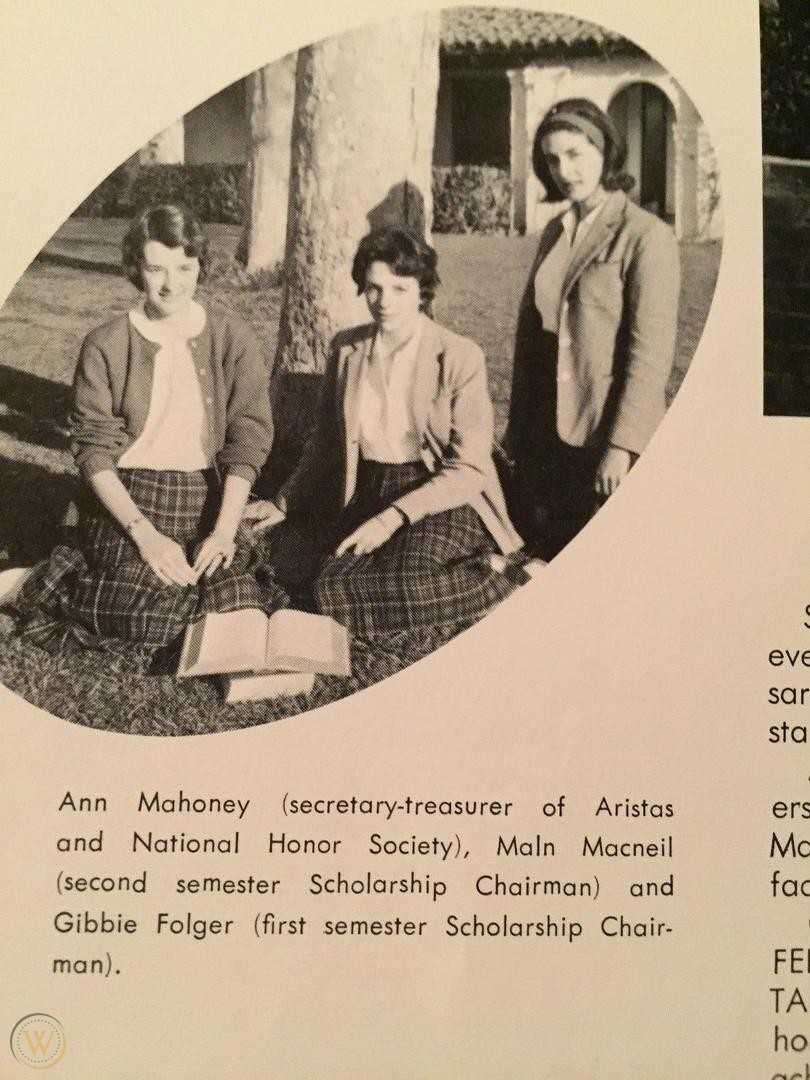
Students of TLB will know that prior to just a few years ago, there were but a handful of available photographs of Abigail, and not one of them in color. The single largest contribution of photos of Abigail come from the recently digitized yearbooks of Santa Catalina, the Catalinan. Although she could have lived in Woodside and commuted to school, it is now known that Abigail did live in dorms at the school and that she had roommates.


Santa Catalina School Yearbook Cover, 1961


Santa Catalina School


Santa Catalina School Campus


Abigail Folger Senior Yearbook Photo


The Catalinan


The Catalinan


Abigail was a member of the graduating class of 1961. One notable girl from that class--and a roommate of Abigail's--was actress Sharon Gless, who played police woman Christine Cagney in the TV drama, Cagney and Lacey, which ran from 1981 to 1988. Sharon was from Los Angeles, and like Abigail, eventually became a debutante in 1961, and was presented at the Las Madrinas Ball.


Tyne Daly and Sharon Gless in Cagney and Lacey


Sharon wrote a memoir of her life, Apparently There Were Complaints. In it she recalls being paired up with Abigail as roommates at Santa Catalina. After completing her freshman year at the school, Sharon returned home for the summer, and returned to begin the next academic year in the fall. As she tells it, "[T]hat autumn I returned to Santa Catalina. I was housed in what was known as "the Cottage". It was a very small old house on the school property. It had two regular bedrooms and then two very tiny rooms that were open to each other. I was given one of the little rooms and another classmate was given the other. Her name was Gibbie.

We were nothing alike. She was San Francisco and I was LA. She was dark-haired and had an angular face, defined by a Roman nose. She was very bright. She graduated summa cum laude. She excelled at classical piano. I was fair and blonde and was considered well-rounded. I excelled at nothing.

One night I asked Gibbie why she thought the nuns had paired the two of us as roommates. She assumed it was because both of our parents were going through divorces. Divorce was very rare then, especially among Catholic families. Since I was so traumatized by my parents' divorce, the nuns may have thought being near Gibbie would bring me comfort.

We were in Peter Pan together. Gibbie was Captain Hook, and I played Hook's flunky, Smee. In addition to piano, she could sing, dance, and triumphed in sports. Though she was heiress to a massive coffee fortune, she never mentioned it. We were just kids with similar pain.

Gibbie was always kind to everyone. It was later reported that she even looked up from the book she was reading and smiled and said hello to the young stranger who paused by her bedroom door at Sharon Tate's house in 1969, where Gibbie was a guest.

My high school roommate, Abigail "Gibbie" Folger, ran the farthest away, almost making it to the edge of the yard before falling victim to the Charles Manson murderers. I'm still not over it." (Sharon Gless, Apparently There Were Complaints: A Memoir. Simon & Schuster, 2021 p. 47-48).


Sharon Gless book cover


After graduating high school in June 1961, Abigail finalized plans to move to college at Radcliffe, from which she graduated in 1965. But she returned to the Peninsula again upon graduation, and in the Summer of Love of 1967, attended the Monterey Pop Festival, held at the Monterey County Fairgrounds on between June 16-18, 1967. Interestingly, the fairgrounds are only a few hundred yards east of the Santa Catalina campus. Abigail would have left Monterey six years earlier, but these would be familiar environs for her to be sure.


Aerial photo of Santa Catalina area of Monterey


Abigail attended the show, in the company of her then boyfriend, photographer Jim Marshall, and several others, including photographer Elaine Mayes. Elaine took countless photographs of the festival, employing three cameras. In 2002 she published her book on the festival, complete with many of her amazing photos, entitled, It Happened In Monterey; Classic Photographs by Elaine Mayes.


Jim Marshall


Elaine Mayes book cover


Elaine remembers Monterey Pop well, and provided a forward to it in her book. "For most of us the Festival was a spectacular tribal weekend, a pinnacle celebration of a vision for a way of life. But I also sensed that Monterey Pop meant an end to an era. Maybe this inkling was because my sleeping bag was stolen from Gibbie Folger's car in the parking lot of our motel on the last day of the festival. Apparently not everyone in Monterey was sympathetic with the kindness practiced by most hippies." (Elaine Mayes, It Happened In Monterey: Classic Photographs by Elaine Mayes. Britannia Press, 2002. p. 5).


Crowd at Monterey Pop Festival


Elaine Mayes


After Monterey Pop, Elaine Mayes would go on to teach photography at the University of Minnesota at Minneapolis from 1968 to 1970. She subsequently taught at other colleges, including New York University, before retiring from teaching in 2001.


John Luce, another friend of Elaine, accompanied Abigail and Elaine's friends to the festival. He too factors into Elaine's book. Quoted in 1997, then doctor Luce said, [W]e spent the weekend in one of the few available local motel rooms with other Bay Area photographers, including Elaine Mayes and Suki Teipel. Also with us was Abigail (Gibby) Folger, Jim's (Jim Marshall's) girlfriend at the time, whom I had known since childhood and who was becoming involved in the rock music scene." (Mayes, p. 20).

Luce continues: "The other person I remember most from Monterey was Gibby. She had lived a rather mild life in the Bay Area as a member of a pioneer California family that owned a coffee company. I have always thought of her as a quiet and intellectual woman. Jim Marshall, by contrast, was in those days a fast driving and dirty talking man whos photography was as well served by his aggressiveness as it was by his artistic sensibilities. Seeing Jim and Gibby together made me wonder about how rock music, and perhaps the drugs that were so much a part of rock, produced bedfellows I could not have anticipated. Gibby went further into the rock scene after the Pop Festival, and by report she turned her attention to southern California. In 1969, she was murdered, along with Sharon Tate, by some of the followers of Charles Manson. In retrospect, I don't mean to draw too close a parallel between the Pop Festival and Charles Manson, but they will always be linked thru Gibby Folger in my mind." (Mayes, p. 121).

It is unclear how Abigail was becoming involved in the rock scene from Luce's comment. In New York, she apparently surrounded herself with the literary scene and took an interest in film production and screenwriting. This would have been between August of 1967 and August of 1968. It is well known, however, that Abigail spent much time at the home of Cass Elliot in Los Angeles between August of 1968 and August of 1969, where she was surrounded by many rock musicians. To date, only one photo of Abigail has emerged of her at Cass' house, in a world so very different from the Peninsula.


Wednesday, February 1, 2023

I Asked AI for a Summary of the Hawthorne Shootout

 Get ready for some true knowledge they don't tell you about on the YouTube. And remember you read it here first.


Monday, January 30, 2023

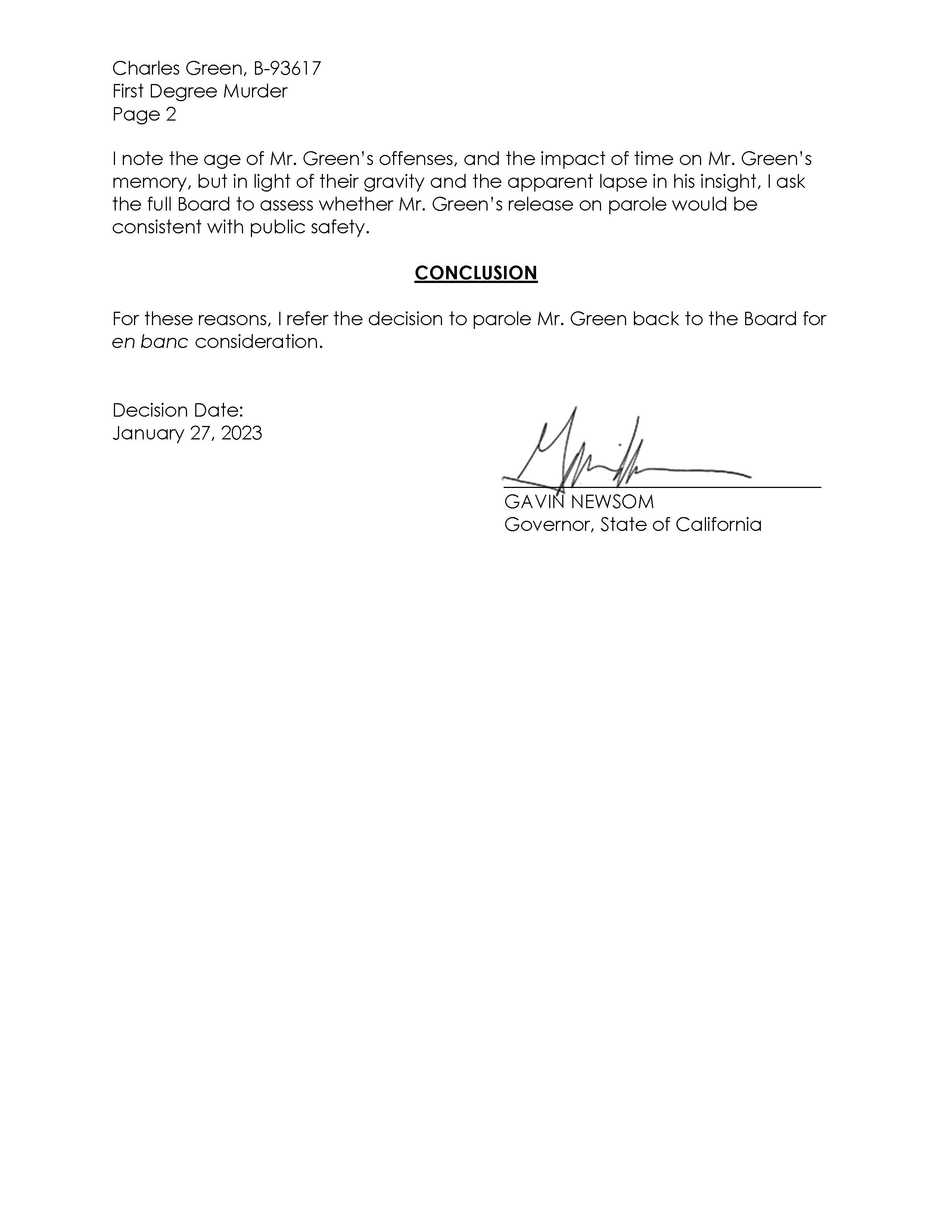
Charles Alan Green/Beard - Governor's Decision


FIRST POST

SECOND POST

The 120-day period after a prisoner has been granted parole gives the full board a chance to review how the hearing panel that conducted the hearing came to their decision. It also gives the legal arm of the Parole Board the opportunity to check for errors of fact or law. If new information is submitted regarding the prisoner after the initial hearing the chief council can refer the case for an en banc review by the full Hearing Board.

I sent new information to the BPH but I do not know in what stage of the process the information was handed over to them. It was rather late in the game before I was directed to the proper place to submit the information so it's possible that the legal department had already done its job.

As was stated in the last post, the allegations I submitted were included in the package to the Governor for his review. The Governor had 30 days to make his decision.

On January 27, 2023 the Governor issued his decision and he decided to refer the case for an en banc review by the full Hearing Board.

So, what does this mean? An en banc review is conducted by the full Hearing Board at one of their monthly executive meetings. As near as I can tell, that review will not necessarily take place at the next monthly meeting but at the next meeting where the schedule allows.

The en banc review can have three different outcomes, 1) affirm the original panel's decision, 2) modify that decision or 3) or order a rescission hearing to decide whether the parole grant should be rescinded.

The information I sent cannot be part of the official record until the prisoner has had a chance hear the allegations and be given a chance to explain the differences between what he has told the Hearing Panel in the past and what I contend is the true story. My hope is that the en banc review will result in an order to hold a rescission hearing so that my allegations can become part of the official record.

If the full Board decides to have a rescission hearing it will not take place for four to six months from the date of the order. 


Many thanks to cielodrive for getting the decision from the Governor 


Tuesday, January 24, 2023

Sharon Tate at 80

January 24th marks the birthdate of Sharon Tate, and this would have been her 80th. Peace be on Sharon and her child, Paul Richard Polanski.

Please click on the video to remember Sharon. Music by: Bob Welch, "Sentimental Lady," 1977.

Sunday, January 22, 2023

Monday, January 16, 2023

The John Phillip Haught Police Report

Copies of this report have been online but they seem to come and go. They always have a watermark even though the report does not belong to any one person or website. The report is a public record so it is presented here without a watermark.


Monday, January 9, 2023

Informants


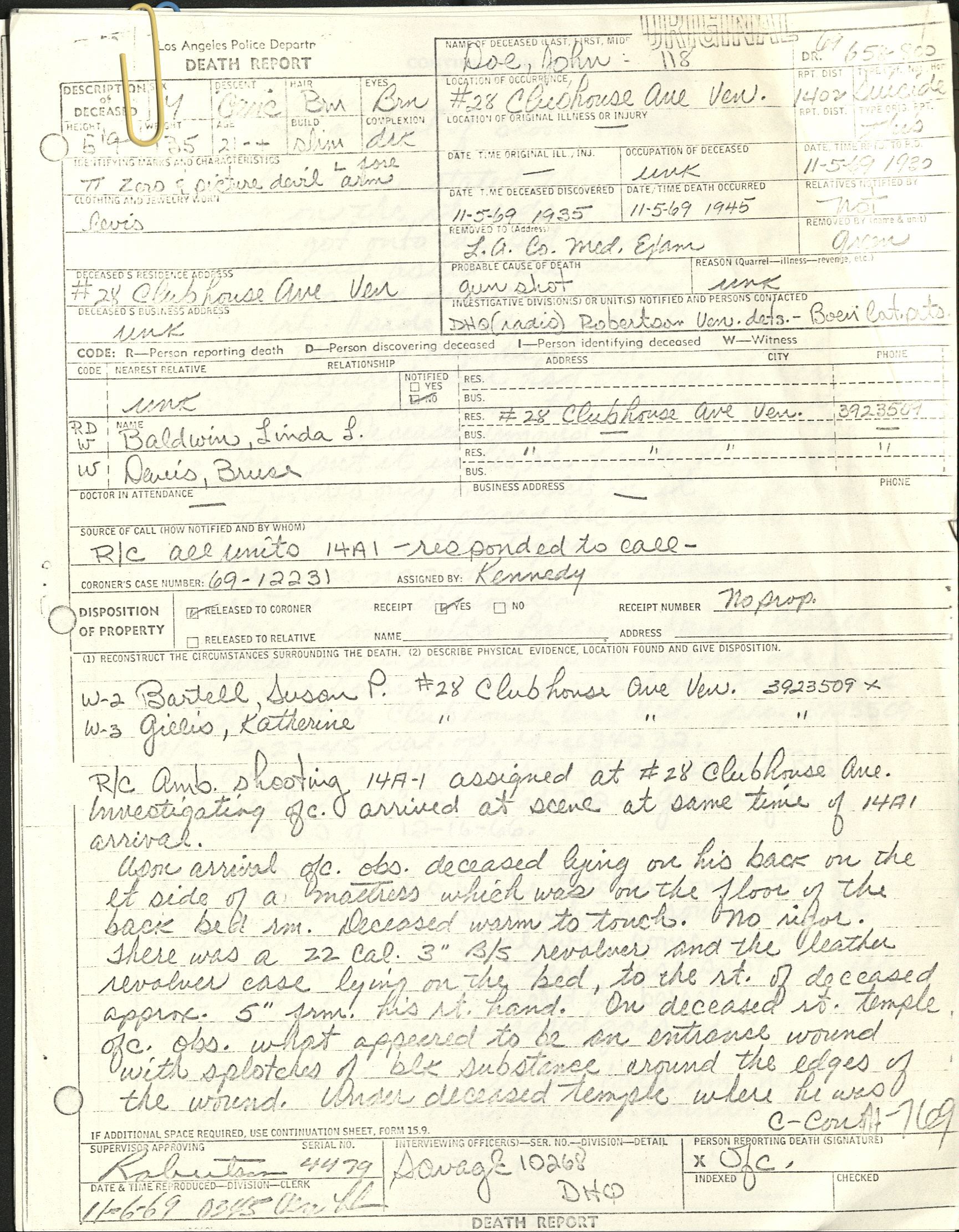
There have been a few documents in the current cache I obtained that are a bit of a mystery to me. Two of those documents are related to Wayne Robert Peterson. One is an arrest report and the other a rap sheet.

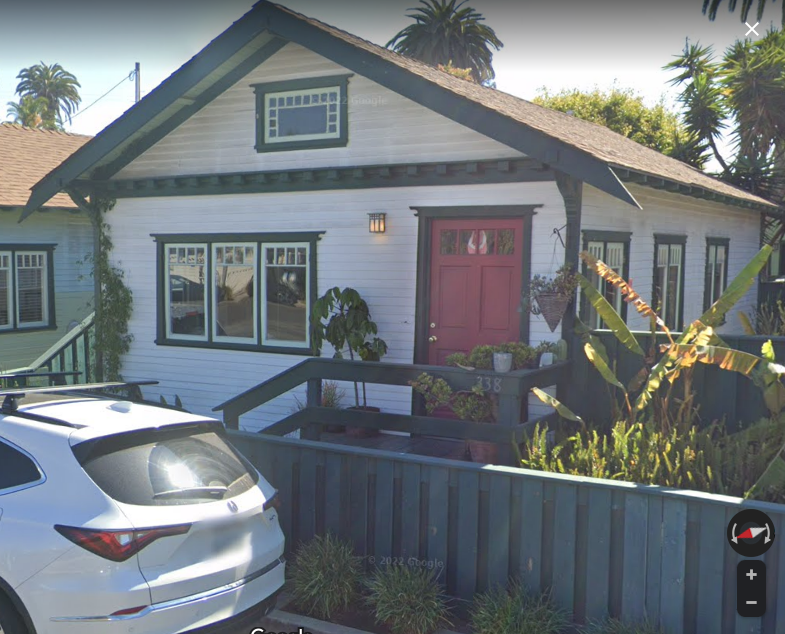
The arrest report states that Peterson's birthdate is January 6, 1947 and he was born in Oakclair, Wisconsin. He was born in Eau Claire, WI, actually. The arrest was for the sale of dangerous drugs and it appears he was arrested on a warrant though there isn’t an arrest location. He lived at 338 Windward in Venice CA.

338 Windward Venice CA


Peterson had a previous arrest for drugs. I could not find any newspaper articles about either of the arrests. The rap sheet is dated June 23, 1969 so there are not any other crimes he was arrested for after that date on the sheet.

Peterson passed away in Wisconsin on July 14, 2021. His obituary page has a motorcycle at the top of the page and the text reveals that he loved to ride motorcycles. I ran a background check on him, he had a number of arrests between 1987 and 2013 for disorderly conduct, domestic abuse and bail jumping in Wisconsin.

Given that information and realizing that I’m stereotyping, I’m thinking that Peterson may have been with the Straight Satans but after asking around to the few people I’m in contact with who might know the names of the Straight Satans members, I struck out. He could have had a nickname and not many were familiar with his true name.

I ran across an interesting detail in the article below regarding the timeline of when law enforcement finally put everything together and realized that the Hinman, Tate and LaBianca murders were all committed by the same people.

On November 12, 1969 Venice police interviewed a man who had been arrested for burglary who might have some info on the suspects in the TLB cases. This informant gave them the name of Danny De Carlo as a person who was known to frequent Spahn Ranch. Danny spilled his guts.

I am wondering if Peterson was the person who gave Venice Police De Carlo’s name??? I don't think that the Peterson documents were with all the other documents by mistake, there's a reason why they were there.

If anyone knows Peterson's role in the Manson saga, please share it with the class.


December 11, 1969

Hollywood Citizen News

Manhunt Timetable Revealed

Police on Right Track Before Susan Talked

"Grinding day and night work" and several informants have been credited with leading police to the six Hippies accused of murdering actress Sharon Tate and six other persons.

The timetable for the lengthy investigation of the bizarre killings was revealed for the first time by Los Angeles Police Capt. Hugh Brown, commander of the Robbery-Homicide Division.

It was not the disclosures of Susan Denice Atkins, 21, one of the accused, which put police on the right trail, Brown contended.

It was, rather, "grinding" police work which included probing 150 murders that occurred in southern California in the past year.

At one time more than 40 investigators were assigned to the Tate and LaBianca murders.

Chronologically the investigation went like this:

OCT. 15- Police became aware of the similarities between the murders of 34-year-old musician Gary Hinman and the Tate and LaBianca slayings.

In all three cases the word "pig" or "piggy" was scrawled in blood at the scene.

Hinman was knifed to death July 25, the Tate killings occurred Aug. 9 and Leno and Rosemary LaBianca were slain the following day.

Miss Atkins is also charged with murdering Hinman and is set for trial in that case Jan. 14 in Santa Monica.

OCT. 20- Police conferred with sheriff's detectives handling the Hinman case and learned of a girl who might have some information about a roving Hippie band.

OCT. 31- The girl was interviewed and the name of Charles Miller Manson- leader of the hate- oriented cult- was first mentioned.

Manson, 35, who was also indicted by the County Grand Jury Monday for the seven murders, was arrested in Independence, Calif. on auto theft charges. He was returned to Los Angeles to face murder charges on Tuesday.

NOV. 1- Homicide detectives conferred with Manson's parole officer and obtained additional information about his Hippie "family."

NOV. 6- Nine "family" members also in custody in Independence on auto theft charges were interviewed. No information was obtained from these individuals.

NOV.12- A major break. Venice police officers informed homicide detectives they had a man in jail on a burglary charge who might have more information on the suspects.

The informant was interviewed the same day and he provided the name of another man who knew the Hippies.

NOV.13- The informant was located and he told investigators the day after the Tate murders he overheard conversations at Spahn Ranch near Chatsworth which led him to believe that some members of the Hippie band might be implicated in the slayings.

He supplied police with the names of several persons- some of whom now face murder charges.

(Daniel Thomas deCarlo, 25, of Inglewood, who once lived at the Spahn Ranch, testified at the Grand Jury inquest.)

It was at this point, Brown said that the man under Lt. Paul Le Page working on the La Bianca murders joined forces with investigators under Lt. Robert Helder who were probing the Tate case.

Capt. Brown said it was the conversation with the Spahn Ranch informant which led police to conclude that the Tate and LaBianca murders were definitely connected.

NOV.18- Beverly Hills officers informed the Los Angeles teams that a woman suspect in another case had disclosed her conversation with Miss Atkins in her jail cell at Sybil Brand Institute.

The Los Angeles officers interviewed the informant.

Nov. 26- The final and major break in the case. A former cellmate of Miss Atkins related conversations she had with Miss Atkins.

The informant was then residing at the Corona Narcotic Rehabilitation Center in Riverside County.

Capt. Brown said his men, meantime, conducted hundreds of interviews, traveled thousands of miles and constantly checked leads.

He explained they had checked most of the acquaintances and associates of Tate, coffee heiress Abigail Folger; Wojiciech Frykowski, Steven Earl Parent, hair stylist Jay Sebring and the LaBiancas, all to no avail.

Police said they got their first clue they were heading in the right direction when they examined the Hinman case, Brown added.

But it was not until Nov. 13 when they talked to the former resident of the Spahn Ranch, that they knew their investigation would soon hit pay dirt, he noted.